 Edward DP Situmorang
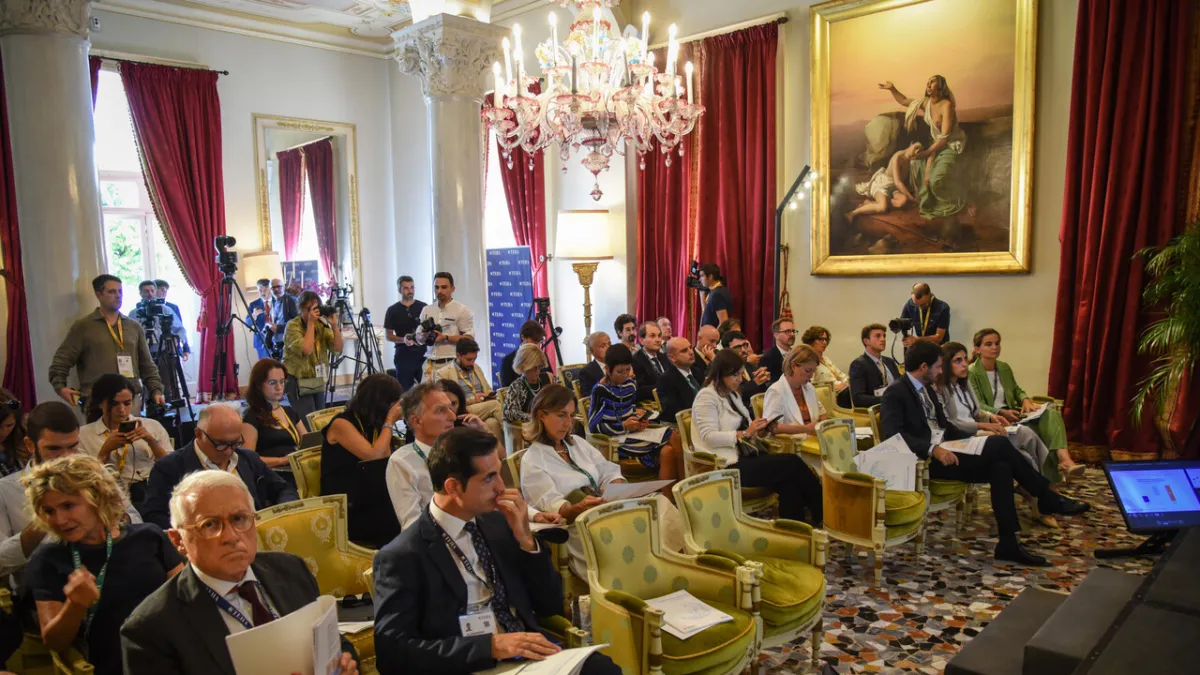
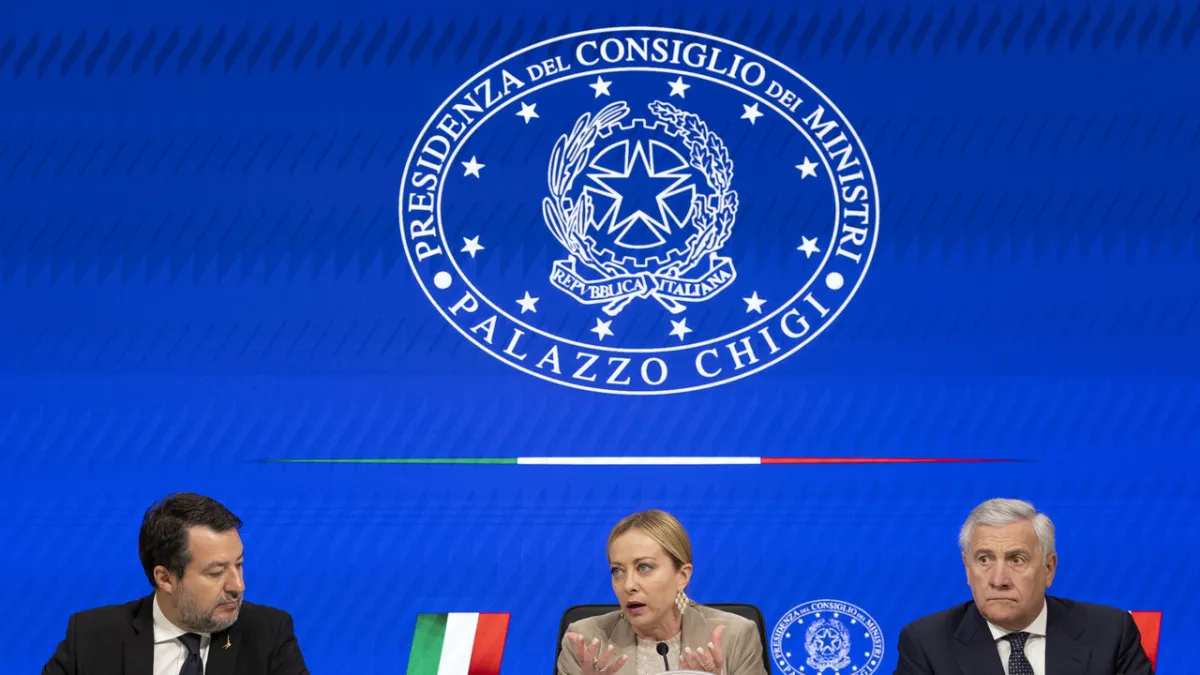
CERNOBBIO – A gathering of political and economic elites in Cernobbio, Italy, has once again drawn significant attention following the revelation of a surprising research finding: over 90% of global businesses reject the foreign policy of United States President Donald Trump. This discovery sparked heated discussions among Italian political figures such as Elly Schlein, Giuseppe Conte, Matteo Renzi, and Gilberto Pichetto Fratin, who convened to deliberate on the future of the European economy and global geopolitical implications.
This massive rejection, as presented during the prestigious The European House – Ambrosetti economic forum, underscores the business sector's concerns regarding the unilateral America First approach. Businesses perceive these policies as disruptive to international trade stability and global supply chains, creating uncertainties detrimental to investment and economic growth.
Giuseppe Conte, leader of the Five Star Movement (M5S), highlighted Europe's urgency to unite in confronting geopolitical dynamics. This data is not just numbers; it is a clear signal that the global economy needs certainty, not an escalation of tensions, he stated. Conte emphasized the necessity for more constructive and multilateral diplomacy to ease the turmoil caused by the polarization of major powers.
Elly Schlein, Secretary of the Democratic Party (PD), echoed similar sentiments, underlining the impact of aggressive foreign policy on societal well-being. When businesses suffer, it is workers and their families who bear the brunt. Europe must play an active role in maintaining peace and economic stability, Schlein said, calling for Europe to be more assertive on global issues.
Matteo Renzi of the Italia Viva party, a former Prime Minister, also offered his perspective on the need for Italy and the European Union to take proactive steps. We cannot merely be spectators. Italy must strengthen its position on the international stage, building strategic alliances that benefit regional and global stability, Renzi asserted. This view aligns with European nations' efforts to reduce dependence on a single power bloc.
Gilberto Pichetto Fratin, Minister of Environment and Energy Security, added a perspective on the link between geopolitical stability and energy transition. Unstable foreign policies can disrupt energy supplies and green investments. We must ensure our transition is not jeopardized by global intrigues, Pichetto Fratin explained, connecting energy issues with international policy uncertainties.
The research specifically highlighted several aspects of Trump's policies most disliked by corporations:
- Trade protectionism that triggered tariff wars.
- Withdrawal from multilateral agreements.
- A confrontational approach towards developing nations.
- Regulatory uncertainty hindering cross-border investments.
This phenomenon of rejection, if it continues, has the potential to alter the global investment landscape. Many companies are beginning to seek more stable markets and reliable trading partners, away from unpredictable policy upheavals. This could be an opportunity for Europe to position itself as a safe and progressive trade hub.
This context is also inseparable from regional situations, as previously seen in the surge in fuel prices in Italy some time ago, which was heavily influenced by global market dynamics and external policies. Foreign policy stability is a vital key to post-pandemic economic recovery and inflation mitigation.
Indeed, the implications of an aggressive US foreign policy have already been observed in events such as tensions in international waters involving the sinking of an Iranian tanker, raising concerns about a broader escalation of conflict. Such incidents add to the long list of reasons why the global business sector craves stability.
The future of the global economy appears to be highly dependent on how major powers navigate these geopolitical complexities. European leaders, particularly in Italy, are seen to be working hard to formulate adaptive strategies capable of protecting national and regional interests amidst a storm of uncertainty.
Editorial Insight: The overwhelming rejection of President Trump's foreign policy by a majority of global businesses in Cernobbio is a strong indicator that unilateral approaches carry tangible and detrimental economic consequences. This forces Europe, and Italy in particular, to seriously reconsider their strategic position and strengthen a collective voice in maintaining global stability. The increasingly disruptive America First era demands a more robust diplomatic and economic response from the European Union.