 Debby Wijaya
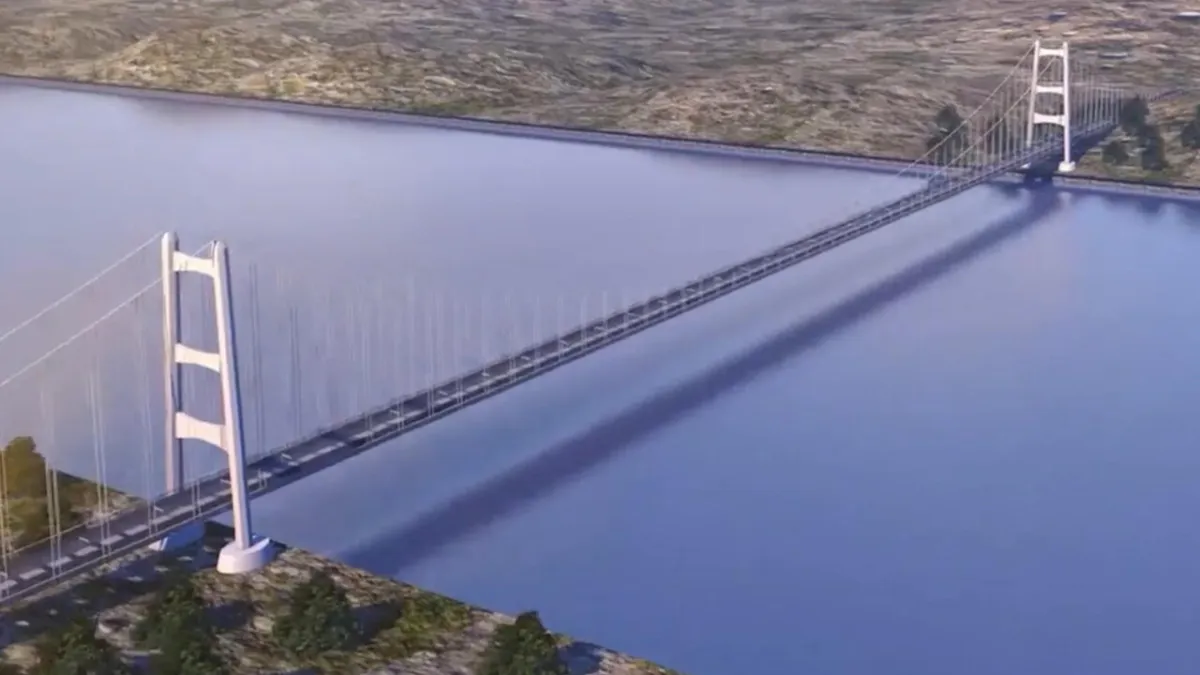
ROME — The Italian General Confederation of Labor (Cgil) officially filed a complaint with the Court of Auditors (Corte dei Conti) in 2026, accusing the government of fiscal damage due to the Messina Bridge construction project. This legal action has shaken Italy's political landscape, reigniting fierce debate over national infrastructure priorities, especially in the southern regions.
The lawsuit, filed by Italy's largest trade union, centers on claims of "danno erariale," or financial damage caused by inefficient or improper management of public funds. Cgil argues that every allocation of funds for the mega-project of the Messina Bridge, which connects Sicily to the mainland, fundamentally erodes budgets that should be allocated for more urgent and vital infrastructure development in Southern Italy.
The complaint asserts that the trade union's action is not merely ideological opposition. The General Secretary of Cgil, a vocal advocate for workers' rights and social justice in 2026, affirmed, "It is not an ideological battle, but every euro for the project is a euro taken away from real infrastructures for the South."
This statement, delivered during a press conference at Cgil's headquarters in Rome, emphasizes the focus on the urgency of genuine societal needs. Cgil stresses that investments must be directed towards projects that yield concrete benefits for the well-being of citizens.
The Messina Bridge project has been an iconic polemic for decades, with its astronomical costs and debated environmental impact. The ruling government in 2026, despite promising equitable development, continues to face significant pressure regarding its commitment to this colossal project, which some perceive as a symbol of extravagance.
Cgil highlights that Southern Italy still grapples with chronic basic infrastructure problems, ranging from dilapidated transportation networks, inadequate water supply, to healthcare facilities in need of modernization. The billions of euros planned for the bridge, according to Cgil, could transformatively improve the quality of life for millions of citizens in the region.
Economic analysis indicates that the maintenance costs and potential delays of the Messina Bridge project could exacerbate the state's financial burden. With a volatile global economy in 2026, prudent budget allocation is crucial for maintaining Italy's fiscal stability.
This move by Cgil also underscores the importance of transparency and accountability in large-scale infrastructure projects. The Court of Auditors is expected to conduct a thorough examination of the economic and strategic feasibility of the bridge project, as well as its long-term impact on public finances.
This decision has garnered support from various civil society organizations and advocacy groups who have long criticized the government's development priorities. They argue that the real needs of the poor in the south are often neglected in favor of grandiose, flagship projects that do not necessarily provide direct and significant benefits.
The debate over the Messina Bridge is often juxtaposed with other infrastructure challenges in Italy. Some time ago, the railway network in Florence was halted until July 30, highlighting the fragility of the national transportation system and the urgent need for investment in various sectors.
Cgil urges the government to reassess national development priorities and redirect investments towards projects with broader and more equitable socio-economic impact, especially in the regions most in need. This lawsuit is expected to serve as a catalyst for more inclusive and sustainable policy changes.
The implications of Cgil's legal challenge could be manifold. Not only could it potentially delay or even cancel the Messina Bridge project, but it could also set an important precedent for state financial oversight of other public projects in the future. The public now awaits an official response from the government and the decision of the Court of Auditors. The outcome of this case will be a significant indicator of the direction of Italy's infrastructure development in the coming years and the extent to which civil society's voice can influence state policy.