 Dorry Archiles
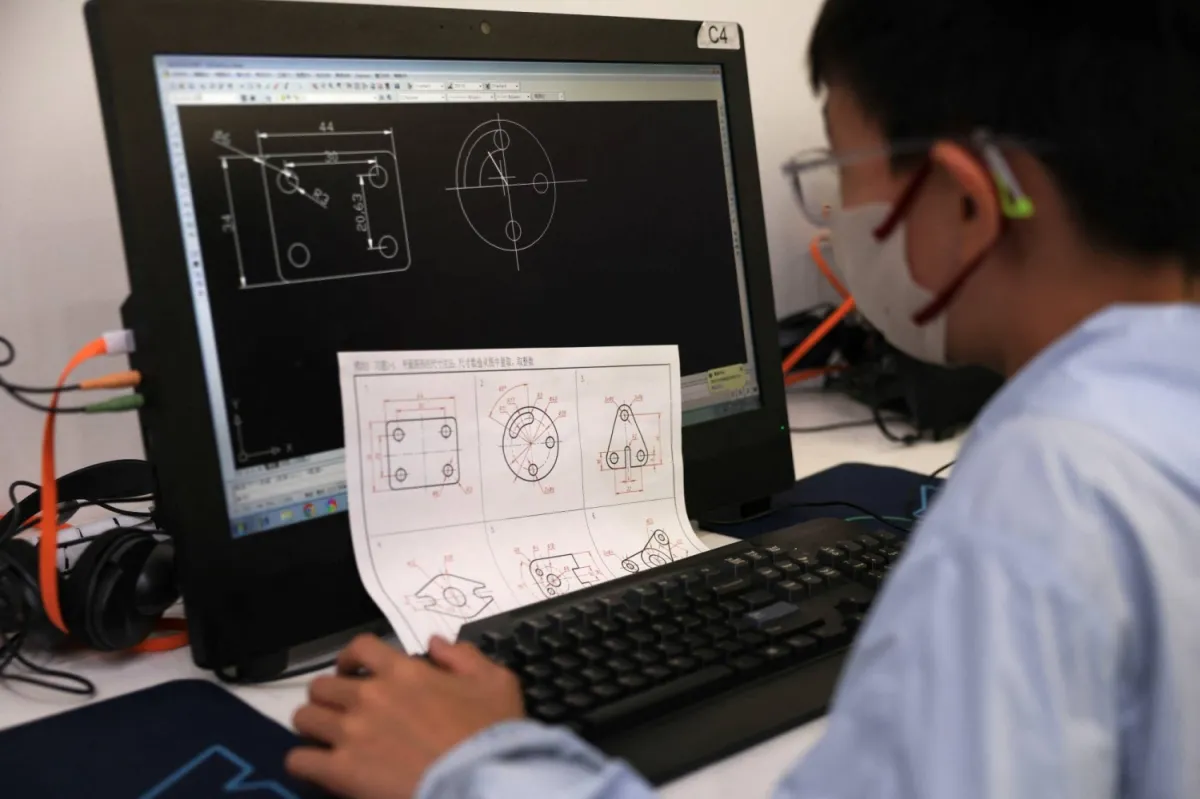
BEIJING – The Chinese government has launched a colossal ambition to instill universal artificial intelligence (AI) literacy in all schoolchildren across the nation. This ambitious target is set for 2030, aiming to cultivate a generation that not only understands basic AI concepts but also possesses critical thinking skills in undertaking complex AI-driven projects. This strategic move underscores Beijing's determination to lead the global digital era.
This revolutionary program is not merely an extracurricular addition but a deep integration into the formal education system. The expectation is that every school-aged child in China by the end of this decade will have a fundamental understanding of algorithms, machine learning, and the social implications of AI technology. This represents a proactive response to the shifting economic and social paradigms driven by AI innovation.
China's decision to forge an AI-native generation by 2030 highlights its long-term vision in global technological competition. The nation fully realizes that future dominance will largely depend on the capabilities of its human resources in mastering and creating advanced technologies. Trillions in investment in the chip and AI industries across various parts of the world attest to the intensity of this competition.
The transformation of the education curriculum forms the backbone of this vision's implementation. Newly designed modules will be introduced from primary to secondary levels, emphasizing practical applications and the ethics of AI. Teachers are also undergoing intensive training to effectively and inspiringly deliver the material.
The Chinese government heavily emphasizes the critical thinking aspect. AI literacy does not just mean being able to use tools, but also understanding how AI works, its potential biases, and its long-term implications for society. This is an effort to ensure young generations become creators and thinkers, rather than just consumers of technology.
A number of global education experts have met China's initiative with varied perspectives. Professor Li Wei from Peking University, for example, stated, China is building a strong foundation for a future knowledge-based economy. However, the biggest challenge is ensuring equitable implementation and maintaining curriculum relevance with the extremely rapid pace of AI development.
The government is not only investing in curriculum but also in supporting technological infrastructure. AI laboratories in schools, high-speed internet access, and advanced computing devices are priorities. The goal is to ensure every student, regardless of geographical location, has an equal opportunity to learn and innovate.
Nevertheless, this ambition is not without potential challenges. The digital divide between urban and rural areas, the availability of competent teachers, and issues of privacy and data ethics pose significant homework for Beijing. Furthermore, the speed of the education system's adaptation to the exponential evolution of AI will also be a determinant of success.
This program also has the potential to spark global debate regarding educational standards and the future of the workforce. If China successfully achieves this target, other nations may feel pressured to follow suit to maintain competitiveness on the international stage.
Independent technology expert, Zhao Ming, added, This initiative is not just about technology, but also about shaping a new national identity. China is redefining educational excellence in the 21st century, preparing its citizens for a future we do not yet fully comprehend.
China's move warrants close attention from the world. While other countries like India are also heavily investing in technology, for instance, Indian chip startups securing significant funding, China's scale and focus on foundational education demonstrate a distinct commitment. The future appears to be determined by who is best prepared with an 'AI-native generation'.
Editorial Insight: China's ambition to create a universally AI-literate generation by 2030 is a revolutionary step that could reshape the global educational and economic landscape. The success of this program will not only strengthen China's position as a leading technological power but also potentially trigger an AI education race worldwide. Implementation challenges are certainly substantial, but if successful, the implications will be cross-border and cross-generational.