 Stefani Rindus
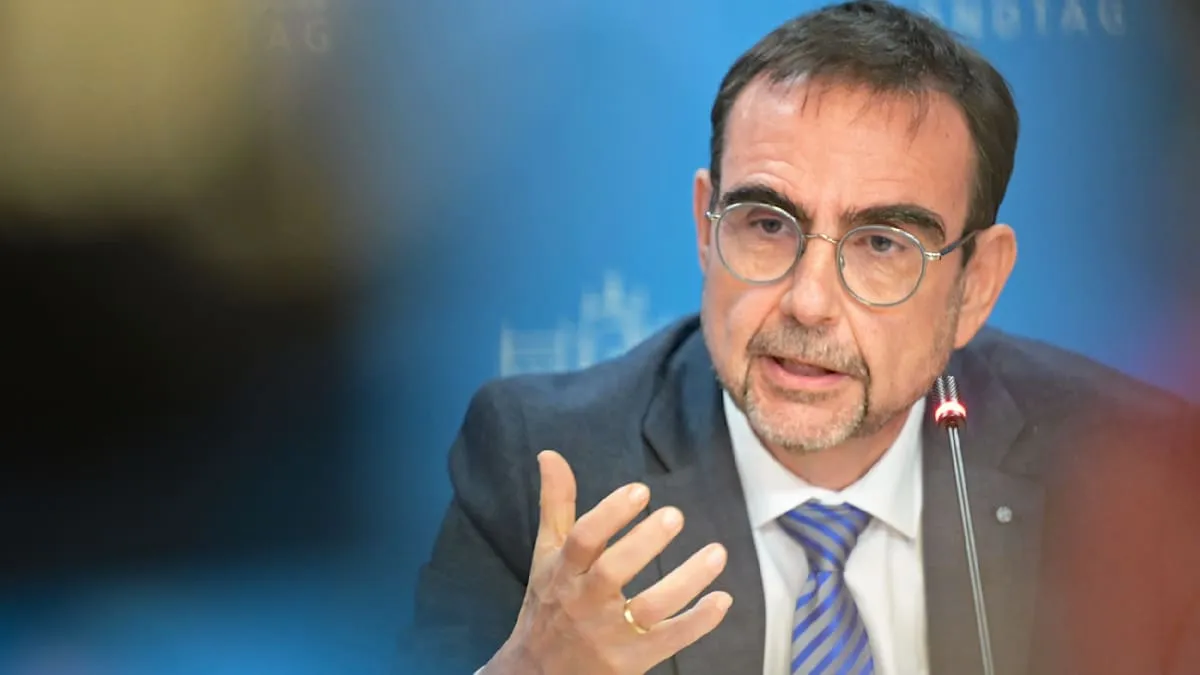
BERLIN — The Christian Social Union (CSU), through its parliamentary group leader in the Bavarian parliament, Klaus Holetschek, surprisingly opened the door to a partial ban on the Alternative for Germany (AfD) branch in Thuringia. This statement was made in mid-February 2026 in Munich, following the classification of AfD Thuringia as a far-right extremist entity by Germany's domestic intelligence agency, the Verfassungsschutz. The move has sparked a serious debate about the limits of democratic tolerance for political parties deemed to threaten the constitution.
Holetschek explicitly stated his support for concrete measures to counter extremist tendencies in German politics. "If there is a possibility to partially ban a party, this must be seriously explored," Holetschek said in an interview. However, he also reiterated his rejection of a complete ban on the AfD, a position that indicates a nuanced approach by the CSU to this issue.
This stance reflects the complexity of dealing with parties considered radical within the framework of a democratic rule of law. AfD Thuringia, under the leadership of Björn Höcke, has long been under close surveillance by the Verfassungsschutz. Its classification as a "far-right extremist" group means the agency can use intelligence methods, including wiretaps, to monitor the party's activities.
The discussion around a partial ban is not without precedent, although such cases are rare in Germany's post-war political history. The German Basic Law, Grundgesetz, indeed allows for the banning of political parties that actively seek to undermine the liberal democratic order. However, the requirements for achieving a full ban are exceptionally high, involving a decision by the Federal Constitutional Court.
Holetschek's rejection of a total ban on the AfD can be interpreted as an attempt to balance protecting democracy and avoiding the impression of political suppression, which could backfire. A total ban is often considered a drastic step that could generate sympathy and strengthen a martyr narrative among supporters of the prohibited party.
In response to Holetschek's statement, AfD Thuringia spokesperson Roland Mager called it an "unfounded political maneuver" and accused the CSU of trying to distract from substantive issues facing Germany. Mager asserted that the AfD always operates within the bounds of law and the constitution.
Meanwhile, several politicians from the governing coalition parties, such as the SPD and the Green Party, welcomed the discussion on partial ban options. They see it as a strong signal that extremism will not be tolerated. "Our democracy must not be naive. We must fight it with all available legal instruments," said an SPD parliamentarian.
The Verfassungsschutz intelligence agency, led by Thomas Haldenwang, plays a crucial role in providing the factual basis for this discussion. Their annual reports consistently highlight the increase in far-right extremist activities and attempts by certain parties to undermine the foundations of democracy. Germany's assertive steps in domestic security also align with sensitive issues concerning identity and law.
The potential impact of a partial ban on the German political landscape, particularly in Thuringia, would be significant. Thuringia is one of the states where the AfD has strong support and could potentially become a dominant political force in upcoming elections. Such a decision could drastically alter electoral dynamics.
Constitutional law expert, Professor Dr. Anna Richter from Heidelberg University, explained that a partial ban might involve certain restrictions on party activities, such as prohibiting specific branches, limiting campaign activities, or cutting public funding. "However, every step must be proportional and based on concrete evidence that the branch actively opposes the constitutional order," she clarified.
Germany has a sensitive history regarding party bans, especially given the Weimar Republic's failure to stem the rise of extremism. Therefore, any decision concerning a party ban is always considered with extreme caution, avoiding wrong precedents or abuse of power.
The discourse initiated by Holetschek now opens a new chapter in Germany's democratic struggle against internal threats. The fundamental question is how far the state can and should intervene in the freedom of political association to protect itself from potential dissolution.
Ultimately, this discussion is not just about the fate of AfD Thuringia but also about redefining the boundaries of legitimate politics and the role of parties in a resilient democratic system. Any decision will set an important benchmark for Germany's political future in the years to come.