 Gabriella
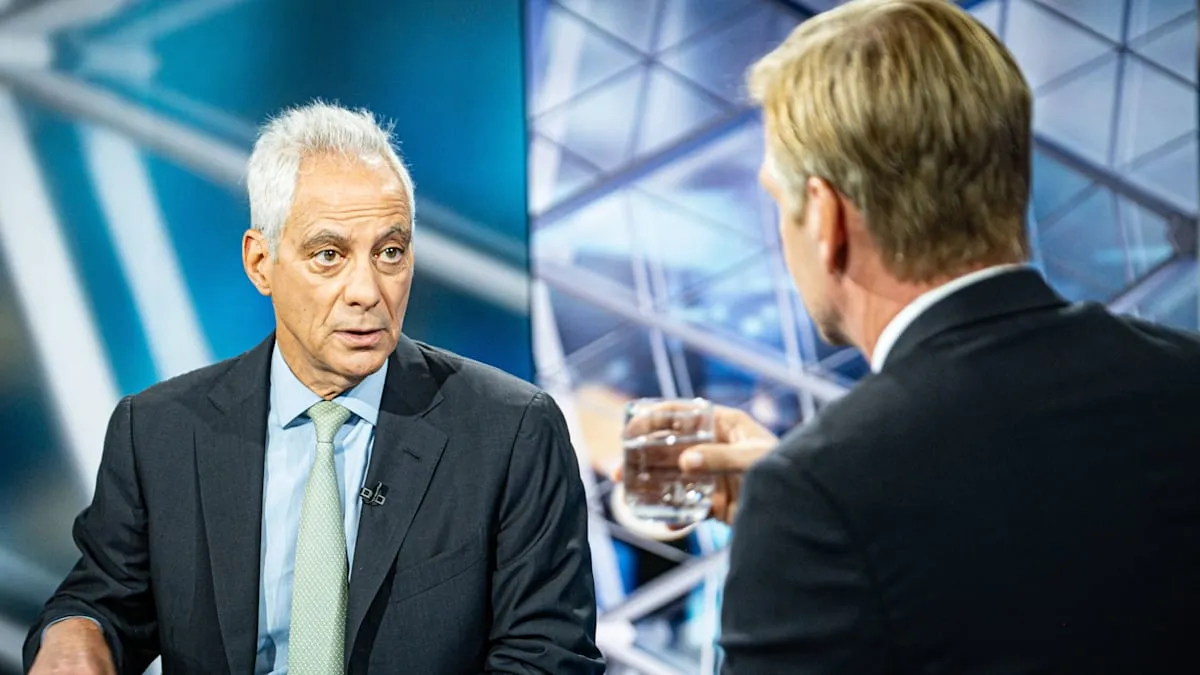
WASHINGTON – Rahm Emanuel, a senior American political figure who formerly served as Mayor of Chicago and Chief of Staff to President Barack Obama, has issued an urgent call for enhanced transatlantic cooperation. In an exclusive interview with Gordon Repinski, Editor-in-Chief of "Politico," Emanuel emphasized the critical need for a stronger deterrence strategy to confront potential ongoing aggression from Russia. These views emerge amid the increasingly complex global geopolitical dynamics of 2026.
Emanuel unequivocally stated that "a wounded and humiliated Russia will not stop." This declaration forms the core of his argument regarding the necessity for the Western bloc not to be complacent but to solidify their alliance. He assesses that Russia's internal conditions following previous conflicts could provoke even more unpredictable actions on the international stage.
The former U.S. ambassador to Japan elaborated that collaboration between the United States and its European partners must transcend mere rhetoric. This partnership, according to Emanuel, must materialize into concrete policies encompassing increased military capabilities, more intensive intelligence sharing, and unity in economic and diplomatic sanctions.
"We must be proactive, not reactive," Emanuel asserted, stressing that lessons from the past decade highlight the importance of prevention. He cited how a lack of coordinated response in the past provided room for certain powers to test the boundaries of international norms.
The issue of European security, particularly in the eastern region, is a central focus of Emanuel's perspective. He argues that any signs of weakness from NATO or the European Union would be exploited by those seeking to disrupt regional stability. Therefore, the consolidation of strength and political commitment is vital.
Discussions with Repinski also touched upon the economic aspects of transatlantic relations. Emanuel pointed out that certain economic dependencies on Russia in the past had become vulnerabilities. Diversifying energy sources and strengthening supply chains are strategic steps that must continue to be promoted to reduce geopolitical pressure.
Digital transformation and cybersecurity also received attention. Hybrid threats involving disinformation and cyberattacks have become crucial instruments in modern conflict. Emanuel emphasized that deterrence efforts must include the development of robust joint cyber defense capabilities.
Emanuel's experience as chief of staff in the White House provides him with a unique perspective on decision-making at the highest levels. He deeply understands the complexity of unifying various national interests into a cohesive foreign policy. However, he believes the Russian threat is significant enough to foster consensus.
Amid shifting global alliances, voices like Emanuel's serve as a reminder of the strong foundations of transatlantic relations that have stood the test of time. This framework of cooperation, forged after World War II, now faces new challenges that demand strategic adaptation and innovation.
Furthermore, several related articles from the database also highlight how various nations confront internal and external issues. For example, the heated Bundestag debate on health insurance savings packages or internal party scandals in Germany show political upheavals that can affect unity on global issues. This indicates that internal stability is also essential for external strength.
Emanuel also hinted at the need for strong leadership from the United States. Despite a shifting focus towards Asia, he affirmed that Europe remains a pillar of global security and that the transatlantic alliance is key to maintaining the existing balance of power.
Rahm Emanuel's message is hoped to galvanize policymakers on both sides of the Atlantic to re-evaluate their defense and security strategies. The consolidation of strength and a shared vision will be decisive in confronting increasingly unpredictable geopolitical challenges in the future.
This discussion indicates that the international community, particularly the Western bloc, needs to seriously re-evaluate old assumptions about stability and peace in Eastern Europe. Awareness of the potential escalation from "a wounded Russia" is crucial.