 Angela Stefani
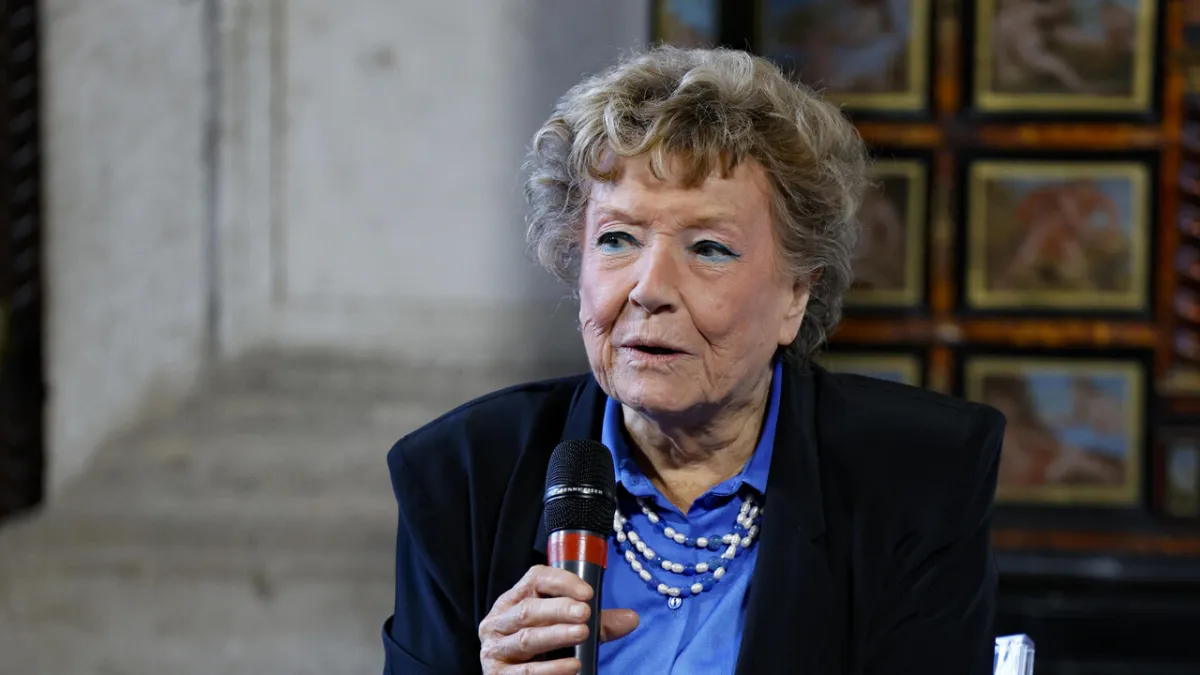
RIMINI – Esteemed Italian writer Dacia Maraini is set to receive the prestigious Premio Tonino Guerra 2026 in a two-day celebration in Rimini on November 6 and 7. This award is a profound appreciation for Maraini's significant contributions to the world of cinema, reaffirming her position as one of the most influential voices in contemporary Italian culture.
The Tonino Guerra Prize is specifically dedicated to honoring individuals whose work bridges literature and cinema, a criterion that perfectly aligns with Dacia Maraini's career trajectory. As a prolific author and visionary filmmaker, Maraini has long explored complex human narratives through various mediums, creating a rich and multidimensional legacy.
Dacia Maraini, known for her sharp novels and captivating plays, boasts a long career spanning over six decades. Born in 1936, she is both a witness and a keen social critic, with her works often highlighting issues of feminism, politics, and the human condition with brutal yet elegant honesty.
Her relationship with cinema extends beyond mere adaptations of her works. Maraini has actively been involved in writing screenplays for several important films, collaborating with legendary directors such as Pier Paolo Pasolini and Marco Ferreri. Her sensitivity to narrative structure and strong dialogue has lent a profound artistic dimension to every cinematic project she has touched.
The two-day event in Rimini will feature a comprehensive program, including panel discussions, retrospectives of films whose screenplays were written by or adapted from Maraini's works, and readings of her literary pieces. This presents a rare opportunity for the public and critics alike to delve deeper into the writer's thoughts and aesthetics.
The organizing committee, in its official statement, declared, Dacia Maraini is a living bridge between words and moving images. Her award is not just a recognition of individual works, but a celebration of the artistic capacity to inspire and reflect reality through a cinematic lens.
This award not only solidifies Maraini's vanguard position in Italian culture but also highlights the importance of cinema as an artistic medium inseparable from literature. It reminds us that powerful narratives can be brought to life through various forms, from the pages of a book to the silver screen.
Within the context of Italian culture, which possesses a strong tradition of fusing literature and cinema, Maraini stands as a central figure. She follows in the footsteps of masters who understood that the best stories can be told through a combination of linguistic beauty and visual power.
Tonino Guerra himself was a legendary poet, screenwriter, and visual artist, known for his collaborations with iconic directors like Federico Fellini, Michelangelo Antonioni, and Andrei Tarkovsky. Bestowing the Prize bearing his name upon Dacia Maraini is an affirmation that Guerra's creative spirit continues to live on through subsequent generations of experimental artists.
The year 2026 indeed serves as a stage for various prestigious awards recognizing global talents, such as the Grand Prix won by Manchevski's work in Tokyo. This recognition of Dacia Maraini adds to the long list of achievements in the world of arts and literature this year.
The celebration in Rimini is expected to be a gathering point for academics, artists, and enthusiasts of literature and cinema. It is a moment to reflect on how art can transcend medium boundaries and remain relevant through changing times.
Editorial Insight: The conferment of the Premio Tonino Guerra 2026 to Dacia Maraini is more than just an award ceremony; it is a significant declaration about the vital relationship between literature and cinema. Maraini, with her profound body of work, represents an essential intellectual and artistic bridge. This award underscores that in an increasingly visual era, the power of written narrative remains an irreplaceable foundation for any quality cinematic work. Maraini's presence at the forefront of this recognition can also inspire a new generation of writers and filmmakers to explore the synergy between these two art forms.