 Chandra Wijayanto
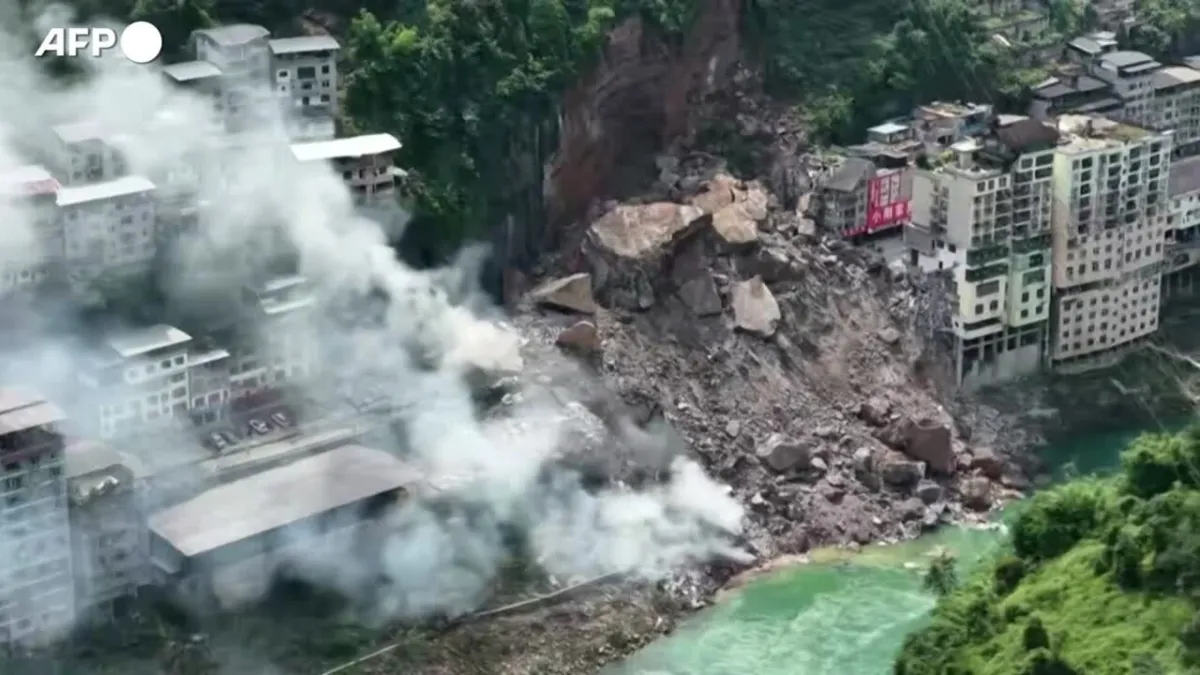
PENGSHUI — A devastating landslide struck Pengshui County, China, in early May 2026, claiming at least eight lives and leaving thirty-four others reported missing. This tragic incident triggered a rapid response from local authorities, deploying combined rescue teams to race against time in search of victims buried under the debris.
A massive volume of soil and rocks suddenly collapsed from a steep hillside, engulfing several densely populated rural settlements. The unfortunate event occurred after the region experienced prolonged heavy rainfall for several days, a condition that frequently increases the risk of soil destabilization in mountainous areas.
Search and rescue teams, comprising military personnel, police, and volunteers, faced extremely difficult terrain. Access to the primary landslide site was hampered by rubble and thick mud, necessitating the use of heavy equipment and extremely careful manual handling. The sound of sirens and the roar of machinery filled the valley, signifying tireless search efforts.
The Chongqing Provincial Government, which oversees Pengshui County, immediately established an emergency task force. The Head Governor, in an official statement, expressed profound condolences to the victims and guaranteed that all resources would be mobilized for rescue and recovery operations. The primary priority currently is to evacuate any potential survivors and identify recovered bodies.
"We will not give up until every last possibility of finding survivors has been explored," said a spokesperson for the rescue team at the scene, voicing the determination of the officers working amidst the threat of secondary landslides. Other challenges, such as unpredictable weather, added to the complexity of the situation.
Residents successfully evacuated from the danger zone were placed in temporary shelters. They recounted harrowing moments when the ground trembled and a deafening roar tore through the morning's tranquility. Many lost family members and their possessions in an instant. Deep trauma now haunts the affected community.
Landslide disasters are indeed a serious threat in many regions of China, especially in mountainous and highland areas prone to erosion. Although the government has undertaken various mitigation efforts, such as building retaining infrastructure and early warning systems, the forces of nature are often difficult to predict and entirely avoid.
Geologists and hydrologists have also been deployed to the site to assess soil stability and potential further hazards. Thorough analysis is required to prevent similar incidents in the future and provide recommendations for permanent relocation if necessary.
Humanitarian aid has begun to arrive from various non-governmental organizations. Assistance in the form of food, clothing, and medical supplies is urgently needed for the survivors and the tirelessly working rescue teams. National solidarity is evident in the response to this tragedy.
Rescue operations are expected to take days, even weeks, given the scale of destruction and the significant number of missing persons. The international community has also extended its condolences and offered assistance to China amid the profound grief over this natural disaster. Long-term recovery efforts will be the next focus after the emergency phase concludes.