 Demian Sahputra

BAGNOLET – Georges-Politzer College in Bagnolet, Seine-Saint-Denis, France, was forced to close all operations on Wednesday due to a non-potable water supply problem that has persisted for several months. This sudden decision comes after prolonged inaction in addressing critical sanitary conditions that endangered the health of hundreds of students and staff at the educational institution.
This emergency situation came to light after internal reports indicated that tap water throughout the school facilities had long failed to meet safety standards for drinking or basic sanitation use. Although the problem had been known to school authorities for a significant period, concrete steps to resolve it had not been taken until the temporary closure was triggered.
The closure of the college, located on the eastern outskirts of Paris, will allow for large-scale repair and cleaning operations. This is a last-resort effort to address the source of water contamination, which has not yet been clearly identified. Naturally, this decision raises deep concerns among parents and the local community regarding health standards in public facilities.
Many parents expressed disappointment over the slow response from the relevant authorities. A parent, who wished to remain anonymous, stated, How could our children be exposed to health risks for so long? This is not the first time school infrastructure issues have been highlighted in France. This incident adds to a long list of problems plaguing the French education system, which has previously seen waves of protests and school blockades in various regions.
Although specific details regarding the type of water contamination have not been officially released, initial indications suggest the presence of bacteria or other harmful substances making the water unsafe for consumption. Regional health authorities have been involved in conducting in-depth testing and recommending mitigation measures.
The local government of Seine-Saint-Denis is now under pressure to explain why the problem was not addressed sooner. Questions about the oversight and maintenance of educational infrastructure in the region have become a public spotlight. We will ensure a thorough investigation is conducted to determine the root cause and who is responsible for this negligence, stated an official from the Seine-Saint-Denis Departmental Council in a written statement.
This scandal is a reminder of the various challenges facing the education sector in France, from teacher shortages to deplorable building conditions. Similar issues have emerged in several educational institutions, fueling calls for reform and increased budget allocation for facility maintenance.
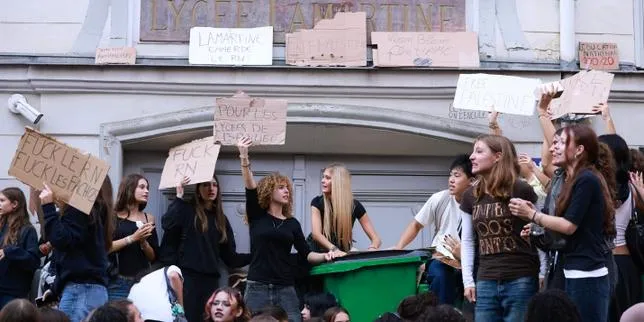
The situation at Georges-Politzer College is not an isolated case. In recent years, France has faced criticism over underinvestment in school infrastructure, which directly impacts students' learning environments. Cases of school chaos and lycee blockades due to various student demands clearly indicate structural problems that need to be addressed.
It is hoped that this temporary closure can serve as a moment for relevant parties to not only fix the water problem but also to comprehensively evaluate all aspects of safety and health in the school environment. The primary priority must be the health and safety of students and educators.
The public demands full transparency regarding the investigation results and long-term plans to prevent the recurrence of similar incidents. Strict oversight from both central and local governments is absolutely necessary to ensure that every educational institution meets minimum operational suitability standards.
Editorial Insight: The non-potable water incident at Georges-Politzer College is not merely a sanitation issue but a reflection of potential vulnerabilities in France's public infrastructure. The authorities' slow response underscores the need for more stringent oversight mechanisms and adequate maintenance budget allocation. This case has the potential to spark further national debate about education budget priorities and official accountability, especially given the recently highlighted conditions of the French education system.