 Dorry Archiles
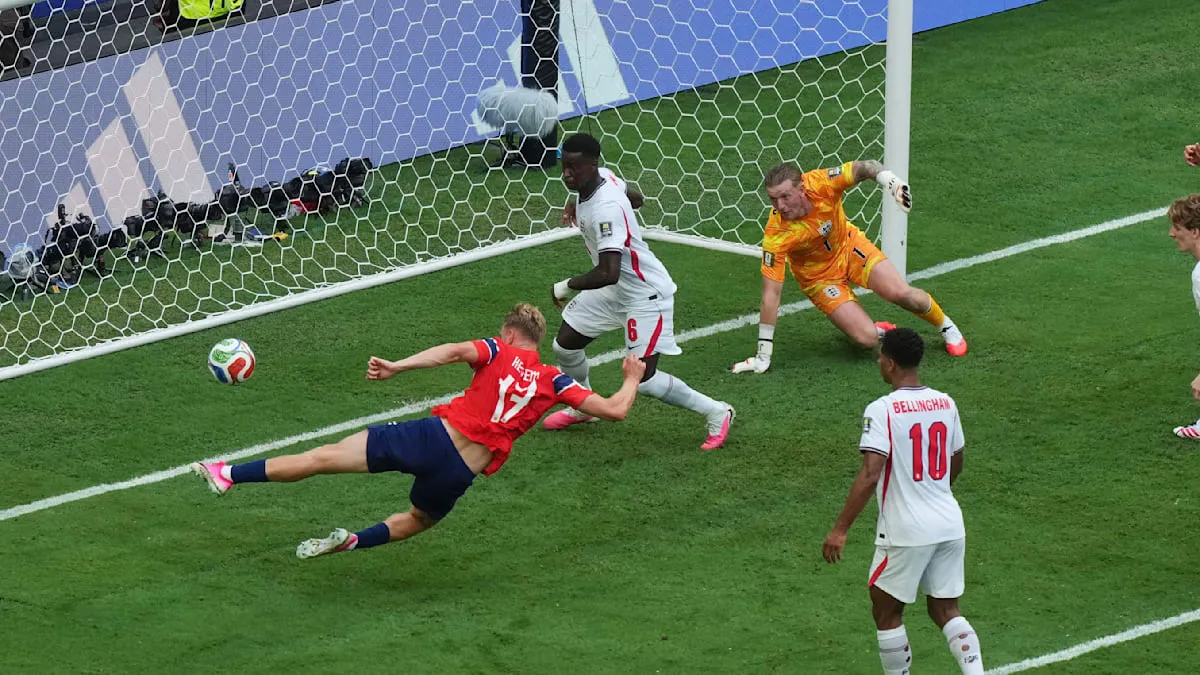
DOHA — A goal scored by Norway in the 55th minute during a crucial 2026 World Cup match against England was disallowed by the referee after a Video Assistant Referee (VAR) review identified a foul committed by their star player, Erling Haaland. This incident instantly altered the course of the game and sparked intense debate regarding the accuracy of technology's decisions in football.
Initially, the entire stadium and Norwegian supporters cheered, celebrating what they believed was a second goal that would put them ahead. However, their joy was short-lived as the head referee received a signal from the VAR room to review the goal's buildup.
The meticulous replay revealed that Erling Haaland had pushed an English defender just before receiving a cross and striking the ball into the net. The push was deemed significant enough to affect the defender's position and ability to anticipate the play.
The decision to disallow the goal automatically reset the score to a draw, giving a new lease of life to the English national team, which had previously been under pressure. This moment became a critical turning point that dictated the direction of the remainder of the 2026 World Cup quarter-final match.
Reactions from the Norwegian camp were mixed. Manager Stale Solbakken appeared frustrated on the sidelines, while Haaland himself seemed in disbelief at the decision. They felt that the push was a normal part of battling for the ball in the penalty area.
However, the referee adhered to a strict interpretation of FIFA rules, where any foul affecting the scoring process, no matter how minor, must be penalized. This decision was consistent with the enforcement of VAR regulations throughout the 2026 World Cup tournament.
This incident adds to the growing list of controversies surrounding VAR implementation in modern football, especially in a major event like the World Cup. The debate over objectivity and subjectivity in interpreting minor incidents on the field continues to be a focus for pundits and football fans alike.
For England, the disallowed goal was certainly a significant advantage. They were able to capitalize on the momentum to refocus and develop more effective attacking strategies. The outcome of this match, as highlighted in our previous report, “Bellingham’s Magic Carries England to 2026 World Cup Semifinals!” proves how small incidents can affect a team's fate in the pinnacle tournament.
On the other hand, Norway had to swallow a bitter pill. What should have been a morale-boosting moment turned into demoralization. Their hopes of making further history at the 2026 World Cup, previously described with the title “Norway Shakes 2026 World Cup: Haaland Threatens England in Quarterfinals!”, now face a tough challenge.
Nevertheless, this incident reaffirms the crucial role of VAR technology in maintaining fairness in matches, while also serving as a reminder that critical decisions can occur and change a team's destiny in the blink of an eye. This 2026 World Cup drama will undoubtedly be a hot topic among global football enthusiasts.