 Chris Robert
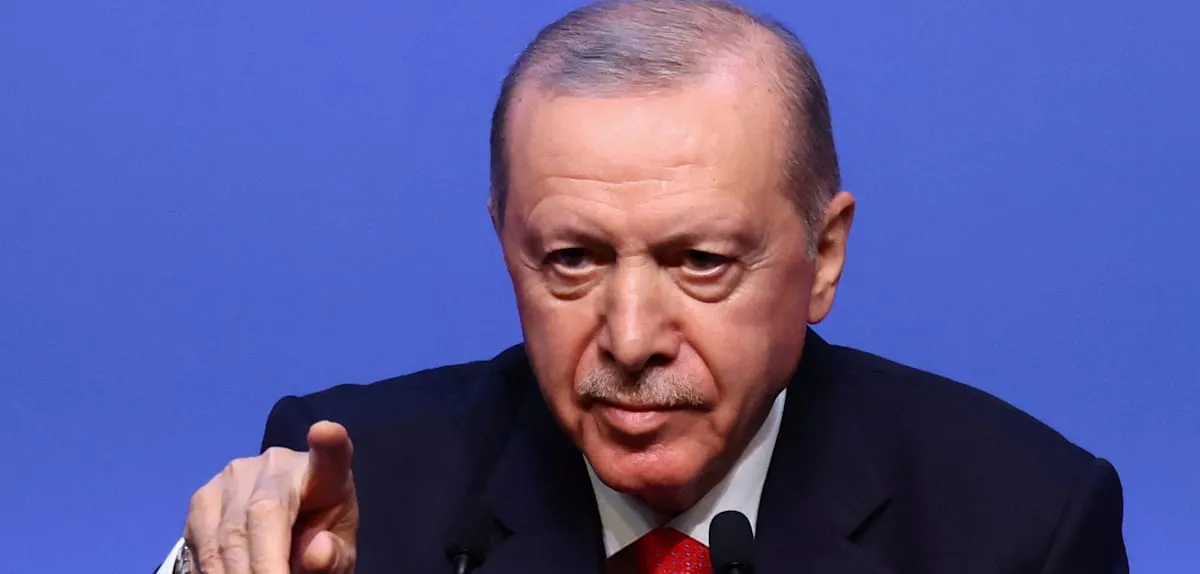
WORLD — A diplomatic gesture by Turkish President Recep Tayyip Erdogan caused global astonishment in 2026, after he was reportedly found to have presented several heads of government with revolvers and ammunition. British Prime Minister Keir Starmer was among the first to reveal this unusual incident to journalists on his flight home, with a German government spokesperson later confirming that a similar gift for the German side would be handed over to the embassy. This incident sparked widespread discussion regarding international diplomatic protocols and the meaning behind such a symbolic choice of gift.
News of this unexpected gift first emerged from the press corps accompanying Prime Minister Starmer, generating speculation and questions among international relations observers. It is no secret that state gifts typically consist of art, books, local handicrafts, or items symbolizing friendship and culture. Therefore, the choice of firearms as a diplomatic souvenir is considered highly unconventional.
London views this gesture as a serious matter. "Prime Minister Starmer shared information regarding this unique gift with reporters on his flight back to the UK," stated a source close to the Prime Minister's delegation. Although specific details about the revolver model and ammunition type have not been released, the presence of such weapons raises debates about security implications and diplomatic ethics.
A similar reaction came from Berlin. A German government spokesperson promptly issued a clarification. "In accordance with standard procedures, the revolver received by our government representative will be officially handed over to the embassy. Such an item is not for personal use," the spokesperson affirmed, highlighting the strict handling of sensitive diplomatic gifts. This procedure ensures that any gifts received by state officials adhere to applicable legal and security regulations.
History of diplomacy has indeed recorded various forms of gifts, from horses to elephants. However, gifts of firearms, especially revolvers with ammunition, are rare in the modern era and often raise questions about any hidden message intended. International political analysts suggest this could be an assertion of Turkey's firm position as a regional power.
President Erdogan, known for his bold and sometimes controversial leadership style, might see this as an expression of strength or a symbol of protection. However, the perception in Western countries could be different, viewing it as an action less aligned with softer, peace-promoting diplomatic norms.
Some security experts also voiced concerns. The transfer of weapons, even as a symbolic gift, could be interpreted as a disregard for global efforts to control weapons proliferation. This raises questions about how recipient nations should address gifts that inherently may conflict with their disarmament or firearm control policies.
Although this gift was intended for "heads of government," there is no complete list of recipients other than Prime Minister Starmer and the German representative. This situation adds to the mystery and fuels further speculation about the context of the gift-giving, whether it occurred during bilateral meetings, multilateral conferences, or specific events.
Amidst the dynamics of global geopolitics, where issues of security and peace are critically important, such a gesture naturally draws public and media attention. This article will be a hot topic of discussion in various international forums, including its potential implications for Turkey's relations with the European Union and other Western countries.
The context of this gift can also be viewed from the perspective of complex alliances and international relations. Turkey, as a NATO member, holds a unique strategic position. Discussions surrounding this gift might relate to how countries like Italy and the United States perceive relationships with allies amid global dynamics. For instance, debates about NATO commitments or the direction of US politics towards Europe, as previously discussed in articles like "Meloni Shakes NATO: Italy Urges New Priorities for Sustained Commitment 2026" or "Expert Analysis: Trump's Political Direction Moves Away from Europe, NATO Shaken 2026?", could be relevant in understanding the broader background of Erdogan's diplomacy.
Diplomats are now faced with the task of interpreting the true intent behind this gift. Is it merely a cultural peculiarity that has been misunderstood, or is there a deeper message regarding Turkey's independence and military strength? Whatever the interpretation, this event has marked a new chapter in the history of unusual diplomatic gift exchanges.
The Turkish government itself has not issued an official statement explaining the motives behind the gift of revolvers and ammunition. However, the lack of explanation only strengthens the narrative of mystery and fuels debate at various levels, from parliaments to the dinner tables of ordinary citizens following world news developments.