 Debby Wijaya
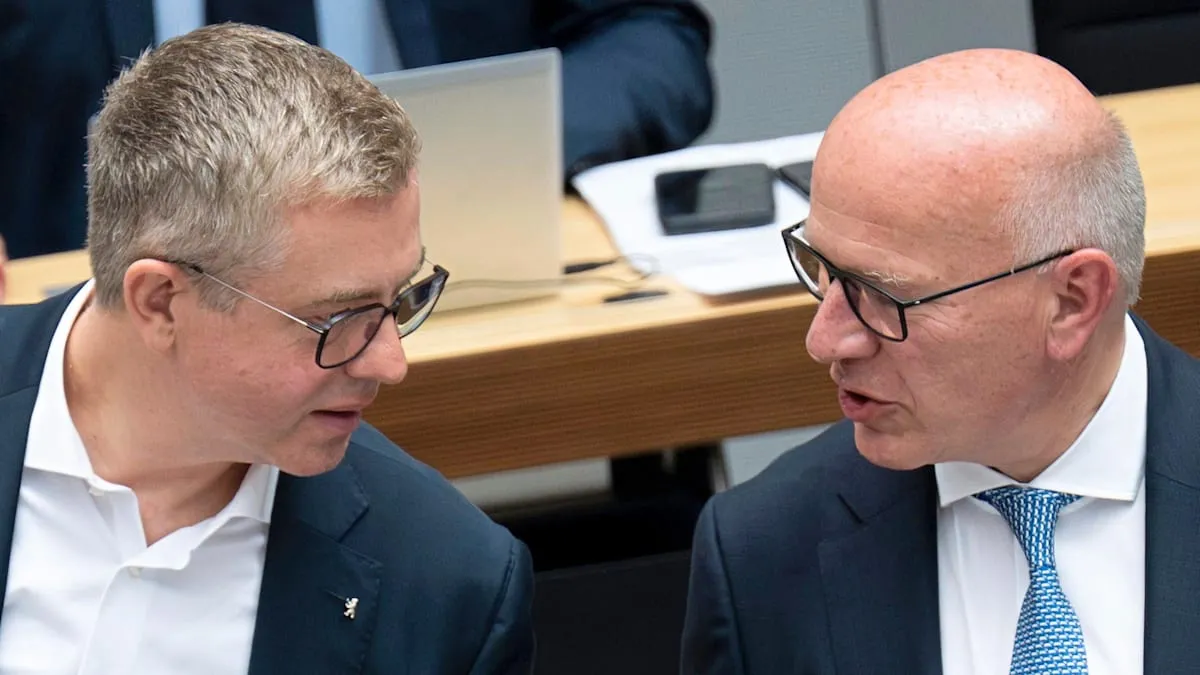
BERLIN — Kai Wegner's surprising resignation from the top leadership of the Berlin CDU has triggered a wave of questions regarding the party's future, placing Stefan Evers in a highly crucial position. Evers now bears significant responsibility for restoring stability and defining the party's strategic direction amidst the political turmoil in Germany's capital city in 2026. This situation is not merely a change in leadership but a reflection of deep-seated internal challenges.
This leadership crisis occurs as the Berlin CDU faces a crossroads. Wegner's decision to step down has created a vacuum that demands a swift and strategic response, especially given the increasingly complex political dynamics leading up to the upcoming general election. The party must quickly find new footing to maintain its relevance in the public eye.
Pascal Biedenweg, from the editor-in-chief's desk at Berliner Morgenpost, underscored the urgency of a change in approach. “It will be about steering the election campaign towards content,” Biedenweg stated, highlighting that focusing on substance is far more important than empty rhetoric. This statement indicates that the CDU's political narrative must be updated to resonate with public aspirations.
Stefan Evers, now a central figure, is required not only to unite factions within the party but also to formulate a coherent vision. This burden makes him the most crucial figure in efforts to restore voter confidence. The initial steps of his leadership will largely determine the trajectory of the Berlin CDU in the competitive political landscape.
One of Evers' biggest tasks is to overcome public perception of the CDU post-Wegner. Political analysts predict that this transitional period will be fraught with challenges, given fluctuating voter sentiment and pressure from opposition parties. Failure to navigate this difficult time could be fatal for the party's political ambitions.
The Christian Democratic Union (CDU) in Berlin is not only grappling with leadership issues. They also face a broader identity crisis, as highlighted in a related article on German Political Stagnation: The Roots of Crisis and National Decline in 2026. Evers' challenges extend beyond internal party matters; he must address macro issues affecting the entire political order of the country.
The content-based campaign mentioned by Biedenweg implies the need for concrete programs that can offer solutions to the real problems of Berlin citizens. Issues such as housing, transport, environment, and the local economy must be top priorities. This approach is expected to win back voters who may be disappointed or apathetic.
Evers has an opportunity to redefine the image of the Berlin CDU. This is not just about managing the political legacy left by Wegner, but also about shaping a new narrative that is progressive and inclusive. This transformation requires bold leadership and the ability to articulate collective hopes and ambitions.
The political future of Berlin will largely depend on how Stefan Evers manages this transition. Will he be able to turn crisis into opportunity? This question will be answered as the Berlin CDU formulates its strategy and communicates with its constituents in the coming months. Public and media scrutiny will be intense.
2026 is a crucial year for the Berlin CDU. With elections fast approaching, pressure to demonstrate tangible performance and a clear direction will intensify. Evers' success will be measured not only by his ability to win votes but also by his capacity to revitalize and strengthen the party's ideological foundations.
The change in leadership at the Berlin CDU also has implications for the broader governing coalition in Germany. Regional political stability often reflects national political conditions. Therefore, the steps taken by Evers will be closely watched by political observers nationwide.
This is a defining moment for Stefan Evers and the Berlin CDU. His capability in managing the political “debris” left by Wegner will be a real test of his leadership. Only with a sharp focus on content and a strong commitment to restoring public trust can the party hope to rise again.