 Angel Doris
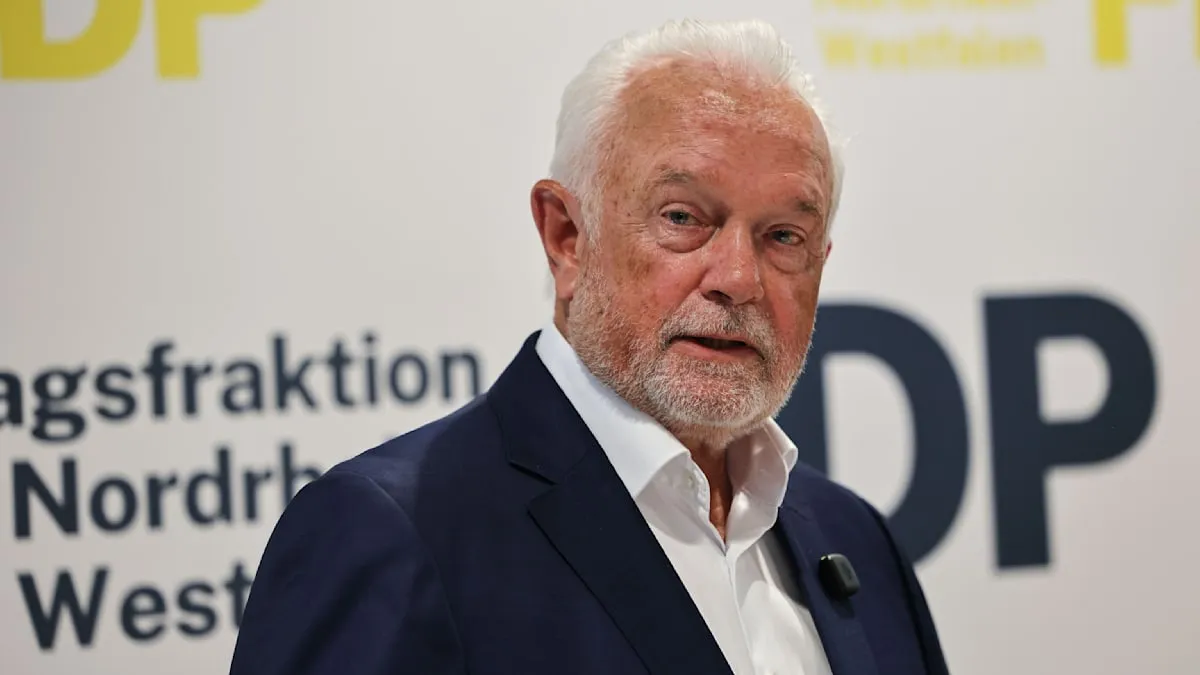
BERLIN — Leader of the Free Democratic Party (FDP), Wolfgang Kubicki, launched a scathing attack on the Christian Democratic Union (CDU), accusing politicians of the conservative party of practicing double standards that erode public credibility. This sharp criticism primarily highlights a shift in stance on sensitive issues such as surrogacy, where former Health Minister Jens Spahn has become the focal point of the political ethics debate.
This controversy emerged amidst Germany's political dynamics in 2026, as the ruling coalition and opposition continually clash over various fundamental policies. Kubicki asserted that political elites, especially those in power, frequently exhibit hypocrisy in addressing the moral norms they themselves proclaim.
"This is morally reprehensible," Kubicki stated, referring to what he perceives as hypocrisy within the CDU. This statement directly attacks the ethical foundations often championed by the center-right party.
He specifically named Jens Spahn, a CDU figure who previously held firm views on several social issues. According to Kubicki, Spahn's change of heart on the issue of surrogacy does not reflect a credible or consistent shift aligned with the principles he once espoused.
Kubicki did not hold back his disappointment. He openly accused a widespread pattern within the Union, comprising the CDU/CSU group. "In the Union, it seems prevalent that when one is in power, they can afford more than ordinary citizens," Kubicki emphasized, describing a perceived moral privilege exercised by politicians at the height of their power.
This statement is not merely a personal attack but also a systemic critique of how politics is conducted among the elite. The issue of German political credibility has indeed been under scrutiny, especially after several incidents that have eroded public trust.
The consequences of these accusations could be significant. The CDU, currently striving to maintain its dominance in the German political arena, now faces serious questions regarding the integrity and moral consistency of its members.
Kubicki's criticism has the potential to inflame political tensions ahead of upcoming regional elections, and influence public perception of established parties. The public demands transparency and honesty from their leaders, particularly concerning fundamental societal values.
The issue of surrogacy itself is a highly complex topic in Germany, involving deep ethical, legal, and social dimensions. Debates over its legality and morality continue, with various conflicting viewpoints.
Kubicki's comments place Germany's political dynamics under a sharp spotlight. How the CDU will respond to these accusations of double standards will be a crucial indicator for the future of their leadership and the policy direction they will take.
BERLIN — The statement by FDP leader Wolfgang Kubicki, accusing CDU politicians of having "double standards," has sparked a heated debate in German politics, particularly highlighting their stance on ethical issues such as surrogacy. Kubicki targeted Jens Spahn, the former Health Minister, questioning the credibility of his changed views on this sensitive matter.
During a press conference held in the German capital, Berlin, Kubicki firmly stated that such political behavior is "morally reprehensible." These comments come amidst a series of challenges faced by the CDU, including shifts in political dominance and increasing pressure from opposition parties.
Kubicki, known for his outspoken communication style, did not hesitate to criticize what he termed "the privilege of power." He claimed that politicians within the Union feel they can "allow themselves more than ordinary citizens" when in government. This reflects a growing public perception of a gap between political promises and actual practices.
This attack is not an isolated incident; it is part of a larger narrative concerning political integrity and the increasingly high demands for accountability from the public. When issues like surrogacy touch upon society's moral core, the consistency of political leaders becomes crucial.
The CDU's reaction to Kubicki's accusations is expected to be varied. Party leaders will likely dismiss the allegations as a political maneuver, but public pressure for substantial clarification will be immense.
The issue of surrogacy, in particular, involves complex questions about human rights, reproductive ethics, and legal frameworks. Any change in stance by a senior politician like Spahn will always be subject to scrutiny and criticism.
Kubicki's criticism also serves as a reminder of the importance of transparency in politics and the dangers of hypocrisy that can erode democratic trust. In an increasingly fragmented political landscape, integrity is an invaluable currency.
This debate will not only shape public opinion of the CDU and FDP but also contribute to a broader discourse on the ethics of power in Germany. This is a crucial moment that tests the commitment of parties to the principles they uphold.