 Stefani Rindus
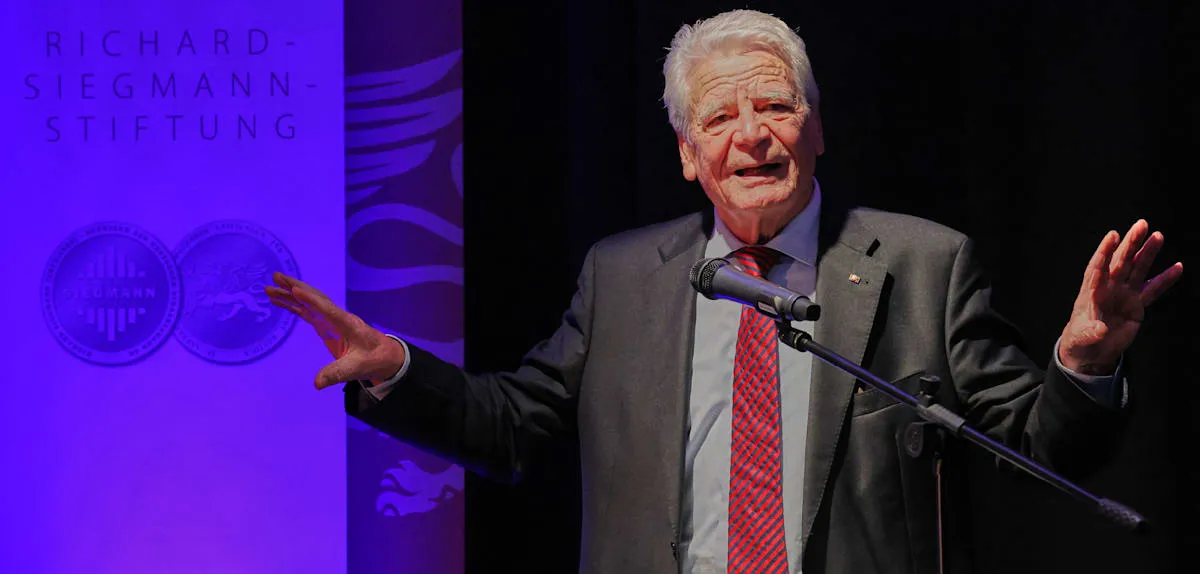
BERLIN – Former German Federal President, Joachim Gauck, recently issued a stark warning about the significant potential for loss of public trust. This warning comes amidst slow reform processes and prolonged political compromises, urging those in power to re-implement stringent governance if they do not want public confidence to erode. His statement resonates strongly in the German political landscape of 2026.
Gauck, a respected figure known for his moral integrity, emphasized that the foundations of democracy will falter if citizens feel their leaders are unwilling to make difficult decisions. According to him, political courage is an absolute prerequisite for moving forward, especially when facing complex challenges.
Gauck's criticism targets a pattern often seen in policymaking, where various parties engage in endless negotiations, often sacrificing the essence of reform for partial consensus. This condition, in turn, creates an impression of stagnation and indecision in the public eye, leading to collective frustration.
He explained that trust cannot be bought but is built through tangible actions and consistent leadership. When political promises become mere rhetoric without concrete implementation, the gap between the government and the people widens. This is crucial in 2026 when many countries, including Germany, face significant economic and social pressures.
If compromise becomes an end in itself, not a tool to achieve better solutions, then we lose the essence of effective leadership, Gauck stated, underlining the urgency of real action. He observes that many important reforms often fail not due to a lack of ideas, but due to the absence of political courage to see them through.
Public trust is an invaluable asset for any democratic government. Without legitimacy derived from the people's trust, policy implementation, even the most urgent ones, will face massive resistance and delegitimization.
This situation can also be linked to Germany's internal political dynamics, where cross-party support and neutrality are often hotly debated. As seen in reports on cross-party support for Aigner and neutrality issues highlighted by the AfD in 2026, the complexities of domestic politics require consistent assertiveness. Read more about these political dynamics here.
His statements are also relevant to various political upheavals, including calls for the resignation of a Linke Berlin politician over controversial statements threatening the coalition. The incident highlights the fragility of trust in the German political landscape.
Gauck reminded that stringent governance is not synonymous with authoritarianism. Instead, it is about the ability to make clear, transparent, and responsible decisions, even if those decisions are unpopular in the short term. It is about prioritizing the country's long-term interests over immediate political calculations.
The consequences of losing public trust are immense. It not only weakens political institutions but can also trigger social polarization, instability, and even voter apathy. In the long run, this threatens the very foundation of democracy.
Therefore, Gauck calls on current leaders to re-evaluate their approach to governance. Priority must be given to efficiency, courage, and honest communication with the public about the challenges faced and the solutions proposed. Only then can democracy be strengthened and public trust restored amidst the global complexities of 2026.
Editorial Insight: Joachim Gauck's warning is a reflection of a universal challenge facing many democratic nations today: how to balance political consensus with the need for decisive and swift action. In Germany, with its complex coalition system, the friction between reformist idealism and political pragmatism often results in sub-optimal policies. Gauck's statement serves as a critical reminder that true leadership demands more than merely managing compromises; it requires vision and the courage to shape the future, especially in the years to come. If ignored, this warning could become a catalyst for significant shifts in the political and social landscape.