 Dodi Irawan
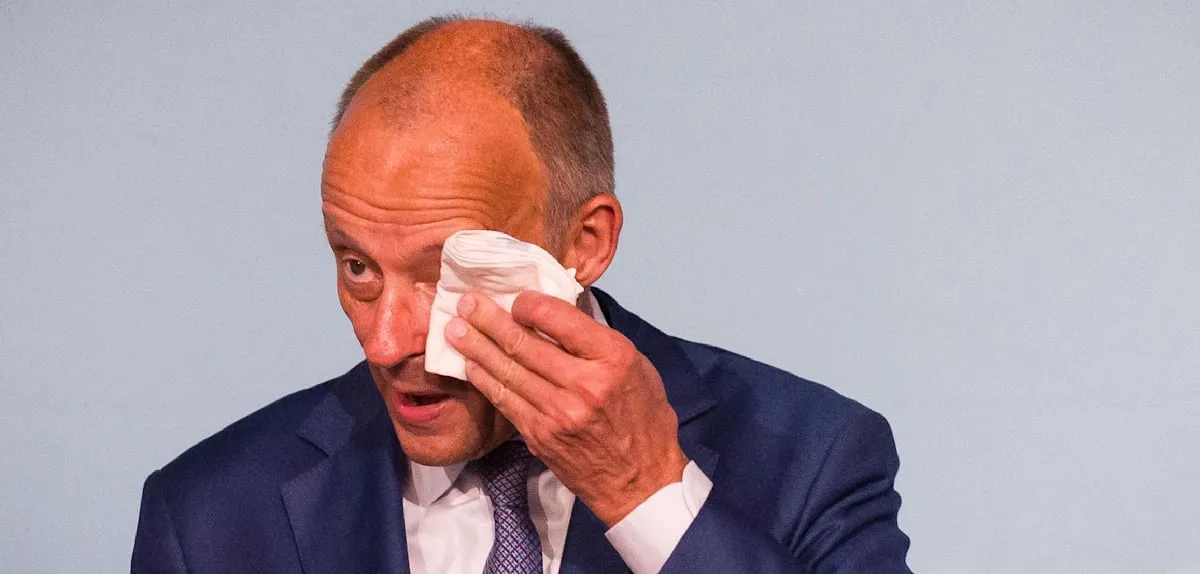
HANNOVER – The German Chancellor launched a scathing attack on the Alternative for Germany (AfD) party at the close of a tense election campaign week, asserting a firm resolve not to let anyone undermine the nation's integrity. This pivotal moment unfolded at Hannover Airport, a venue witnessing the consolidation of political forces ahead of the electoral contest.
'We won't let these people talk our country into ruins,' declared the Chancellor unequivocally, underscoring the urgent need to protect fundamental values and national integrity from what is perceived as a destructive threat. This statement immediately resonated, sparking widespread public discussion.
Alongside the Chancellor, the leader of the Christian Democratic Union (CDU), Friedrich Merz, also seized the platform to deliver 'Kampfansagen,' or clear political declarations. Merz's presence attracted a significant audience, especially given that the CDU's previous campaign week seemed sluggish and did not prominently feature its leader.
The campaign week, described as a 'lausige Wahlkampfwoche' or poor campaign week, indicated significant challenges faced by the CDU. The party's strategy of seemingly 'hiding' their chancellor during that period fueled speculation and questions about the effectiveness of their political tactics. However, the Hannover appearance marked an attempt at revitalization.
The strong condemnation of AfD is not without reason. The far-right party has seen a significant surge in support in several German regions, triggering concerns among established parties regarding policy direction and democratic stability. Issues of immigration, economy, and national identity often form the core of AfD's rhetoric.
Political observers believe that this open attack by the Chancellor is a strategy to curb AfD's momentum and reinforce the image of centrist parties as the frontline guardians of democracy. It also sends a strong signal that traditional parties will not remain passive in the face of populist narratives.
Friedrich Merz, with his extensive political experience, appeared determined to use this opportunity to demonstrate strong leadership. With a large crowd at Hannover, he aimed to reverse public perception of the CDU's campaign performance, which was previously deemed less impactful.
The gathering in Hannover serves as an important barometer for current German political dynamics. With general elections drawing closer, every statement and gesture from political leaders carries significant weight on voter preferences. The battle of narratives becomes exceptionally crucial.
Political tension in Germany is not new. The dynamic between major parties and AfD has often led to polarization. However, the intensity of the Chancellor's condemnation reflects deep concern over the potential impact of AfD on governmental structures and society.
The German public now awaits AfD's reaction to this sharp criticism and how political dynamics will evolve through the remainder of the campaign. Germany's democratic strength will be tested in confronting various extreme political views and ensuring the democratic process continues within constitutional bounds. For further context on the political situation in Germany, also read Germany Heats Up: Democracy in Saxony-Anhalt Threatened by Pre-Election Riots.
This situation is reminiscent of fierce debates also occurring in various other European countries, where established parties are striving to respond to waves of populism. Germany, as the largest economy in the European Union, plays a vital role in maintaining regional political stability.
Furthermore, this battle of ideas also tests the capacity of mass media to present balanced and educational information. The duty of journalism is to ensure the public has access to diverse perspectives without being provoked by divisive rhetoric.
The roles of leaders like Merz and the Chancellor are crucial in navigating this complex political landscape. They must be able to articulate a clear vision for Germany's future, while effectively fending off threats to democratic principles and unity.
Ultimately, the outcome of the upcoming elections will largely determine the direction of German policy, both domestically and within the framework of the European Union. This is not just about the struggle for power, but an ideological battle that will shape the nation's identity for years to come.
Editorial Insight: The Chancellor's strong denunciation of AfD, supported by Friedrich Merz's presence, is a clear indication that Germany's mainstream parties are taking the electoral threat from the far-right increasingly seriously. This speech in Hannover is more than just standard campaign rhetoric; it's a declared intention to proactively defend the foundations of German democracy. The long-term impact will depend on the ability of these parties to translate rhetoric into effective strategies to draw voters away from AfD, and the consolidation of power in parliament post-2026 elections. This also reflects a tactical shift from passive to more aggressive engagement with populist challenges.