 Angela Stefani
BERLIN – German Chancellor, Friedrich Merz, is set to lead an emergency summit on Sunday, January 12, 2026, alongside state premiers and leading politicians from the Christian Democratic Union (CDU). This summit was convened in response to the state of democracy in the country, described as a 'bad week' amidst growing concerns over the expanding influence of radical groups. This crisis demands a swift and coordinated response from policymakers.
This crucial meeting aims to formulate a comprehensive strategy to stem the tide of extremism threatening the fundamental pillars of Germany's political order. This development follows a series of incidents and heated debates indicating deepening social and political fragmentation across the nation.
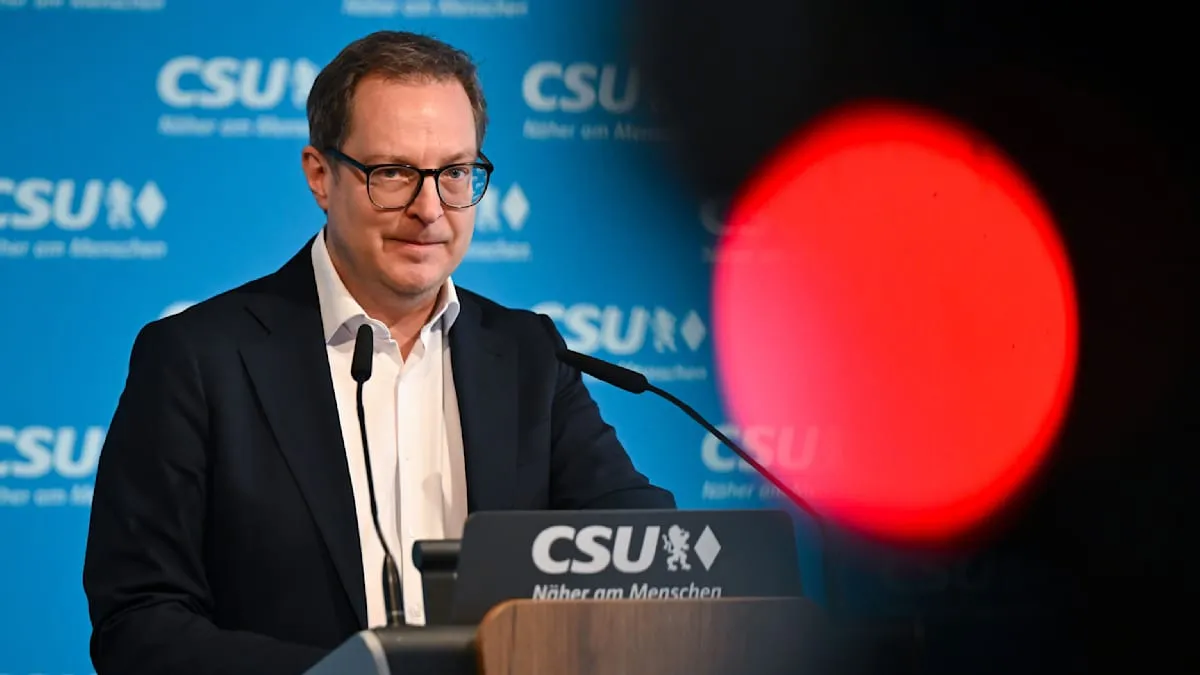
Christian Social Union (CSU) Secretary General, Martin Huber, emphasized the importance of proactive measures. The best recipe against the strengthening of radical groups is to reinforce the country's foundations, he stated. Huber's remark highlights the urgency of a holistic approach that not only focuses on law enforcement but also on strengthening economic and social structures.
Concerns about radicalization are not new in Germany. Previous incidents, including public demonstrations and confrontations, have sparked serious debates about tolerance and inclusivity. This situation is compounded by reports of AfD being confronted by crowds at the tragic anti-Semitic Halle commemoration, indicating an escalation of tensions.
Germany's economy, which has recently shown signs of slowdown, is also an integral part of this discussion. Latest data indicates that SME investment has fallen to its lowest in two decades, creating an uncertain climate that can be exploited by populist groups. Economic stability is considered crucial to prevent people from turning to extreme solutions.
Chancellor Merz, also the leader of the CDU, is expected to use his authority to unite moderate political forces. This meeting is not merely about addressing symptoms but also seeking the root causes of public dissatisfaction and the proliferation of radical narratives.
Issues such as economic disparity, social integration, and even Germany's worrying digital connectivity often provide fertile ground for radical propaganda. Responsive and inclusive public policies are believed to be the most effective bulwark against division.
The KTT agenda includes in-depth discussions on concrete measures, which may involve:
- Strengthening deradicalization programs in communities.
- Increasing investment in civic education.
- Reforming economic policies to create jobs and reduce inequality.
- Enhancing cross-party collaboration to address common challenges.
This step demonstrates the seriousness of the German government in upholding its democratic principles. However, the challenges faced are immense, given the complexity of factors contributing to the strengthening of radical groups.
The German public awaits concrete outcomes from this meeting, hoping for long-term solutions that can restore trust in democratic institutions and foster social cohesion. The future of German democracy hinges on the ability of its leaders to act decisively and unite in confronting this internal threat.
Editorial Insight: The emergency meeting led by Chancellor Merz reflects a profound level of concern among Germany's political elite regarding the erosion of democratic values. The strengthening of radical groups, as indicated by various incidents and political scandals, is not just an ideological threat but also has tangible economic and social impacts. The success of this summit will largely depend on the leaders' capacity not just for rhetoric, but also for formulating and implementing policies that genuinely address the root causes, rather than merely reactive responses. Germany's stability is a crucial barometer for the European Union as a whole, so every step taken will be closely observed by the international community.