 Robert Andrison
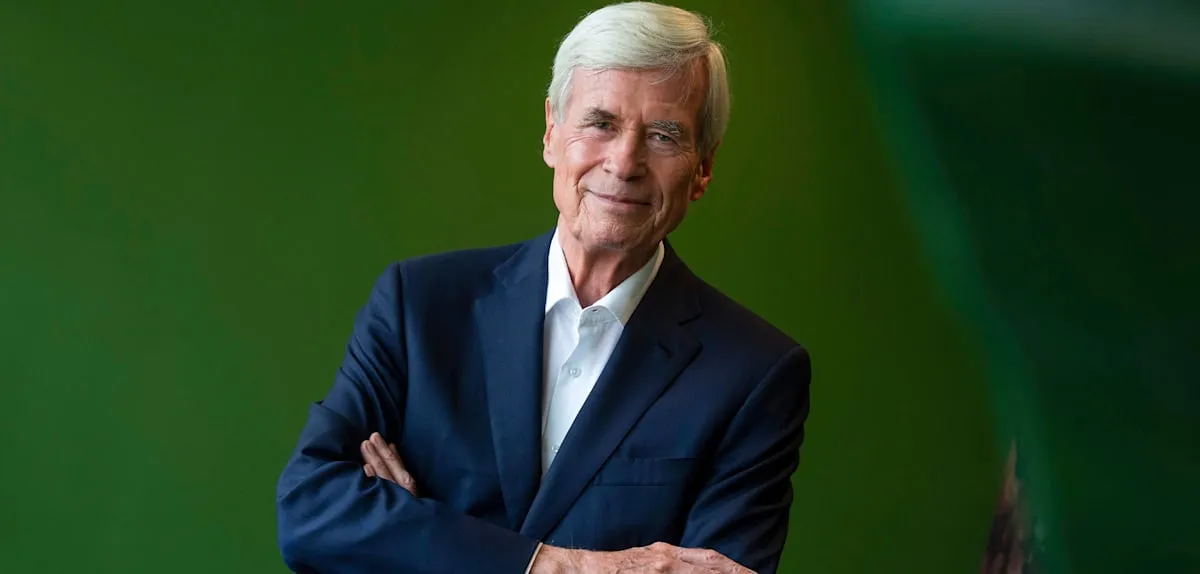
BERLIN — Prominent German entrepreneur, Michael Otto, has voiced deep concerns regarding the potential impact of a state government led by the Alternative for Germany (AfD) party. Otto, a long-time leader of the Otto Group retail conglomerate, asserts that current political trends in Germany are partly worrying and urges all parties to understand the long-term consequences of political extremism. This warning emerges amid an increasingly polarized German political landscape ahead of regional elections in 2026, sparking widespread debate about the future of the nation's democracy and economy.
Otto specifically highlights what he describes as “trends that are partly bedenklich” or worrying. According to him, the political shift towards populist forces could undermine the economic and social foundations Germany has built over decades. The threat to internal stability is seen as a serious risk to the investment climate and market confidence.
In his statement, Otto acknowledges that the term “Brandmauer” or firewall, often used to describe the isolation of the AfD, might be “ungeschickt” or awkward. However, he emphasizes that the essence of caution towards the AfD is crucial for maintaining Germany's political integrity.
The concept of “Brandmauer” in the German political context refers to an unwritten consensus among mainstream democratic parties not to cooperate or form coalitions with extremist parties, such as the AfD. Otto argues that regardless of the chosen terminology, the principle of maintaining these ideological and cooperative boundaries must be firmly upheld to protect basic democratic values.
Otto asserts a series of “red lines” that must not be crossed in any political interaction with the AfD. These red lines include a commitment to the constitution, human rights, and free-market economic principles based on openness and innovation. He warns that compromising these values could have irreversible consequences.
Otto's warning is inseparable from his position as a business leader who understands the direct impact of political policies on the economy. He fears that policies or the political climate created by AfD dominance in some states could significantly hinder investment, innovation, and economic growth. This aligns with recent reports on investment stagnation in the country. This situation is compounded by global pressures, as discussed in the article “Germany's Economy on the Brink: 20% of Companies Withhold Investment Due to High Costs”, indicating existing fragility.
Given the year 2026, attention to the AfD is intensifying ahead of key state elections. The party continues to show increasing support in several regions, particularly in Eastern Germany, raising serious concerns about a potential drastic change in the political landscape.
Otto's warning has sparked further debate among political and business elites on how to deal with this increasingly powerful populist party. Discussions encompass not only political strategies but also ethical and moral implications. For example, the discourse on partial bans against the AfD or certain figures within it, as revealed in the news “Germany Shaken 2026: CSU Thuringia Pushes for Partial AfD Ban, Höcke's Voting Rights Threatened!”, shows the widespread level of concern.
Otto is not the only business figure to speak out. More and more industry leaders feel the need to intervene in political discourse to ensure long-term stability and Germany's credibility as a global economic hub. They view threats to democracy as threats to business and prosperity.
Beyond domestic economic impacts, there are significant concerns about Germany's international reputation. If liberal and democratic values are eroded by political extremism, Germany's position as a European leader and reliable global partner could be jeopardized. This could affect diplomatic relations, trade, and the attractiveness of foreign investment.
Otto implicitly calls for unity among democratic parties to maintain the fundamental consensus that underpins German society. He emphasizes that ideological differences among democratic parties must be overcome for the greater good of preserving democratic integrity and national stability.
The stakes for Germany's future, both economically and in terms of its political identity, are now felt to be higher than ever. The warning from a figure of Michael Otto's caliber underscores the urgency for political leaders and the wider public to seriously reflect on the direction the country will take amidst the challenging political dynamics of 2026.