 Chandra Wijayanto
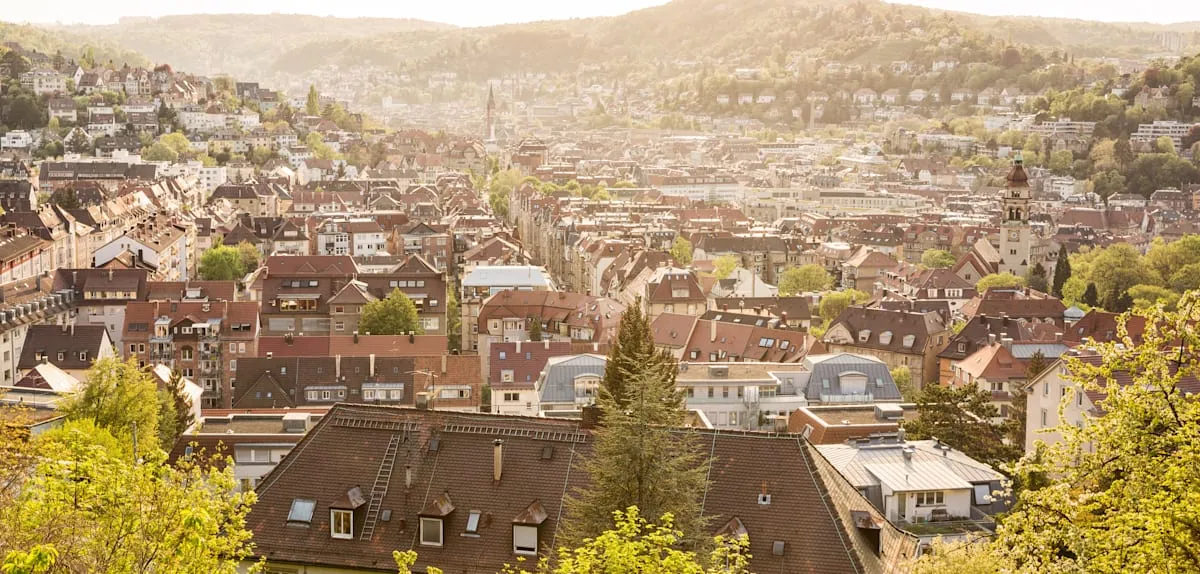
STUTTGART — Germany's property market in early 2026 reveals a significant anomaly. While most regions grapple with rising prices and interest rates, several automotive industry hubs like Stuttgart and Wolfsburg are presenting highly attractive real estate investment opportunities. This phenomenon occurs as property prices in these areas tend to fall, while residents' incomes actually soar, creating ideal conditions for buyers and investors alike.
A real estate market analysis across Germany reveals a concerning trend for conventional buyers. Data from independent property research institutions indicate that a steady increase in mortgage interest rates, coupled with a surge in property selling prices, has drastically reduced purchasing power. Even high-income earners are finding it difficult to secure affordable buying opportunities in major metropolitan centers.
Global and domestic German macroeconomic conditions have exerted considerable pressure on the housing market. Central bank monetary policies, inflation that is not yet fully under control, and limited land supply in large cities collectively contribute to an increasingly challenging investment landscape. This situation compels many prospective buyers to postpone their homeownership plans.
However, an anomaly unfolds at the heart of Germany's automotive industry. Cities that serve as headquarters for leading vehicle manufacturers, such as Mercedes-Benz in Stuttgart and Volkswagen in Wolfsburg, are experiencing a paradigm shift. Here, average household incomes have demonstrated solid growth, driven by the stability and expansion of the automotive sector, which remains vital to the national economy.
In stark contrast, property prices in these regions, encompassing both residential and commercial sectors, are exhibiting a downward trend. Factors such as market adjustments after historical surges, or perhaps anticipation of long-term demographic changes, are believed to be the primary causes of this price correction. This condition creates a unique window where purchasing power increases alongside a decrease in asset acquisition costs.
"This is a rare moment in the German property market," stated Dr. Klaus Richter, a property economist from the University of Frankfurt. "Typically, an increase in income would trigger a rise in property prices. However, in these automotive cities, we are observing a fascinating de-correlation effect, offering significant advantages to those who are astute enough to recognize the opportunity." Dr. Richter also added that this situation differs from other regions in Germany still wrestling with energy challenges and climate policies, such as those currently under dispute in the Constitutional Court regarding the Heating Act.
Investment analysts view this phenomenon as a golden opportunity for both long-term investors and first-time homebuyers. With interest rates still relatively high compared to the previous decade, falling property prices in these cities can substantially reduce the total cost of loans and investments. They advise conducting thorough due diligence before making any decisions.
Local governments in the affected cities are also closely monitoring this trend. There is potential to attract more high-skilled workers seeking economic stability and a good quality of life, along with access to more affordable housing. This could boost population growth and innovation in these regions.
Nonetheless, concerns also exist regarding potential political uncertainties at the national level that could broadly impact investor sentiment. Internal party turmoil and challenges facing Germany's political leadership in 2026 could become risk factors. However, the strong local economic fundamentals in automotive cities are deemed capable of buffering against such volatility.
This opportunity is not limited to the residential sector alone. Investment potential also extends to commercial properties, including office spaces and retail, which stand to benefit from increased purchasing power and local economic activity. Cities like Stuttgart and Wolfsburg are projected to continue driving innovation and job creation, promising bright prospects for discerning investors.
The property market in Germany's automotive cities, therefore, emerges as a beacon amidst national market turbulence. With its unique combination of growing incomes and declining property prices, this region offers a compelling investment narrative worthy of consideration by anyone seeking value and long-term growth in the European economic landscape.