 Demian Sahputra
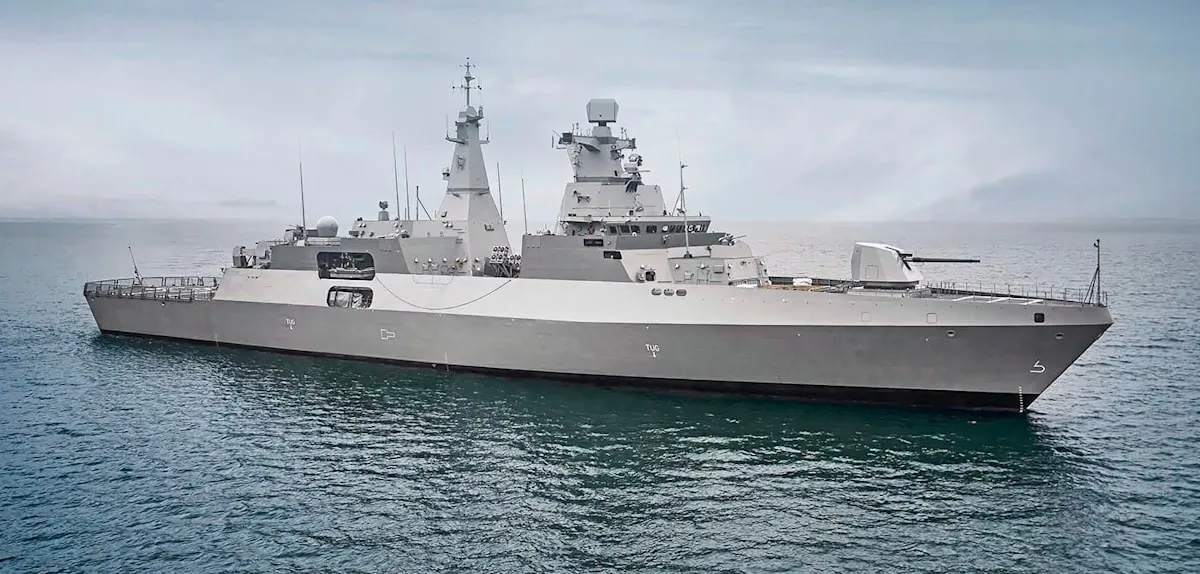
BERLIN — The German Bundestag's Budget Committee has officially approved the allocation of 6.3 billion Euros, equivalent to over 100 trillion Rupiah, a monumental decision that will fund the construction of four advanced F128 type frigates for the German Navy. This approval, announced this week in 2026, immediately positions the ThyssenKrupp Marine Systems (TKMS) shipyard in Kiel as the most crucial strategic supplier for the modernization of the national maritime fleet.
This vital decision underscores Germany's commitment to strengthening its maritime defense capabilities amidst increasingly complex global geopolitical dynamics. The F128 frigate is designed as a multi-role warship capable of undertaking various missions, from surveillance and reconnaissance operations to deterring threats in international waters.
This ambitious project does not stop at the first four units. The budget approval documents also indicate plans for the future procurement of four additional F128 frigates, bringing the total to eight such vessels that will bolster the ranks of the German Navy. This reflects the government's long-term vision for maintaining maritime security.
For TKMS, this approval marks the culmination of a series of strategic successes. This is the second record contract secured by the company in a single week, solidifying its position as a leader in the European shipbuilding and maritime technology industry. The German government's trust in TKMS is clearly unwavering.
An internal source from the German Ministry of Defense, who requested anonymity due to the project's sensitivity, stated, "This investment is not merely an acquisition of new defense equipment. It is the foundation for our maritime defense posture for decades to come, ensuring the German Navy remains relevant and capable."
The construction of these frigates is projected to create thousands of new jobs in Germany's defense industry sector, particularly in and around Kiel. It will also foster technological innovation and the development of strategic domestic manufacturing capabilities.
The F128 model is renowned for its cutting-edge technology, including integrated radar systems, advanced anti-submarine and anti-aircraft weaponry, and state-of-the-art command and control capabilities. Its modular design also allows for future adaptations and upgrades to meet operational needs.
International defense analysts believe that this move by Germany sends a strong signal to allies and potential rivals. It demonstrates Berlin's seriousness in fulfilling its defense obligations, including its contributions to NATO.
Germany's efforts to strengthen its military are part of a broader trend in Europe, where many NATO member states are evaluating and increasing their defense budgets following conflicts in Eastern Europe. Discussions regarding defense spending commitments and new priorities within NATO, as expressed by Italy, highlight the urgency of military modernization across the continent.
This large contract is seen as a significant boost for the local and regional economy in Kiel, a port city with a long history in shipbuilding. Kiel Mayor Ulf Kämpfer has not yet issued an official statement, but significant positive impacts are expected.
With this record order, TKMS is expected to increase its production capacity and innovation. The expertise gained from this construction project will reinforce Germany's position as a major player in the global defense industry market.
Germany's defense budget has been under scrutiny in recent years, with pressure from allies to reach the NATO-agreed target of 2% of GDP spending. The acquisition of the F128 frigates is a concrete step towards achieving this target.
The Bundestag's approval went through a rigorous legislative process, reflecting a broad political consensus on the need to maintain Germany's maritime security and sovereignty. Intense debates occurred, but ultimately, majority support was secured.
Security observers also point to increasing tensions in the Baltic Sea and North Sea as one of the driving factors behind the urgent need for the modernization of the German Navy's fleet. The presence of new vessels will enhance response capabilities.
In addition to its focus on surface vessels, TKMS is also known as a leading submarine manufacturer worldwide. Success in this frigate contract could pave the way for further orders across various segments of maritime defense.
This F128 frigate project is not just about weaponry but also about fully integrated digital technology and cyber capabilities. This reflects the evolution of modern warfare, which increasingly relies on information technology superiority.
It is expected that the first frigate will become operational in the early 2030s, with gradual completion of all units. Crew training and system integration will be the crucial next phases of this project.
The German government, through the Ministry of Defense, asserts that transparency and accountability are top priorities in the execution of this multi-billion Euro defense procurement project. Strict oversight will be applied at every stage.
Overall, this budget decision marks a new era for the German Navy and the national defense industry. It is a long-term investment in Germany's security, sovereignty, and strategic position on the world stage.