 Dorry Archiles
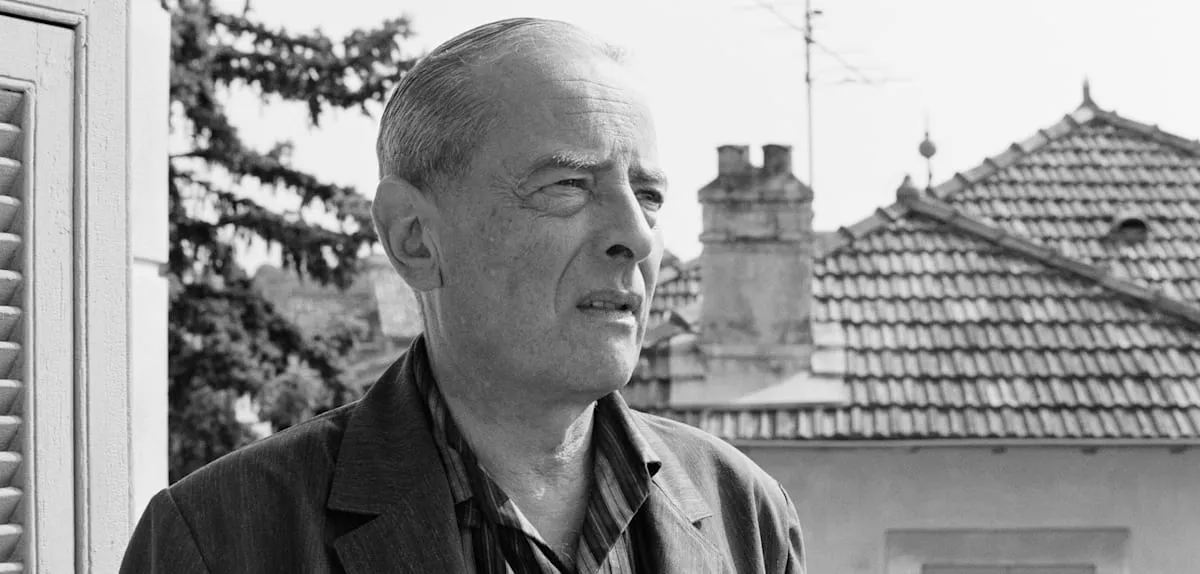
Warsaw — The provocative ideas of Witold Gombrowicz, the Polish-Argentine writer, are once again at the forefront of global intellectual discourse in 2026. Gombrowicz's daring insights, particularly his critique of national identity and existence, offer a fresh perspective in confronting the polarization and claims of superiority that still frequently characterize the world today. He is known for his iconoclastic views, opposing all forms of rigidity and formality, including collective assumptions about the grandeur of a nation.
Gombrowicz, who spent most of his life in exile, openly expressed his views on major European nations. According to him, “the Russians and the Germans were secondary, ridiculous, and barbaric.” This statement, which he uttered not as a personal insult but as a critique of national identity constructions that often suppress individuality and free thought, serves as a starting point for deep discussions on the essence of human existence in an ever-changing society.
Born in Poland in 1904, Gombrowicz was forced to flee to Argentina at the beginning of World War II, an experience that further enriched his perspective on alienation and freedom. This new environment provided him with the necessary distance to more sharply observe and criticize his own culture, as well as other cultures. His work always encourages readers to dare to think independently, break conventional boundaries, and reject social falsehoods.
In his essays, Gombrowicz often highlighted how every nation, fundamentally, is an imposed “form.” This form could be glorified history, rigid traditions, or blind national pride. His critique of the “inferiority, ridiculousness, and barbarism” of the Russian and German nations at the time should be understood as a metaphor for dogmatism and claims of superiority that hinder humanity, not a racial or ethnic critique in the narrow sense.
It is therefore not surprising that Gombrowicz is said to have “dreamed of a Javier Milei” in his era. The radical and anti-establishment figure of the current President of Argentina in 2026 reflects Gombrowicz's spirit in challenging the status quo, disturbing comfort, and dismantling established structures. Both, in their respective contexts, dared to swim against the current of dominant thought.
Gombrowicz's philosophy centered on resistance to “imposed immaturity,” where individuals are constantly forced to conform to social roles and expectations. His work, especially the novel Ferdydurke, became a manifesto for reclaiming personal freedom from the tyranny of form. He invites everyone to reflect on whether the identity they hold dear is the result of authentic choice or merely a construct imposed by their environment.
Gombrowicz's relevance in 2026 is evident as various identity movements and nationalisms regain strength in different parts of the world. In the European context, for example, discussions about national identity, integration, and the sustainability of the European Union are often colored by historical claims and deep cultural differences. Gombrowicz teaches us to look beyond these claims, seeking a more universal human core.
His critique of “form” is also relevant in the world of art and culture. He would question the authenticity of exhibitions or art collections that merely glorify the past without critical innovation. As with the “20th Century Italy Blooms Again” exhibition in Rome featuring 50 exclusive artworks, Gombrowicz might demand more than just appreciation, but an honest dialogue about the meaning behind it.
In the context of contemporary socio-politics, his thinking can serve as a lens to analyze societal dynamics. For example, when Germany is in turmoil with declining support for certain parties and publicly criticized government reforms, Gombrowicz would see this as part of a process where old “forms” are being questioned and new “forms” are attempting to emerge, often with all their absurdity.
Gombrowicz's intellectual legacy is not merely a record of literary history, but an enduring call for the liberation of thought. His works, transcending genres and geographical boundaries, continue to inspire new generations to dare to question, dismantle dogma, and celebrate individual freedom in the face of the complexities of the modern world. Through Gombrowicz, we learn that courageous thinking is key to true human evolution.