 Debby Wijaya
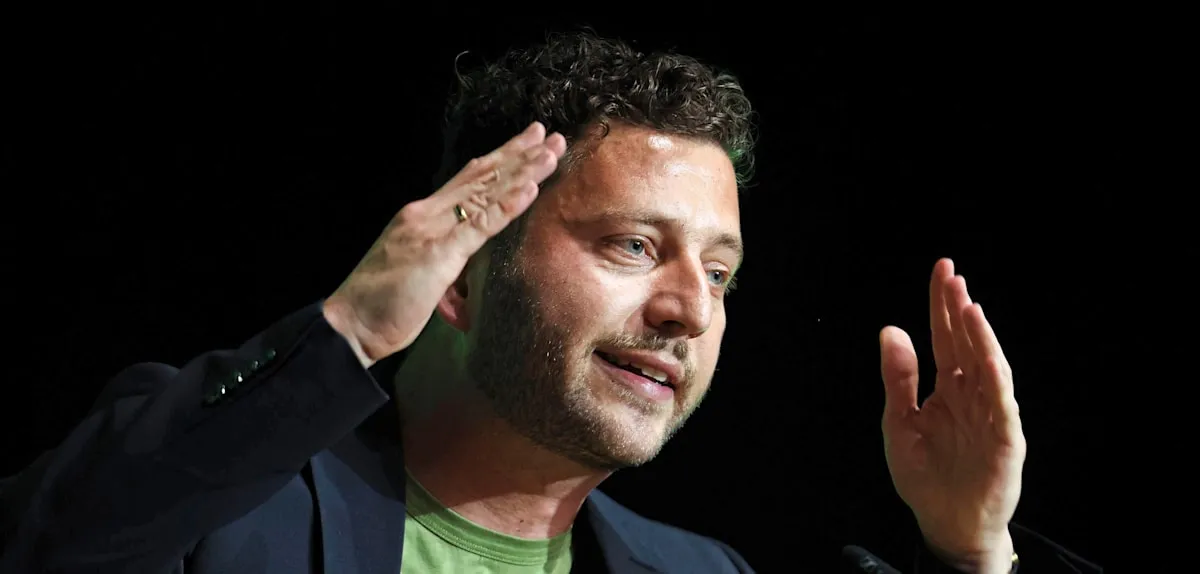
The leader of Germany's Green Party, Felix Banaszak, levied serious accusations against the Christian Democratic Union (CDU) earlier this week in Berlin. Banaszak alleged that the CDU possesses a culture of cover-ups and concealment (vertuschens und deckens), particularly concerning the controversial statements made by Kai Wegner on crisis management, which have now reached the Chancellery. This demand for transparency was directed straight to Chancellor Friedrich Merz.
The affair surrounding Kai Wegner's statements has drawn significant public attention. This issue, originating from Wegner's comments regarding crisis handling, has escalated into allegations of abuse of power or at least a lack of accountability.
Felix Banaszak, as a leader of one of the coalition parties, felt compelled to urge the federal government for comprehensive clarification. He perceives a troubling pattern in how the CDU handles such incidents.
"These questions extend all the way to the Chancellery and must be answered thoroughly," Banaszak asserted during a press conference in the capital, emphasizing that the implications of this case go beyond mere individual statements.
Banaszak's demands are specifically aimed at Chancellor Friedrich Merz. This indicates that the Green Party views this issue not merely as an internal CDU matter, but as a question of national leadership's integrity.
Merz, as the head of state, is expected to ensure that all relevant information is disclosed to maintain public trust. Transparency is a non-negotiable pillar of democracy.
This sharp criticism from the Greens reflects the tense political dynamics in Germany, particularly ahead of upcoming general elections. Issues of integrity and accountability invariably become potent weapons in the political arena.
The culture of 'vertuschen und decken,' as articulated by Banaszak, refers to the practice of concealing mistakes or crucial information from the public. Such practices can erode the foundation of public trust in government institutions.
Political analysts view these accusations as potentially exerting significant pressure on Chancellor Merz and the CDU. They must respond promptly with concrete steps to prevent further escalation.
If not addressed seriously, the Kai Wegner 'affair' could become a political boomerang for the CDU, especially in the context of crisis management which often requires swift and honest responses.
The German public demands clarity regarding what exactly transpired, how Wegner's statements could have triggered a crisis, and why there are allegations of a cover-up by the ruling party.
The Green Party leader emphasized that this is not merely an inter-party dispute, but an effort to uphold the principles of clean and accountable governance.
A response from the CDU is still awaited. Leaders of the conservative party are likely to undertake internal consolidation before issuing a comprehensive official statement.
This case also highlights the role of national media in overseeing sensitive issues. Strong public pressure can compel the government to act with greater transparency.
Moving forward, the handling of this case will be a test of credibility for Chancellor Merz and the governing coalition. Their ability to face criticism and take responsibility will be put to the test.
With the Greens' demands, the ball is now in the CDU's and the Chancellery's court to demonstrate their commitment to good governance.