 Stefani Rindus
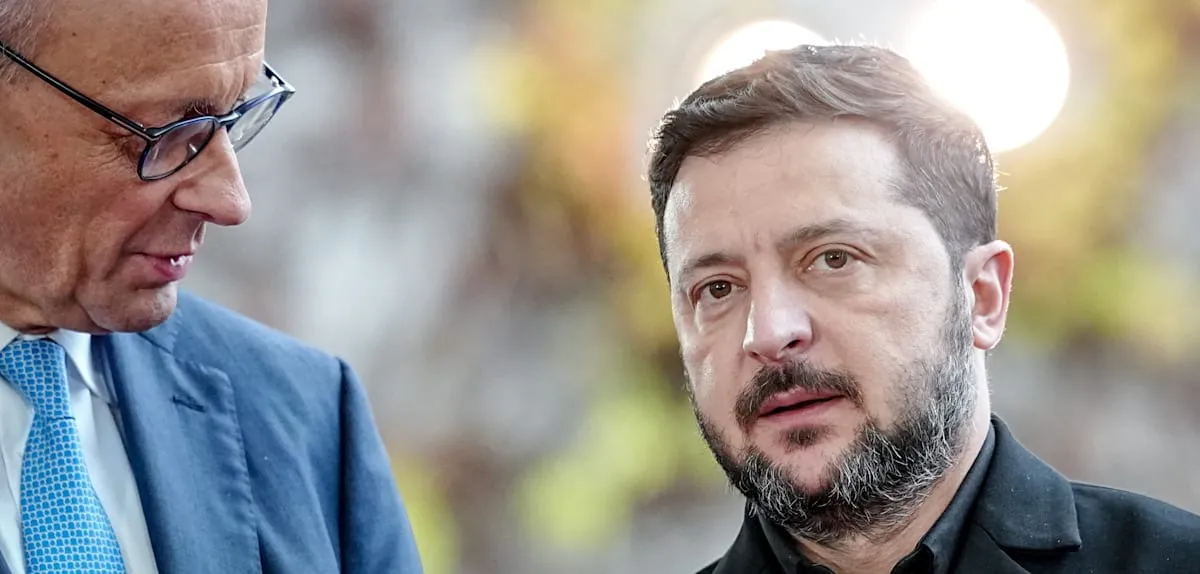
BERLIN – A recent public opinion survey reveals that nearly two-thirds of German citizens explicitly reject the notion of their nation assuming a military leadership role on the global stage, despite reports indicating an increasingly dangerous geopolitical landscape. The study's findings reflect a growing desire among the German public for restraint in foreign policy, a sentiment that could potentially reshape Berlin's approach to international security and alliances in 2026.
This rejection of a proactive military role is not merely a reflection of general pacifism, but rather a strong statement regarding foreign policy priorities. The survey data clearly demonstrates a distinct tendency to avoid dominant military involvement, even amidst narratives of escalating global threats.
The survey also highlighted a significant shift in public support for Ukraine. While specific details of this shift are not explicitly mentioned in the source data, the implications could vary, ranging from decreased enthusiasm for military aid to a stronger preference for diplomatic solutions and humanitarian assistance. This shift adds complexity to Germany's foreign policy formulation, particularly concerning the ongoing conflict in Eastern Europe.
International political analysts note that such public sentiment can have a substantial impact on Germany's position within the European Union and NATO. As one of Europe's largest economic powers, Germany's decision to abstain from military leadership could create a power vacuum or require other member states to assume more prominent roles. This could trigger a re-discussion of burden-sharing and collective security strategies.
Historically, Germany has a complex history regarding its military role, especially after the traumatic experiences of the Second World War. Its post-war constitution and political culture have long emphasized peace, diplomacy, and military restraint. The results of this survey indicate that this collective memory remains very strong in the minds of the majority of citizens.
Chancellor Olaf Scholz's government faces the challenge of balancing pressure from international allies, who might expect Germany to play a more assertive role, with a strong domestic desire to maintain a more cautious policy. This balance is crucial for preserving internal cohesion while maintaining credibility on the global stage.
This perspective also contrasts with some other European nations that may be more willing to adopt a stronger military posture, particularly after major conflicts on Europe's eastern borders. Such differences in approach could create friction among members of defense and political blocs.
The implications of this public rejection extend beyond rhetoric. It could influence defense budget allocations, priority investments in military capabilities, and participation in international missions. Every step taken by the government must align with the will of the people to maintain its legitimacy.
The increase in global uncertainty, encompassing geopolitical tensions, climate change, and hybrid threats, has often been cited as a reason why Germany should enhance its role. However, the public appears to have a different interpretation of how to confront this increasingly dangerous world, with many opting for a non-confrontational path.
One example of the increasingly dangerous world context is Russia's threat to send nuclear weapons into space, a development that has sparked global concern. In such situations, Germany's desire for neutrality or restraint becomes even more prominent and fuels intense debate about the effectiveness of such a strategy.
Ultimately, these survey results underscore the importance of diplomacy as a cornerstone of German foreign policy. In the view of most citizens, Germany's true strength lies in its capacity for mediation, consensus-building, and peace advocacy, rather than in dominant military power.
German leaders need to carefully consider these survey results as they navigate a complex geopolitical landscape. Ignoring public sentiment could erode domestic trust, while being overly subservient to it risks isolating Germany from its allies. A comprehensive national dialogue on Germany's role and identity in the modern world may be necessary.
Editorial Insight:
The strong anti-military sentiment in Germany, as reflected in the latest 2026 survey, is not merely an emotional response but a manifestation of a public strategic calculation aimed at maintaining stability through non-confrontational means. Even as the world grows increasingly uncertain, German citizens collectively imply that economic power and diplomacy are their primary assets, not assertive military capabilities. This places Chancellor Scholz's government in a dilemma, having to balance allied expectations with a deep domestic desire for peace. The impact could be a paradigm shift in European security policy, where Germany focuses more on building civilian and diplomatic capacities rather than becoming a military leader.