 Edward DP Situmorang
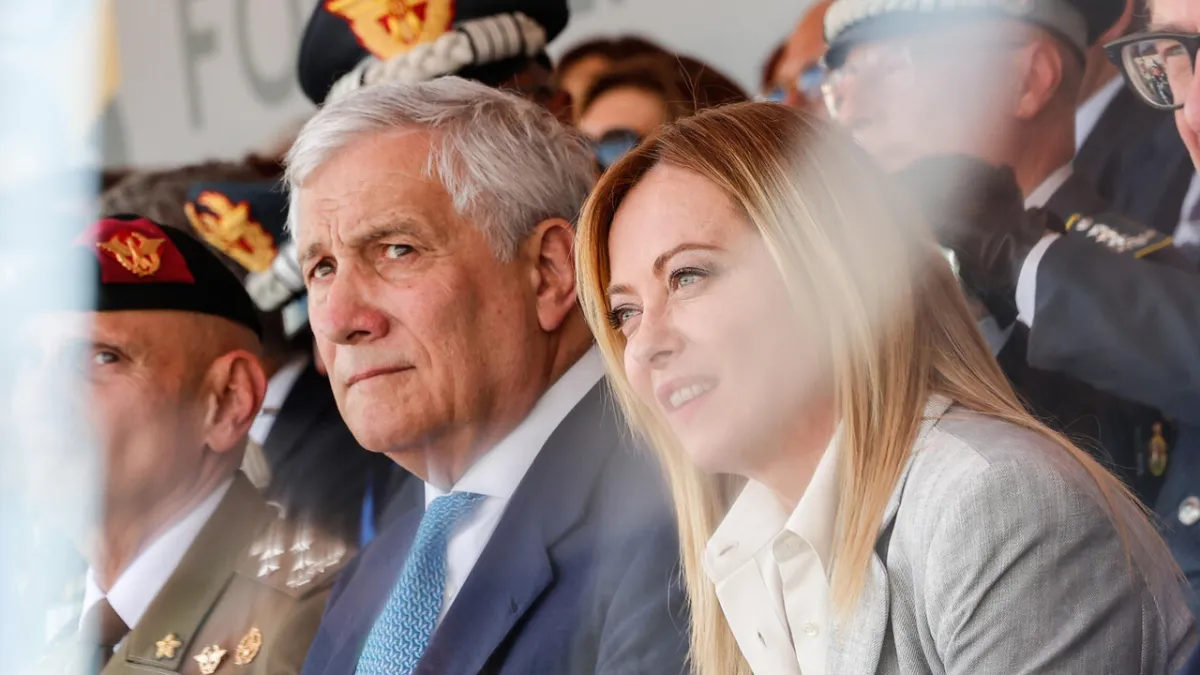
ROME — Political tensions grip Italy's governing coalition in 2026 after two crucial issues, an amendment on interception policy and a draft electoral law, triggered a significant deadlock. Senate President, Ignazio La Russa, openly hinted at a postponement of the controversial amendment. Concurrently, Forza Italia (FI), a key pillar of the coalition, unequivocally stated 'niet' or rejection of the proposed electoral law. This situation threatens the stability of the 'double understanding' that has thus far sustained the parliamentary majority.
La Russa's statement, a senior figure from the Fratelli d'Italia party, regarding the amendment's postponement, sparked a wave of concern. This widely debated amendment aims to revise the rules for using interceptions or wiretaps, a perennially sensitive topic in Italian politics due to its implications for privacy and law enforcement. The indication of a delay points to serious difficulties in achieving internal consensus.
Meanwhile, Forza Italia's rejection of the draft electoral law adds complexity. The party, now led by Antonio Tajani following the passing of Silvio Berlusconi, holds differing views on the proportional system and voter preferences. This disagreement is not merely a technical detail but a reflection of distinct political philosophies among coalition partners.
The coalition led by Prime Minister Giorgia Meloni now faces a severe test in 2026. The 'double understanding,' referring to the bilateral agreement between the constituent parties of the coalition, now hangs in the balance. Without agreement on such fundamental issues, the potential for internal divisions becomes increasingly real.
The issue of the interception amendment has long been a fiercely contested battleground in Parliament. Some advocate for reforms to protect civil liberties, while others argue for the effectiveness of criminal investigations. La Russa, with his extensive experience, may view the postponement as a strategic move to defuse tensions, but this step ironically highlights the chasm of differences within the coalition.
On the other hand, electoral law reform is a vital promise from the government's platform. Italy's complex electoral system has often been a source of political instability. The coalition's inability to agree on a new framework indicates profound debates regarding the distribution of power and political representation in the future.
This situation recalls Italy's turbulent political dynamics of the past. Various governments have fallen or experienced crises due to disagreements on key legislation. Italian political history records how figures like Tina Anselmi once shook the establishment with her reformist vision, demonstrating that change always faces resistance.
Political analyst Professor Elena Rossi from the University of Rome remarked, "This situation is not just about legislation, but also about the struggle for influence within the coalition. Forza Italia wants to reassert its position, while Fratelli d'Italia attempts to navigate their reform agenda." She added that negotiations would be tough and require significant compromise from all parties.
Should the deadlock persist, the consequences could be fatal for the government's reform agenda. Other important legislative projects, including economic and social reforms, could be delayed or even halted. National economic stability, which is striving for recovery, could also be affected by this political uncertainty.
The Italian public is closely monitoring these developments. Hopes for a stable and effective government, capable of addressing economic and social challenges in 2026, are now at stake. The outcome of these internal coalition negotiations will largely determine the country's political direction in the coming years.
Coalition leaders are scheduled to meet in a closed session to seek common ground. The pressure to reach an agreement is immense, given the mandate provided by voters. Whether they can overcome differences for the common good or whether this turmoil will usher in a new chapter of uncertainty remains to be seen.
It is essential for the coalition to demonstrate adaptability and negotiation skills. Italy's future as a major European economy heavily depends on its leaders' capacity to forge strong and sustainable consensus.