 Dorry Archiles
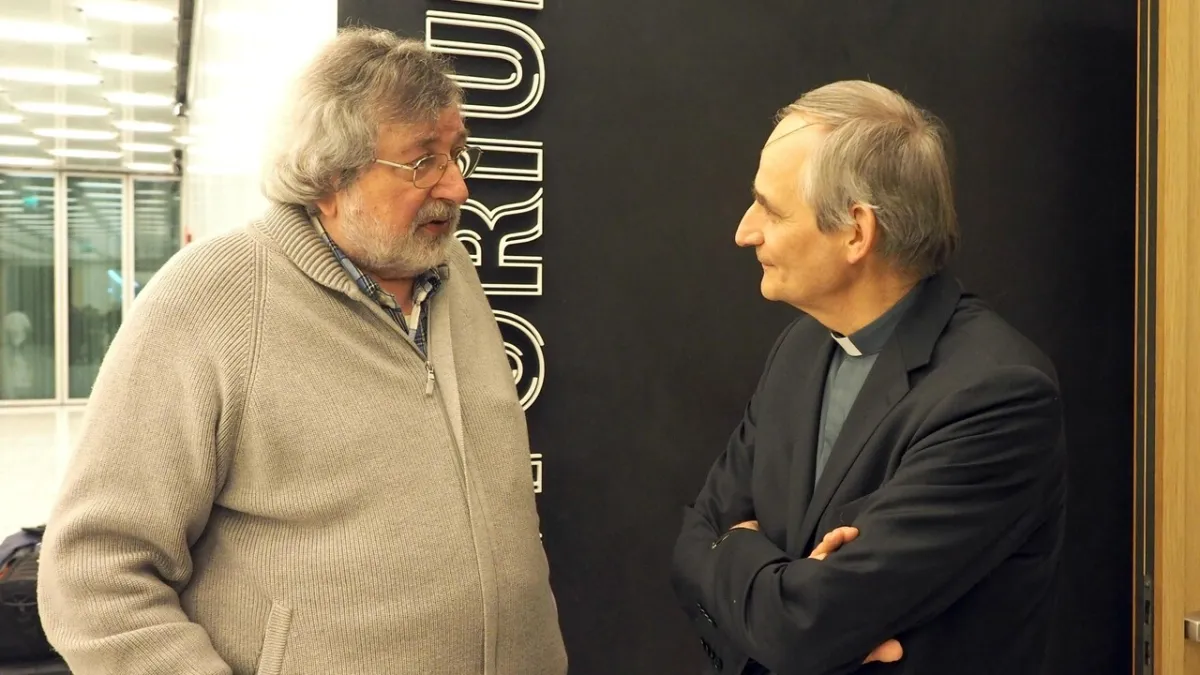
ROME – The Italian Parliament in 2026 held a profound commemorative homage for one of their greatest cultural icons, Francesco Guccini. The President of the Italian Republic, Sergio Mattarella, personally led this deeply meaningful ceremony in the Montecitorio Hall, affirming the Maestrone's enduring legacy that transcends generations. The event also included a significant \"journey of memory\" initiated by Cardinal Matteo Zuppi, reflecting the spiritual and social dimensions in remembering the artist.
A solemn atmosphere enveloped all members of parliament, who collectively gave a long round of applause as a sign of respect. This moment marked the state's official recognition of Guccini's extraordinary contribution to shaping Italy's musical, literary, and intellectual landscape. The applause was not merely ceremonial, but a collective representation of respect for a masterful storyteller whose lyrics often served as a mirror to society.
President Mattarella, in his speech, highlighted Guccini's capacity to encapsulate the essence of the Italian soul through his sharp and honest verses. He underscored how the Maestrone was able to speak to every segment of society, from students to intellectuals, from workers to politicians, with relevant and evocative messages. The President's presence itself emphasized the importance of this event as a national occasion.
Beyond the political sphere, this homage also extended to spiritual and humanitarian dimensions. Cardinal Matteo Zuppi, known for his role in peace diplomacy and social advocacy, guided a \"journey of memory\" inviting attendees to reflect on the human values and existential ponderings embedded in Guccini's work. This initiative added depth to the event, making the tribute more than just an artistic celebration.
Guccini's legacy, often dubbed the \"Maestrone,\" has long been a pillar of Italian popular culture. His works are not just heard, but deeply felt and passed down. A posthumous book that stirred the literary world, \"Words Are Love\", was also newly launched in September 2026, further solidifying Guccini's position as both a philosopher and a poet.
Various figures from the art and entertainment world also celebrated Guccini's memory, from rock legend Vasco Rossi to iconic graphic artist Milo Manara. They, and many others, acknowledged Guccini's undeniable influence on artistic expression in Italy, resonating from concert stages to art galleries.
Guccini's lyrics consistently addressed political issues, collective memory, and Italian identity. His work is like a chronicle of life, full of subtle yet penetrating social critique, personal reflection, and depictions of cities like Bologna and Pavana that bore witness to his life's journey. Indeed, the city of Bologna itself has echoed Guccini's memory, with eternal melodies reverberating through Via Paolo Fabbri in 2026.
This homage also serves as an opportunity to revisit Guccini's striking lyrics, which remain relevant to Italy's current social and political challenges. From \"L'Avvelenata\" to \"Canzone per un'Amica,\" each composition is a lesson in history and humanity.
The journey of memory with Cardinal Zuppi encourages the public not only to remember the artist but also to understand the universal messages embedded in his works. It is a reminder that art, especially profound lyrics, possesses the power to unite and inspire, even amid the hustle and bustle of modern life in 2026.
This high-level state homage, involving the President and a prominent spiritual figure, demonstrates the depth and breadth of Francesco Guccini's imprint on the soul of the Italian nation. It is an acknowledgment that cultural heritage is an inseparable part of national identity.
Guccini's passing at the age of 86 earlier had brought deep sorrow to the world of music and literature. However, this tribute event proves that the Maestrone never truly left; he continues to live through his melodies, lyrics, and everlasting memories. The Italian music world mourned, but his legacy stands strong.
Editorial Insight: The state's commemorative homage to Francesco Guccini is a strong indicator that Italy recognizes the importance of preserving and celebrating its cultural heritage as a foundation of national identity. The involvement of President Mattarella and Cardinal Zuppi suggests that Guccini's artistic values are seen as integral to the nation's political and moral ethos. This event also serves as a reflection on how art can continue to bridge differences and unite society, even in the future.