 Gabriella
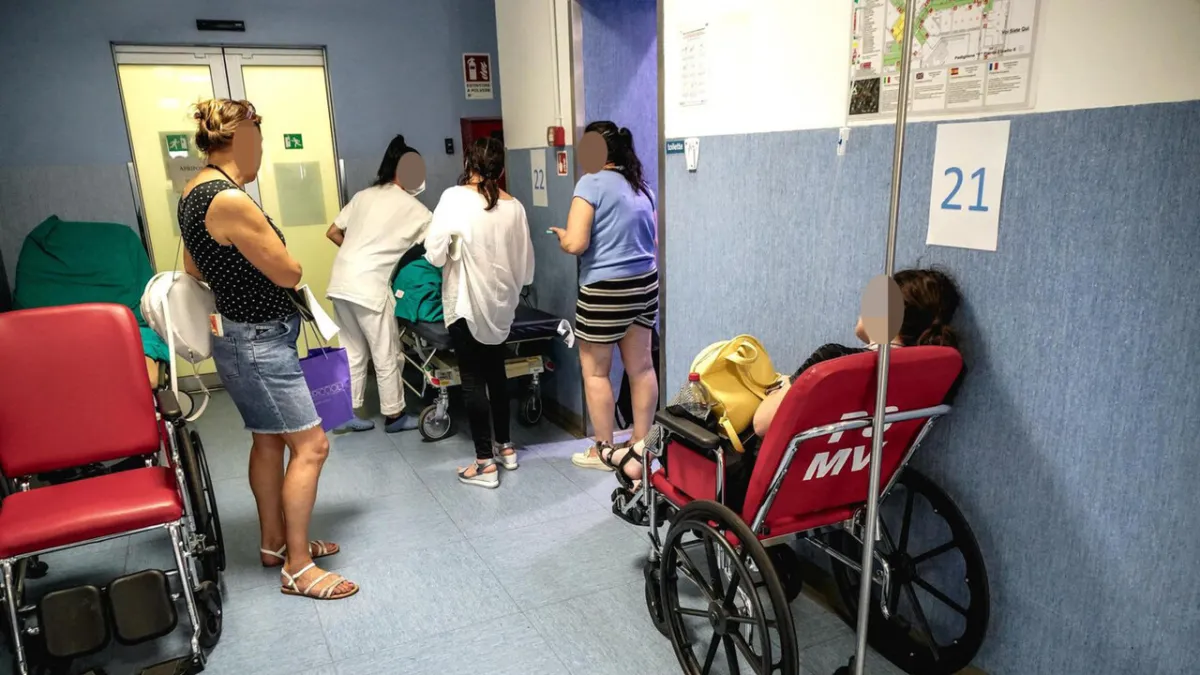
ROME – Emergency healthcare services across Italy are now facing a severe threat of collapse. The Italian Society of Emergency Medicine (Simeu) has warned that the deficit of medical personnel will peak in August 2026, with nearly 7,000 specialist doctors absent from these vital units. This crisis is not merely a seasonal issue but an accumulation of structural shortages exacerbated by the usual wave of annual leave.
Simeu, through its official statement, highlighted how this situation imposes an inhumane workload on the remaining staff. “We are not only facing a fundamental shortage of doctors but also additional pressure due to the absence of thousands of our colleagues on holiday, a right we cannot deny,” stated a Simeu spokesperson during a virtual press conference yesterday. This deficit is expected to cause service delays, long queues, and a decline in the quality of patient care.
The primary factor behind this crisis is a combination of permanent staff shortages and summer holiday absences. Each year, August becomes a critical month for the Italian health system as many doctors take their allocated leave. However, in 2026, the situation is compounded by a systemic failure to attract and retain new doctors in emergency medicine.
Internal reports from Simeu cite several deep-rooted causes for the structural shortage:
- Less competitive remuneration compared to other European countries.
- Deteriorating working conditions and high stress levels.
- Lack of investment in training programs and career development.
- Low interest from new medical graduates in choosing emergency medicine specialization.
The Italian government, particularly the Ministry of Health, has yet to issue a concrete response to Simeu's serious warning. Patients and medical personnel are demanding both short-term solutions to address the August 2026 crisis and long-term strategies to revitalize the emergency sector.
Current conditions in emergency units are far from ideal. Patients often have to wait for hours, even days, to receive a diagnosis or a hospital bed. “We often feel like we are fighting on a battlefield without enough reinforcements. This is not just physically exhausting but also incredibly mentally draining,” said Dr. Elena Rossi, a senior doctor at a hospital in Milan.
Simeu proposed several urgent measures, including:
- Emergency recruitment of emergency specialist doctors from abroad.
- Provision of greater financial incentives for doctors willing to work in emergency units.
- Accelerated training programs for general practitioners to fill basic positions.
This threat to the national health system has wide-ranging implications. If emergency units collapse, the entire chain of healthcare services will be affected, from acute case management to elective procedures. This could potentially erode public trust in healthcare services.
Similar situations have occurred in other European regions, but the scale in Italy in August 2026 is projected to be one of the worst. Simeu's early warning is hoped to prompt preventive actions before the crisis reaches its nadir.
Editorial Insight: The 2026 emergency doctor deficit crisis in Italy exposes the fragility of a long-neglected healthcare system. Without courageous and comprehensive policy interventions, ranging from improving doctor welfare to structural reforms, the Italian public will continue to bear significant risks in accessing essential healthcare services. This is an urgent call for the government to act, not merely with reactive responses to seasonal crises, but with serious investment in the future health of its nation.