 Stefani Rindus

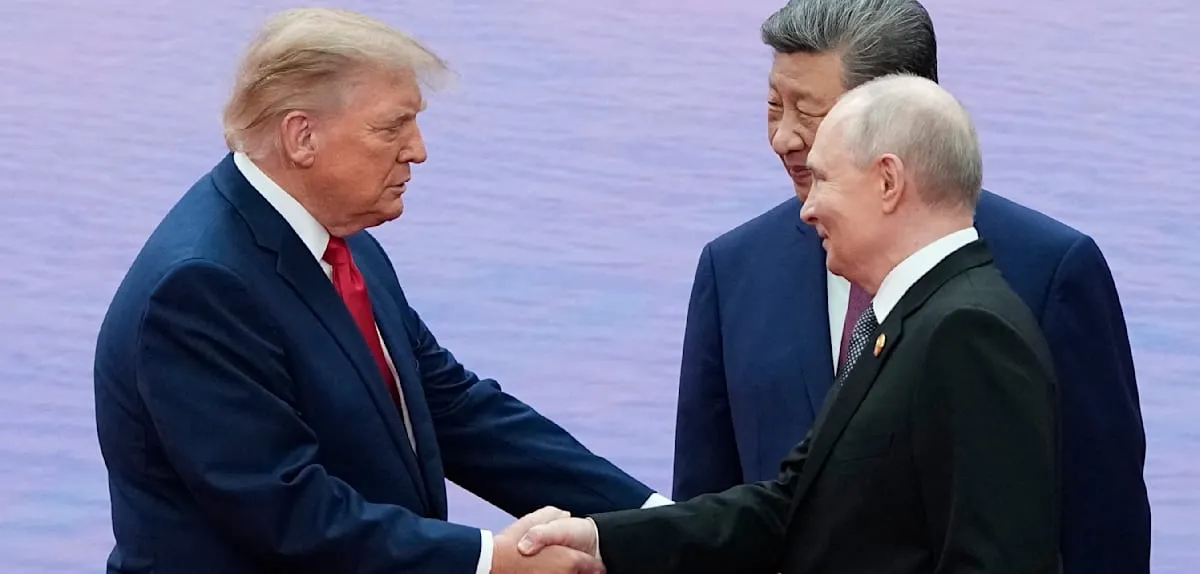
Singapore – World leaders convene this week in Singapore for the 2026 Asia-Pacific Economic Cooperation (APEC) Summit. The primary focus of the agenda centers on a highly anticipated trilateral meeting between the United States, China, and Russia, expected to determine the trajectory of several critical global issues amidst an increasingly complex geopolitical landscape.
The APEC Summit, held from Monday to Friday at Singapore's grandest convention center, serves as a vital platform for its 21 member economies to discuss challenges and opportunities within the Asia-Pacific region. However, public and international media attention is dominated by the anticipation of direct dialogue among President Donald Trump, President Xi Jinping, and President Vladimir Putin.
This meeting of the three major powers is viewed as a critical moment to de-escalate mounting tensions across various parts of the world. Regional conflicts, technological competition, and global economic stability are predicted to form the core of the closed-door discussions.
International relations analysts note that this APEC Summit carries significant historical weight. It is rare for these three leaders to sit together in a format explicitly targeting the resolution of deep-seated differences. Great hope is placed on this meeting to yield meaningful diplomatic breakthroughs.
Amidst cautious optimism, challenges persist. Each nation brings strong national interests, and aligning agendas among Washington, Beijing, and Moscow is no easy task. Several sensitive issues likely to be raised include:
- Global supply chain stability and its impact on the global economy.
- Sovereignty in the South China Sea and regional security issues in Asia Pacific.
- The future of arms control agreements and the threat of escalating conflicts, as evidenced by issues blocked by Russia.
- Technological competition and global digital standards, particularly concerning cybersecurity.
- Coordinated efforts in addressing climate change and cross-border pandemics.
President Trump's administration reportedly arrives with an agenda to pressure China on trade practices and intellectual property, while also seeking common ground with Russia on Eastern European security issues and strategic stability. Meanwhile, China is expected to emphasize the importance of multilateralism and economic cooperation without intervention.
The Kremlin, through its spokesperson, previously stated that President Putin is highly enthusiastic about constructive, open dialogue. A diplomatic source, who requested anonymity, indicated that President Putin has consistently stressed the importance of direct dialogue as key to de-escalating tensions and finding pragmatic solutions to global problems, echoing sentiments previously expressed regarding his desire for conflicts to end.
The impact of this trilateral meeting will be felt worldwide, not just in the Asia-Pacific region. Trade policies, investments, and even geopolitical alliances could undergo significant shifts depending on the outcomes of the negotiations in Singapore.
Delegates from other APEC member economies are also closely monitoring the dynamics unfolding among these three powers. The APEC Summit is expected to produce agreements that foster sustainable and inclusive economic growth across the region, irrespective of existing geopolitical tensions.
Nevertheless, many remain skeptical that a single meeting can resolve all long-standing differences. Yet, the opportunity for direct dialogue is considered a crucial step forward. The world awaits with bated breath what will emerge from the negotiation table in Singapore.
Editorial Insight: This trilateral meeting at the 2026 APEC Summit represents a potential turning point in global governance. On one hand, there is significant hope for conflict de-escalation and economic consensus. On the other, the risk of failure remains high, potentially deepening existing chasms. The outcome will not only shape the future relationship of these three superpowers but also the architecture of global peace and prosperity for the coming decade. Failure to achieve substantial progress could trigger greater uncertainty, affecting everything from financial markets to regional stability.