 Demian Sahputra
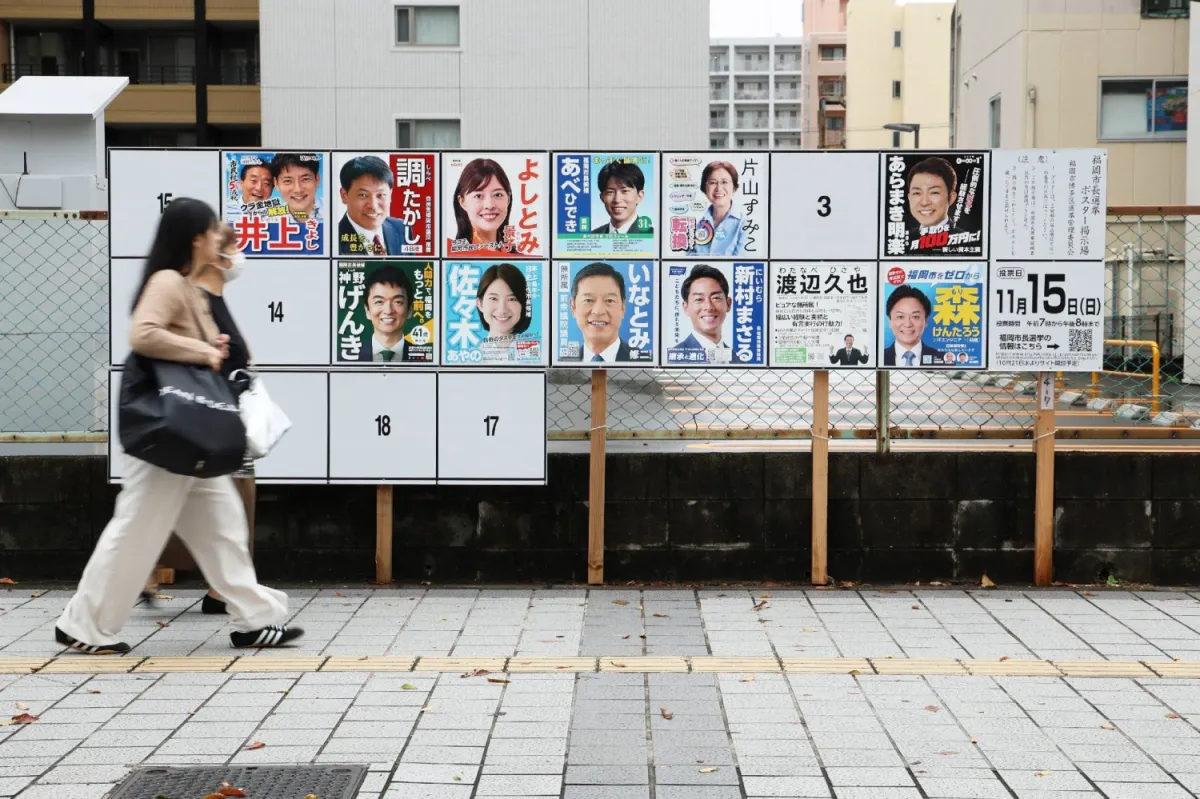
FUKUOKA – Political uncertainty shrouds Fukuoka after the recent 2026 mayoral election concluded without a definitive winner. A record 13 candidates participated in the contest, yet none managed to secure the mandated quarter of valid votes required to be declared an outright victor. This situation necessitates a second round or a rerun, adding complexity to the dynamics of local governance in Japan.
Among the dozen-plus contenders, former Lower House member Shuji Inatomi was the sole figure to come close to the minimum threshold. However, his vote count was insufficient to secure the top position without further proceedings. The failure to meet the vote quota reflects the fragmentation of voter support amidst a multitude of available choices.
The phenomenon of numerous candidates mirrors the diverse aspirations of Fukuoka's populace and the challenges in achieving political consensus. Each candidate presented distinct platforms, ranging from economic and environmental issues to urban planning, ultimately splitting the vote significantly.
Local political observers highlight that while a large number of candidates demonstrates democratic vitality, it can simultaneously be a double-edged sword. Such situations often lead to an absence of a strong majority, necessitating run-offs or complex coalition negotiations.
This is testament to how dynamic Fukuoka's politics are, but it's also a warning of potential deadlock, stated an unnamed political analyst. Voters are divided, and no single vision was dominant enough to garner the necessary majority support.
The primary challenge now lies in how the Fukuoka City Government will address this leadership vacuum. A less-than-smooth transition process could impact crucial policy-making and the implementation of urban development programs. Administrative stability is at stake amid the search for a new leader.
For Japan, particularly at the prefectural and city levels, elections failing to produce an outright winner are not entirely new. However, with a record number of candidates, the Fukuoka case garners special attention. Increased participation is positive, but it also demands a system adaptable to unexpected outcomes.
The implications of this result are far-reaching. Stakeholders, from citizens to investors, will closely monitor the next steps to ensure the wheels of government continue to turn effectively. Decisions regarding the mechanism for further elections will be crucial in determining Fukuoka's future political direction.
Former parliamentarian Shuji Inatomi, who came closest to the threshold, will likely remain a central figure in any subsequent election scenario. His ability to attract a significant portion of the votes indicates a substantial support base, though not yet enough for an outright victory.
This situation in Fukuoka offers valuable lessons about the complexities of modern democracy. High public engagement with numerous choices must be balanced with mechanisms that ensure effective and representative leadership can emerge without being caught in a cycle of repeated elections.
- Vote Fragmentation: A large number of candidates distributed voter support evenly.
- Administrative Uncertainty: Risk of hindering crucial city policy-making processes.
- Threshold Importance: Highlights the role of vote thresholds in ensuring leadership legitimacy.
- Potential Run-off: Allows top-voted candidates to re-compete.
Editorial Insight: The Fukuoka Mayoral Election deadlock underscores a profound challenge in democratic systems that allow for broad participation but lack structured consolidation. With 13 candidates and no outright winner, the city faces a period of uncertainty. This is not merely a local issue but a reflection of a global trend where political fragmentation is increasingly evident, often slowing down governance. The Fukuoka administration is now pressured to find a legitimate and efficient solution promptly to avoid prolonged stagnation, while simultaneously maintaining public trust in democratic institutions.