 Robert Andrison
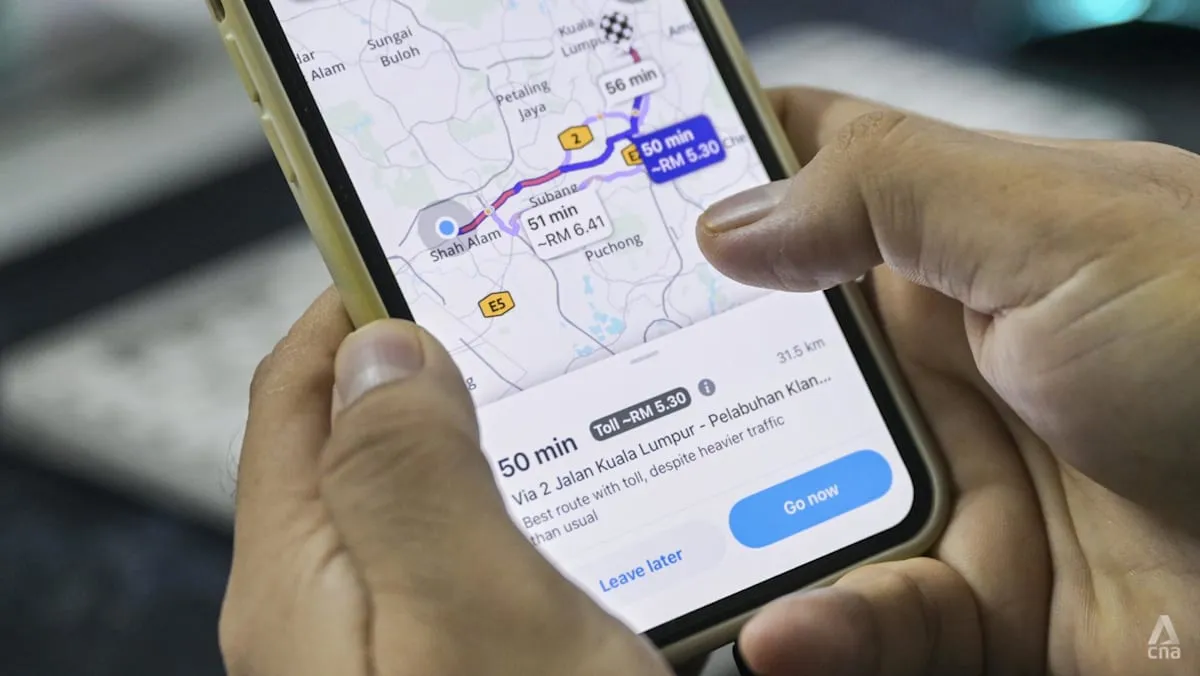
KUALA LUMPUR – The Malaysian government officially banned the use of the popular Israeli navigation app, Waze, for all civil servants starting in early 2026. This policy is also accompanied by a strong appeal to the general public to abandon the application and switch to other alternatives that support the national agenda. This drastic step immediately sparked diverse reactions, primarily due to the absence of local navigation applications deemed equivalent in features and data coverage.
The decision to ban, as confirmed by the Ministry of Communications and Digital, is part of the government's efforts to maintain data sovereignty and support domestic products. However, its implementation faces significant challenges from millions of users who have relied on Waze for daily navigation. We understand this transition will not be easy. However, this is a strategic step for national interests, said a senior ministry official who wished to remain anonymous.
The government acknowledges that currently there is no Malaysian-made navigation solution that can fully replace Waze's capabilities, which have evolved over many years. This becomes a crucial point that raises concerns among drivers. Many citizens have expressed disappointment over the lack of adequate options, potentially causing confusion on the roads.
Online surveys conducted by several local media outlets show that more than 70 percent of respondents expressed their loyalty to Waze due to its traffic data accuracy, early warnings, and interactive community features. Waze has been an inseparable part of my daily commute. How can we switch if theres nothing comparable? said Puan Aminah, a private sector employee in Petaling Jaya.
The ban has actually been speculated since late last year, following increasing global geopolitical tensions that have also influenced digital policies in various countries. Similar steps, albeit for different reasons, have occurred in other countries, such as when a Hong Kong telecommunications company ceased operations in the United States due to sanctions. However, for Malaysia, the main challenge is the local technology ecosystem, which is not yet mature in the navigation app sector.
Malaysian software developers welcome this policy as a golden opportunity for innovation. They hope the government will provide full support in the form of incentives and adequate data infrastructure. This is a call to local developers. We need investment and trust to build applications we can be proud of, said Dr. Hassan Rahman, a technology expert from Universiti Malaya.
Several proposals for local navigation applications have been submitted to the government, but most are still in the early stages of development and do not have a strong user database like Waze. Key challenges include comprehensive road mapping, real-time traffic updates, and integration with other services such as parking information and points of interest.
In the coming weeks, the government is expected to announce a concrete action plan to support the development of local alternatives. This includes the possibility of partnerships with other major Asian technology companies not affiliated with sensitive geopolitical issues. The goal is to ensure that the public is not isolated from vital navigation services.
Motorcyclists and ride-hailing drivers, who rely heavily on navigation accuracy for their livelihoods, express the greatest concern. They demand quick and effective solutions to avoid disrupting their daily operations. Every minute wasted due to a wrong turn is a loss for us, complained a ride-hailing driver in Kuala Lumpur.
Editorial Insight:
Malaysia's policy to ban Waze reflects a global trend of countries striving to strengthen digital sovereignty and reduce reliance on foreign technology, especially those linked to geopolitical issues. While well-intentioned, significant implementation challenges arise from the technology gap and public dependence on established applications. The success of this initiative will heavily depend on how quickly the government can facilitate the development of competitive local alternatives and how the public responds to this transition. Failure could lead to public frustration and the potential emergence of a black market for banned applications.