 Dorry Archiles
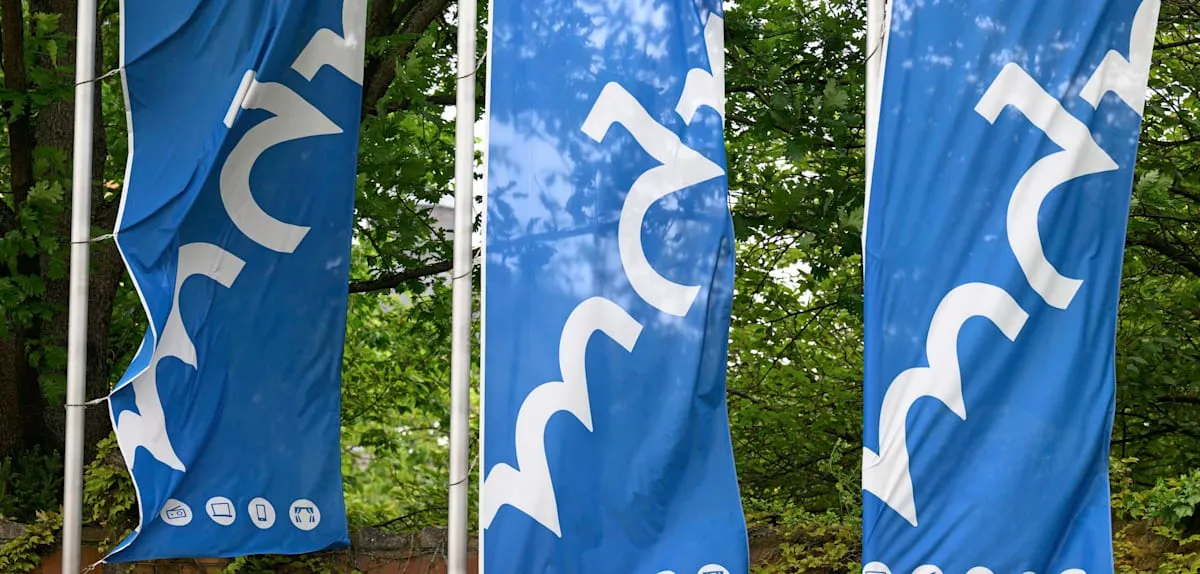
Saxony-Anhalt — The public broadcaster Mitteldeutscher Rundfunk (MDR) is vehemently opposing the Alternative for Germany (AfD) party's plan to terminate the state treaty, or Staatsvertrag, governing its operations in Saxony-Anhalt. This provocative move by the AfD, which could potentially end funding and the very existence of MDR as a public broadcasting entity, has triggered threats of serious legal consequences from MDR in 2026.
MDR, a pillar of information and culture in central Germany, considers the AfD's proposal unconstitutional. MDR's management asserts that a “kahlschlag,” or comprehensive sweeping cut, of public broadcasting is legally impermissible and contradicts the constitutional mandate to provide adequate public broadcasting services to citizens.
The AfD's plan in Saxony-Anhalt is not merely a local political initiative. It reflects the party's broader national agenda to significantly reduce, or even abolish, the funding system and structure of public broadcasting in Germany. This issue has repeatedly been a focal point in German political debates.
The Staatsvertrag is a crucial legal foundation guaranteeing the independence and sustainability of public broadcasting in Germany. Its unilateral termination by a single state could set a dangerous precedent and shake the foundations of independent media, which is vital for democratic discourse.
MDR reaffirms its commitment to maintaining its role in providing unbiased information, education, and entertainment. The broadcaster argues that public broadcasting guarantees media pluralism and serves as a reliable source of information, especially in an era of increasing disinformation.
The legal threats issued by MDR underscore the gravity of the situation. They will not hesitate to take this matter to court to ensure that citizens' constitutional right to quality public broadcasting remains fulfilled.
Political observers view the AfD's move as an attempt to strengthen their political position by targeting institutions they often criticize as “system media” or part of the establishment. However, this also opens up the potential for a lengthy and complex legal confrontation.
The implications of terminating the Staatsvertrag are not limited to MDR. If the AfD succeeds, it could pave the way for other states to follow suit, ultimately undermining the entire architecture of public broadcasting in Germany.
In the German political context of 2026, where debates about the future of media and the state's role are increasingly intense, this case becomes highly symbolic. It reflects a deep ideological struggle over the values and functions of democratic institutions.
The government of Saxony-Anhalt now stands at a crossroads. They must respond to the AfD's demands while considering the far greater legal and constitutional implications for their media system and citizens.
Internal discussions within the AfD itself are often marked by diverse views on the party's media strategy. These debates were previously highlighted in news such as AfD Politician Reveals Internal Party Scandal, Threat of Dismissal Emerges, indicating that this issue is not without internal friction.
The importance of public broadcasting is increasingly felt amidst rising polarization and information fragmentation. MDR strives to ensure that every citizen in Saxony-Anhalt has access to factual news reports and diverse perspectives.
While the AfD often garners support from segments of society dissatisfied with mainstream media, the response to this dissolution effort will likely be varied, even from their own constituents who might still value MDR's local services.
The financial and operational consequences if the Staatsvertrag is indeed terminated would be massive. Not only are thousands of jobs threatened, but also broadcast infrastructure, local content production, and coverage of important events in the region.
This case is predicted to become one of the main highlights on Germany's legal and political agenda in 2026, with the potential to significantly impact the future of the national media landscape.
MDR has stated its readiness to confront this legal battle with all available resources, in order to protect the integrity and independence of public broadcasting. This is not just a fight for MDR, but for the principles of freedom of the press and information in Germany.