 Angela Stefani
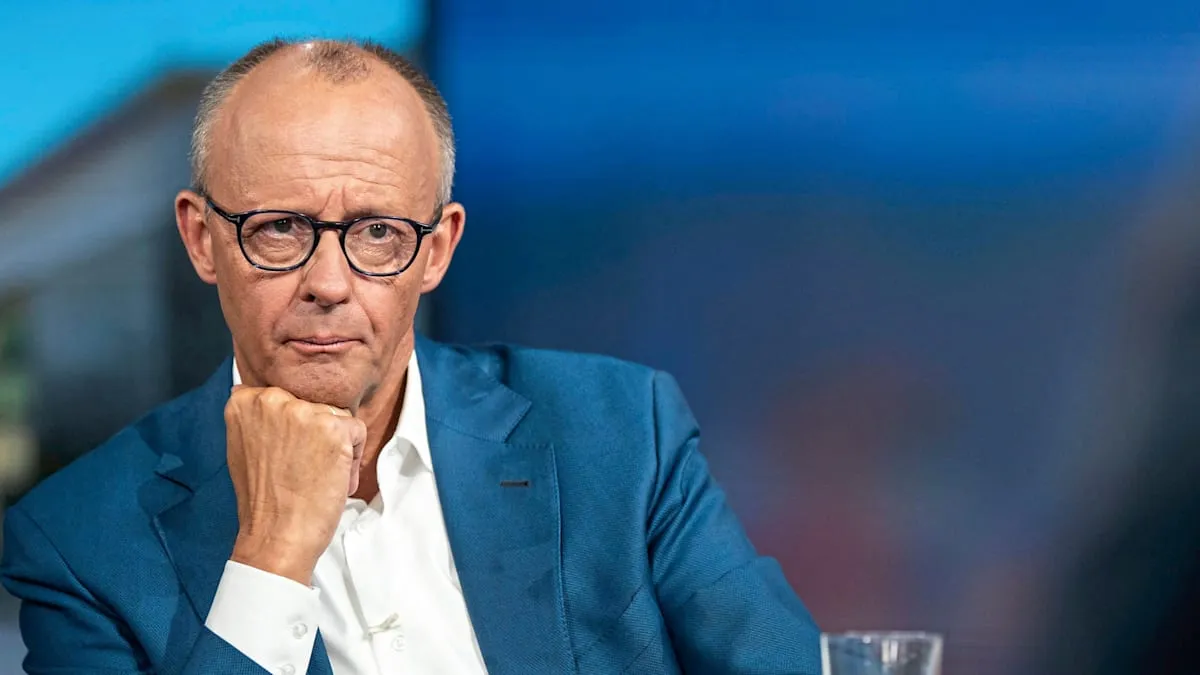
BERLIN – The German political arena is once again stirred as a prominent opposition leader, Friedrich Merz, faces a wave of criticism over his communication style, deemed provocative and lacking empathy. The sharp focus on Merz's rhetoric has sparked widespread debate, especially as a leading political scientist indicates communicative pressure on the Chancellor in 2026.
The discussion surrounding Merz emerged after his strong statements were seen as lacking empathy, resembling sharp admonitions instead. These statements, initially intended as criticism, have ironically backfired on the veteran politician from the Christian Democratic Union (CDU) party.
Professor Volker Kronenberg, a political science expert from the University of Bonn, offered his perspective on this dynamic. This is not empathy, this is sharp, this is admonishing, Kronenberg stated, commenting on Merz's intonation and choice of words, which continue to be a subject of public discussion.
Kronenberg also highlighted the Chancellor's position, who, according to his analysis, is under significant communicative pressure. The increasingly polarized political environment demands precise narratives from every leader, and even minor missteps can become easy targets for political opponents.
Furthermore, Kronenberg observed the political maneuvers of Sahra Wagenknecht, a figure known for her biting verbal attacks. Wagenknecht's attacks, Kronenberg suggests, are not merely spontaneous reactions but part of a carefully calculated political strategy to gain a strategic advantage.
This situation illustrates the complex challenges facing the German political landscape, ranging from economic issues to social integration, which require an effective and inclusive communication approach. Merz's assertive style, while perhaps appealing to his voter base, is often perceived as exacerbating polarization.
The debate over Merz's rhetoric also raises fundamental questions about ethics and the effectiveness of communication in modern politics. Must assertiveness always come at the cost of empathy, or is a better balance possible?
The role of social media and the 24-hour news cycle in 2026 further accelerates the dissemination and amplification of every political statement, requiring leaders to be extra cautious in conveying messages. Small errors can quickly escalate into uncontrollable communication crises.
Kronenberg's analysis of Wagenknecht's political calculus also indicates that inter-party competition occurs not only in the realm of policy but also in the arena of narrative warfare. Every criticism, every attack, serves a larger purpose than mere retaliation.
Amidst this lively debate, it is important for the German public to distinguish between constructive criticism and rhetoric that merely fuels division. Politicians are also expected to find ways to communicate effectively without losing their human touch. This phenomenon is relevant to broader debates about the future of digital democracy, as once touched upon in the context of AfD's rejection at Gamescom: Gamescom Rejects AfD: German President Speaks on the Future of Digital Democracy.
Editorial Insight: The debate surrounding Friedrich Merz's communication style highlights broader communication challenges in contemporary politics, not only in Germany but globally. In an era of abundant information, the ability to convey messages clearly yet empathetically is crucial. The pressure on the Chancellor, as revealed by Kronenberg, suggests that leadership in 2026 demands a balance between assertiveness and the ability to embrace diverse segments of society. Calculated political attack strategies, such as those employed by Sahra Wagenknecht, demonstrate how rhetoric serves as a powerful weapon in the struggle for influence.