 Angel Doris
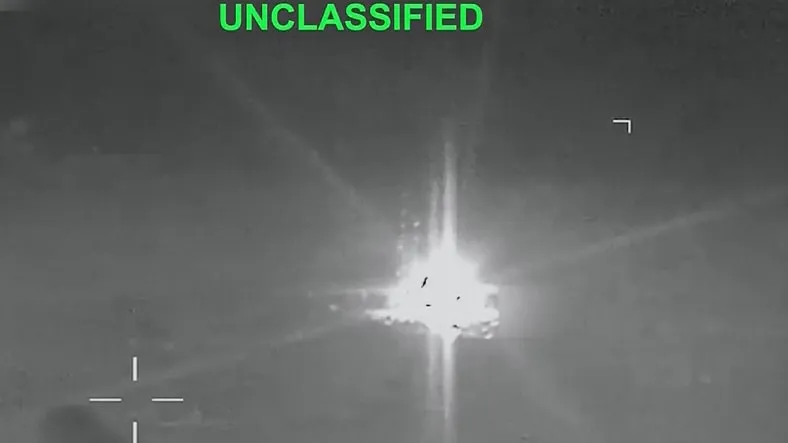
Middle East — Tensions in the Middle East reached a new boiling point in early 2026, following the United States' military response to Iranian provocations. Washington launched a series of retaliatory airstrikes after Tehran shelled a container ship in international waters and subsequently provocatively blockaded part of the vital Strait of Hormuz. These incidents immediately triggered rocket alarms in several Gulf states, raising global concerns about a wider conflict escalation.
Iran's actions began with the dramatic shelling of a Liberian-flagged cargo ship believed to be linked to Western interests. Just hours later, Iran's Revolutionary Guard announced partial navigation restrictions in the Strait of Hormuz, a strategic waterway transporting one-fifth of the world's oil supply. These actions were widely seen as an aggressive response to intensifying economic sanctions and diplomatic pressure from Western nations.
The Pentagon confirmed that US air forces, with support from regional allies, targeted several Iranian military installations in the coastal areas of the Gulf. “These strikes are a firm response to Iran's unjustifiable aggression,” stated US Department of Defense spokesperson, Major General Emily Carter, during a press conference in Washington. She affirmed that the United States is committed to preserving freedom of navigation and regional stability.
In several Gulf states, such as Saudi Arabia and the United Arab Emirates, missile defense systems were activated following reports of detected projectile threats. Although there has been no official confirmation of direct impacts, these incidents clearly add a layer of uncertainty to an already vulnerable region. The international community called for restraint from all parties to prevent further bloodshed.
Regional leaders expressed deep concern. Sultan Haitham bin Tariq of Oman, whose country directly borders the Strait of Hormuz, reportedly held emergency communications with various heads of state, urging diplomatic channels. “Military escalation is not a solution, but a guarantee of mutual destruction,” read a quote from an Omani diplomatic statement.
Iran, through its Foreign Ministry spokesperson Hossein Amir-Abdollahian, stated that their actions were “defensive steps to protect national sovereignty and interests” from what they termed “foreign intervention.” Tehran insisted that the partial closure of Hormuz was a strong message regarding violations of their exclusive economic zone by foreign vessels.
The impact of these tensions was immediately felt in global commodity markets. Crude oil prices surged significantly, approaching their highest levels in the last five years, and stock exchanges in Asia and Europe showed high volatility. Economic analysts warned that a prolonged conflict in Hormuz could trigger an energy crisis and severely disrupt global supply chains.
The United Nations, through Secretary-General Antonio Guterres, issued a deeply concerning statement. He urged all parties to immediately cease hostilities and return to the negotiating table. “The world cannot afford a full-scale conflict in the Middle East,” Guterres emphasized. The European Union and the Arab League also called for immediate de-escalation.
Geopolitical analyst Dr. Sarah Jenkins from the prominent institution Chatham House viewed the situation as a turning point. “If the US and Iran fail to find a diplomatic way out, we are facing the prospect of a conflict that could engulf the entire region and have untold global implications,” she explained. She highlighted how similar past incidents, such as tensions related to the Hormuz blockade in 2026, were always contained through intense diplomacy.
The Middle East region has been a hotbed of latent conflict for decades, and this latest incident adds to a long list of concerns. The international community now awaits the next steps from Washington and Tehran, hoping that political wisdom will prevail over the impulse for military confrontation.
The future of regional stability and even the global economy heavily depends on how this crisis is managed in the coming days. The missile alerts echoing across Gulf nations serve as a painful reminder of how thin the line is between peace and war in one of the world's most strategic regions.