 Robert Andrison
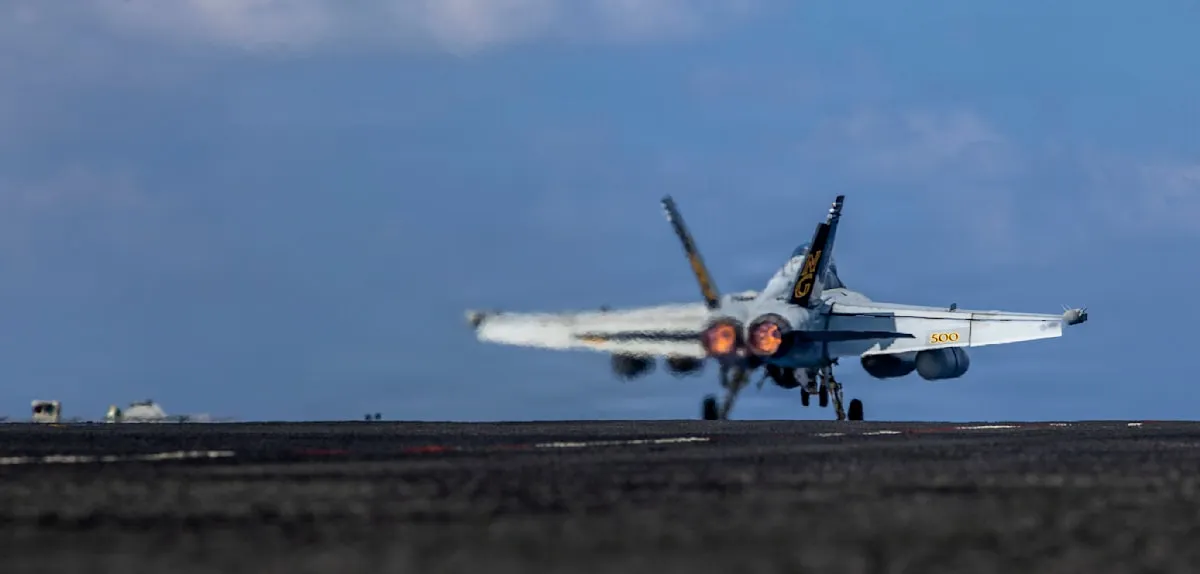
MIDDLE EAST — Tensions in the Gulf region reached a new boiling point as the United States military launched attacks against several Iranian military facilities. These strikes, targeting missile positions, air defense systems, and radar stations belonging to Iran's Revolutionary Guard, were immediately met with retaliation from Tehran, which launched a series of counter-attacks on US military bases located in Jordan, Kuwait, and Bahrain. This exchange of fire marks a significant escalation in the long-simmering conflict between the two regional powers, raising global concerns about the potential for open warfare in 2026.
The attacks carried out by US forces reportedly had the strategic objective of crippling the operational capabilities of Iran's Revolutionary Guard. The Pentagon has not provided specific details regarding the scale of the operation or the types of weaponry used, but initial indications suggest the use of high-precision missiles to target key infrastructure. This move is considered a response to alleged destabilizing activities attributed by the US to Iran across the broader Middle East region.
In response to the aggression, Iranian state media promptly reported that the Revolutionary Guard had taken decisive retaliatory action. Iran's attacks specifically targeted US military facilities in several Gulf states, including Jordan, Kuwait, and Bahrain, which host thousands of US personnel and military assets. This action is seen as a clear message from Tehran that any attack on its sovereignty will be met with a proportionate response.
The Middle East region, long plagued by turmoil, now stands on the brink of even greater uncertainty. International political analysts believe that this exchange of attacks has the potential to trigger a difficult-to-control spiral of violence. Neighboring countries that have sought to maintain neutrality are now at risk of being drawn into a broader conflict.
Various international bodies and major powers are calling for restraint from both sides. The United Nations (UN) reportedly issued an urgent statement, urging Washington and Tehran to immediately return to the negotiating table to seek a diplomatic solution. "We call on all parties for de-escalation and to avoid actions that could exacerbate the situation in an already fragile region," a UN representative stated. (Read: America Attacks Iran Again, UN Calls for Peaceful Negotiations)
This incident is not the first of its kind, but rather the culmination of a series of worsening tensions between the United States and Iran over recent years. Disputes concerning Iran's nuclear program, regional proxy activities, and freedom of navigation in the Strait of Hormuz have frequently been flashpoints. The Strait of Hormuz itself often becomes a focal point of tension, with repeated threats of closure and military incidents.
The Iranian government, through its Foreign Ministry spokesperson, affirmed its right to self-defense against all forms of external threats. In Washington, US defense officials stated that their attacks were necessary defensive measures to protect their interests and personnel in the region. However, the harsh rhetoric from both sides indicates a widening chasm of differences.
This escalation of conflict also sent waves of concern through global financial markets, particularly in the energy sector. Global oil prices are expected to fluctuate, given the vital importance of the Strait of Hormuz as a primary route for crude oil shipments worldwide. Regional and global economic stability could be threatened if these tensions do not subside.
Countries such as Jordan, Kuwait, and Bahrain, which are close US allies and host its military bases, are now in a very vulnerable position. They must balance their relationship with Washington while managing the potential security risks emanating from Tehran. Iran's missile attacks on their territories raise serious questions about security guarantees and sovereignty.
Given the current dynamics, the prospect of de-escalation appears dim. Both nations have conflicting strategic interests and seem reluctant to back down from their respective positions. However, immense international pressure is hoped to encourage dialogue. The "winds of war" warned by Pope Francis in 2026 now feel increasingly real, underscoring the urgency of finding a peaceful resolution before the conflict spreads.
This crisis in the Middle East demands serious attention from the international community. Without effective diplomatic intervention, military escalation could have unimaginable consequences, not only for the region but also for global peace and stability. Diplomacy and dialogue remain the only path to prevent a larger catastrophe.