 Robert Andrison
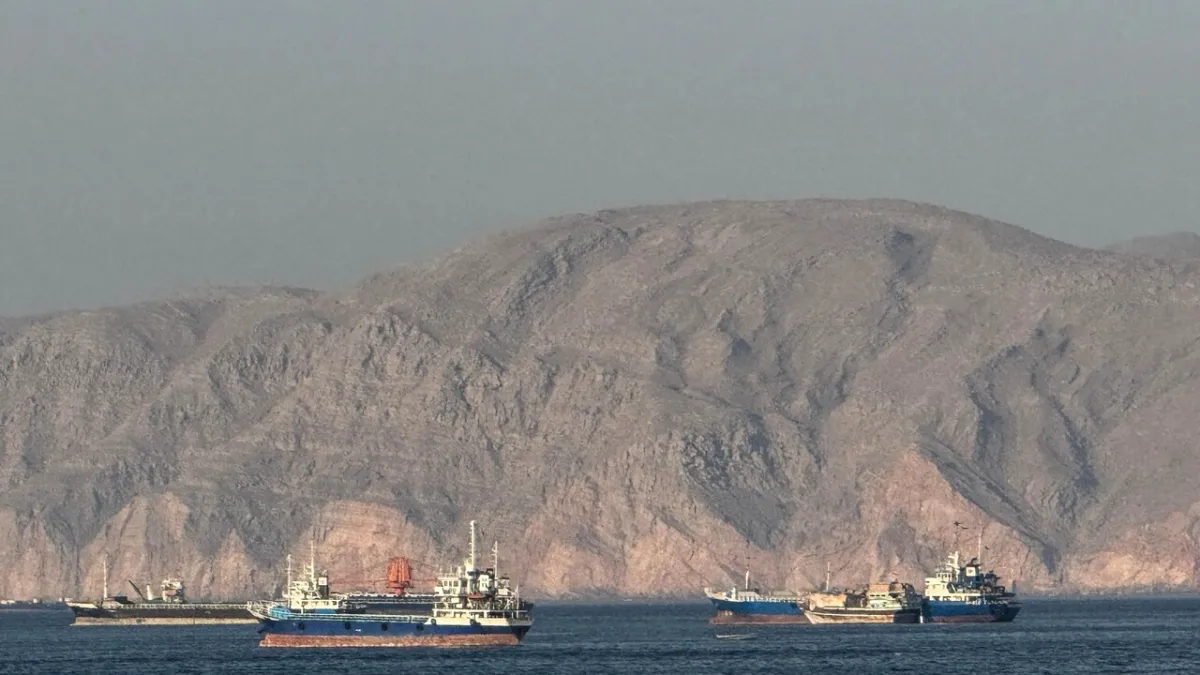
TEHRAN — Tensions in the Strait of Hormuz have flared up again in early 2026, following provocative actions by United States forces that overtly targeted Iranian missile and air defense systems. This incident has sparked serious concerns about the potential for military escalation in the Persian Gulf, a vital shipping lane crucial for global energy supplies. The targeted attack, confirmed by regional intelligence sources, marks a new chapter in the ongoing friction between the two powers.
This latest escalation comes amid a long history of simmering tensions in the Gulf region. For decades, the Strait of Hormuz has been a geopolitical flashpoint, where Iran's strategic interests and the United States' military presence frequently clash, creating a fragile situation constantly on the brink of conflict.
The United States military claims that the targeting of Iranian missile and air defense systems is a response to increased Iranian activity deemed to threaten international navigation and regional stability. Anonymous sources from the Pentagon indicated that the operation was carried out with high precision to neutralize potential threats without causing unnecessary casualties.
Iran, on the other hand, will likely view this action as a serious violation of its sovereignty and an act of aggression. The Iranian government has repeatedly asserted its right to defend its airspace and waters from foreign interference, emphasizing that the presence of foreign military in the Gulf only exacerbates the situation.
Waves of US-Iran escalation erupt: The Middle East boils again in 2026.
The Strait of Hormuz itself is a vital artery for global oil trade, with approximately one-third of the world's total oil supply passing through this route daily. Any disruption, even a minor one, has the potential to send economic shockwaves across the globe, causing oil price surges and global market uncertainty.
The international community broadly calls for immediate de-escalation. The United Nations Secretary-General, through his spokesperson, expressed deep concern over these developments and urged all parties to exercise restraint and return to diplomatic dialogue to prevent a wider conflict.
Pizzaballa: Peace is only culture, Middle East trapped in endless crisis 2026.
Leading geopolitical analyst, Dr. Aris Syafii from National University, argued that this action by the United States could be a step to send a strong message to Iran regarding the limits of tolerance for military activities in international waters. 'However, the risk is that Iran will respond in an unpredictable manner, which could quickly trigger a larger regional conflict,' said Dr. Aris in an exclusive interview.
The economic impact of this escalation is already being felt. Futures crude oil prices show a significant increase, and global stock markets exhibit heightened volatility. Investors are closely monitoring developments in the Gulf, worried about serious disruptions to the vulnerable global energy supply chain.
This incident also harks back to a series of similar confrontations in the past, including when Iran threatened to close the Strait of Hormuz in response to economic sanctions or military operations. History shows that whenever tensions in this region escalate, the consequences are felt far beyond its geographical boundaries.
Hormuz turmoil: Iran blocks crucial route, US retaliates missile attack.
The United States government reiterates its commitment to ensuring freedom of navigation and the security of international shipping lanes in the Strait of Hormuz. A statement from the White House emphasized that the actions taken were purely defensive and aimed at protecting allied interests and global trade.
Meanwhile, Iranian authorities consistently accuse the United States of instigating instability in the region. They consider the United States military presence as a form of intervention that violates the sovereignty of Gulf states, including Iran, and demand the withdrawal of foreign forces.
Middle East in turmoil: Iranian missiles target UAE, Bahrain, Qatar; US launches counterattack.
Other Gulf nations, such as Saudi Arabia and the United Arab Emirates, have also expressed concern. They worry that an escalation between these two major powers could easily drag them into a destructive conflict, threatening the fragile regional political and economic stability.
The United Nations Security Council is expected to hold an emergency session to discuss the situation. Calls for intensive dialogue and mediation are anticipated to be a key agenda, although the prospects for success remain unclear given the high level of distrust between both parties.
With the Strait of Hormuz once again at the center of global attention, the outlook for peace in the Gulf region appears increasingly bleak. Future developments will largely depend on Iran's response and the United States' willingness to seek sustainable diplomatic solutions, amidst the looming shadow of an escalating conflict.