 Dorry Archiles
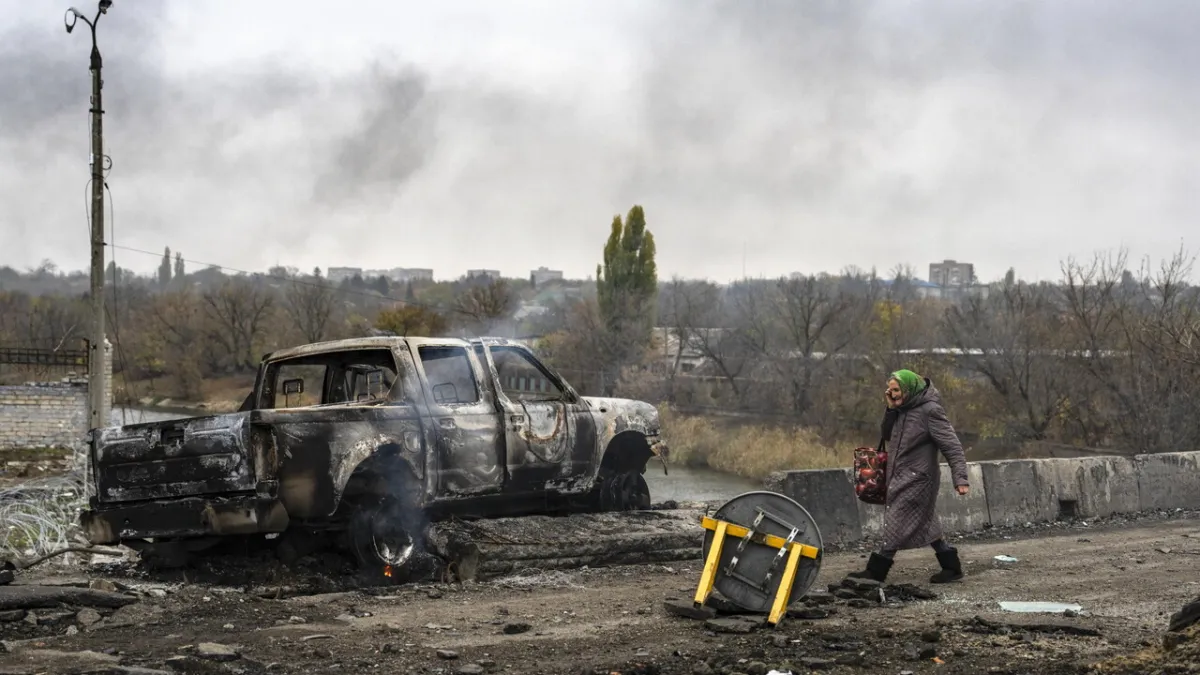
MOSCOW – Russia, through Foreign Minister Sergey Lavrov, announced in 2026 its readiness to negotiate to achieve the objectives set by President Vladimir Putin regarding the conflict in Ukraine. This statement comes amidst increasingly complex geopolitical turmoil, with Lavrov openly criticizing the European Union (EU) for, in his view, only now attempting to board the 'last train' to peace.
'We will negotiate to achieve the objectives set by Putin in 2024,' Lavrov stated, reaffirming Moscow's steadfast position on the desired outcomes of the conflict. This statement indicates that Russia will not compromise on the fundamental principles outlined since the start of its military operation.
Lavrov's barb directed at the European Union was quite sharp. According to him, 'Negotiations on Ukraine, the EU wants to get on the last train. They understand that the convoy is leaving and want to take the last car.' This metaphor clearly illustrates Russia's view that the European Union was slow to realize the urgency of a diplomatic solution and is now trying to catch up.
The situation on the battlefield in Ukraine in 2026 indeed shows different dynamics. After years of intense conflict, both sides face resource exhaustion, albeit to varying degrees. Russia's readiness to negotiate, with the condition of achieving 'Putin's objectives,' can be interpreted as an attempt to consolidate its gains on the ground.
For the European Union, the pressure to find a peaceful solution is mounting. The economic impact of sanctions, energy crises, and waves of refugees have burdened its member states. Russia's refusal to negotiate without terms favorable to Moscow puts the EU in a dilemma: between upholding the principle of Ukraine's sovereignty and pushing for sustainable peace.
In the broader global context, the involvement of the United States under President Donald Trump shows a more pragmatic approach, while still supporting its European allies. However, there is a tendency to encourage Europe to be more self-reliant in resolving regional crises, including the conflict in Ukraine.
Geopolitical analysts observe that Lavrov's statement could indicate a window, however small, for dialogue. However, Russia's ambiguous condition of 'objectives set by Putin in 2024' could be a major stumbling block. These objectives, which include the demilitarization and 'denazification' of Ukraine, may be difficult for Kyiv and its allies to accept without significant modifications.
Meanwhile, the military situation in Ukraine continues to evolve. The use of drone technology, for example, has become a vital element in evacuation operations in conflict zones, as reported in the article Ukraine Transforms Death Zones, Evacuation Drones Become Vital Lifesavers, highlighting the continuously changing complexity of the battlefield.
The role of international organizations like the United Nations is also crucial in fostering dialogue. However, polarization in the UN Security Council often hinders effective mediation efforts. Global civil society's calls for peace continue to resonate but have not yet managed to alter the power dynamics at the negotiating table.
If negotiations do materialize, their form will likely be very different from what was previously imagined. Russia is expected to demand recognition of annexed territories, or at least Ukraine's neutral status. The European Union, on the other hand, must balance Russia's demands with upholding the principle of territorial integrity.
The implications of any peace agreement will be enormous, not only for Europe but also for the global security order. The future of Ukraine, the relationship between Russia and the West, and the role of organizations such as NATO, will all be redefined. The ongoing tensions demand a solution that not only ends the war but also prevents similar conflicts in the future.
Editorial Insight: Russia's statement regarding these negotiations, with its mocking tone towards the European Union, reflects a significant tactical shift amidst the protracted conflict. This is not merely an invitation to dialogue but also a political maneuver to pressure the West into accepting new realities on the ground. The European Union now faces a difficult choice: accept negotiations on Russia's challenging terms or confront the continued uncertainty of a prolonged conflict. Regardless of the rhetoric, this diplomatic window, however narrow, needs to be carefully explored to prevent further escalation.