 Gabriella
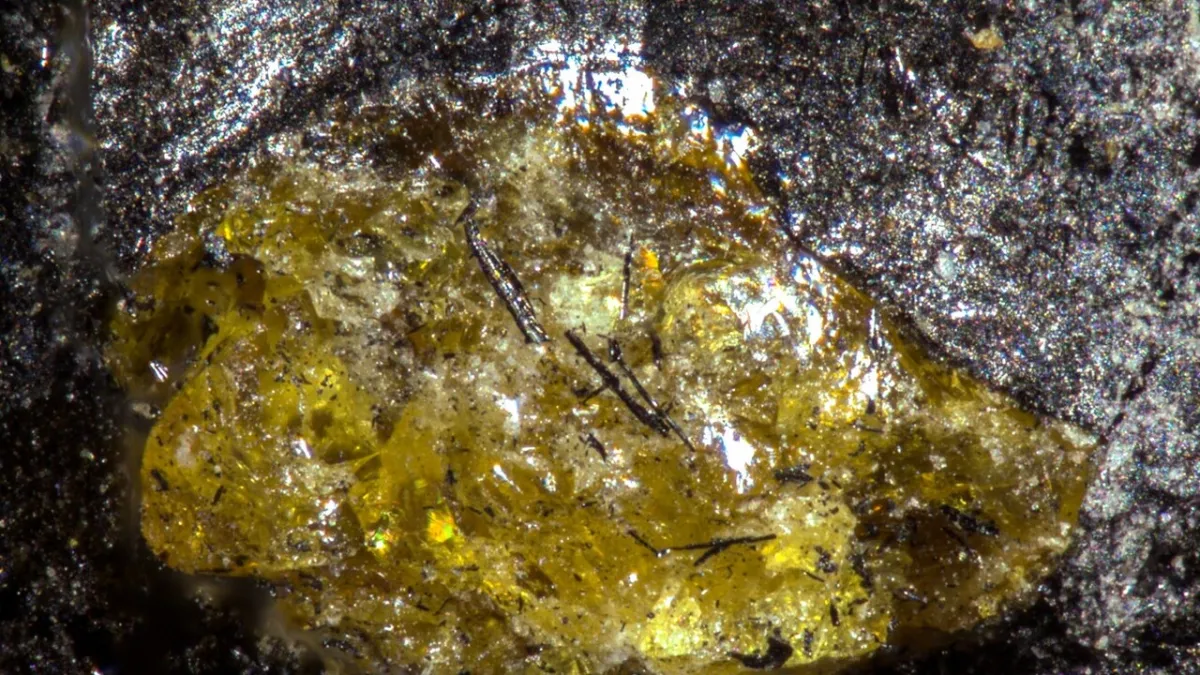
CHINA — A revolutionary scientific discovery has shaken the world of paleontology in early 2026. Researchers successfully unearthed the world's oldest amber fragments in the region of China, dating back approximately 385 million years. This finding provides invaluable insight into ancient ecosystems and the evolution of forests during the Devonian era, opening a new window into Earth's geological history.These tiny fragments of hardened tree resin, despite their minuscule size, revolutionize our understanding of when and how plants began producing resin. Prior to this discovery, the oldest recorded amber fossils originated from the Triassic era, around 230 million years ago. This significant age difference indicates that tree resin existed much earlier than previously thought.
The specific location of the discovery is in an inland region of China, which has now become a global focal point for the scientific community. Scientists from various institutions, including Peking University and national geological research bodies, were involved in the excavation and analysis processes. This reaffirms China's crucial role in contributing to global archaeological and scientific discoveries.
The discovery of Devonian amber highlights a critical period in Earth's history when life on land was just beginning to flourish. During that time, ancient forests with gigantic trees dominated the landscape, and tree resin likely served as a natural defense mechanism against insects and pathogens.
Dr. Ling Wei, a prominent paleobotanist from the Chinese Academy of Sciences, expressed his enthusiasm. "This is a monumental discovery that fundamentally changes the timeline of tree resin evolution," he stated. "These small fragments hold genetic and ecological information from an almost untouched epoch."
The identification and dating process for these amber fragments involved advanced technologies such as infrared spectroscopy and carbon isotope analysis. These methods enabled researchers to confirm the authenticity and age of the samples with high precision, eliminating doubts about the finding's significance.
The implications of this discovery extend beyond mere historical records. By studying the chemical composition of ancient amber, scientists can gain deeper insights into Earth's atmosphere 385 million years ago, including oxygen and carbon dioxide levels. This data is crucial for modeling ancient climates and predicting future climate changes.
Amber, as a natural "time capsule," often preserves insects, spores, and other organic matter. Although the discovered fragments are very small, hopes are high that further discoveries at the same or nearby locations could reveal larger inclusions, offering a visual glimpse into life during the Devonian era.
Researchers plan to continue expeditions in the region, hoping to find larger amber specimens or those containing macroscopic inclusions. Research funding has been significantly allocated by the Chinese government to support these paleontological exploration efforts.
This discovery of the world's oldest amber once again demonstrates that many secrets of Earth still await unveiling. It underscores the importance of basic scientific research in enriching human knowledge about this planet and its extraordinary history of life.
The finding also strengthens China's position as one of the world's leading centers for paleontological research, consistent with numerous dinosaur and ancient fossil discoveries in recent decades. Continued investment in science remains key to unlocking the mysteries of the universe.