 Chris Robert
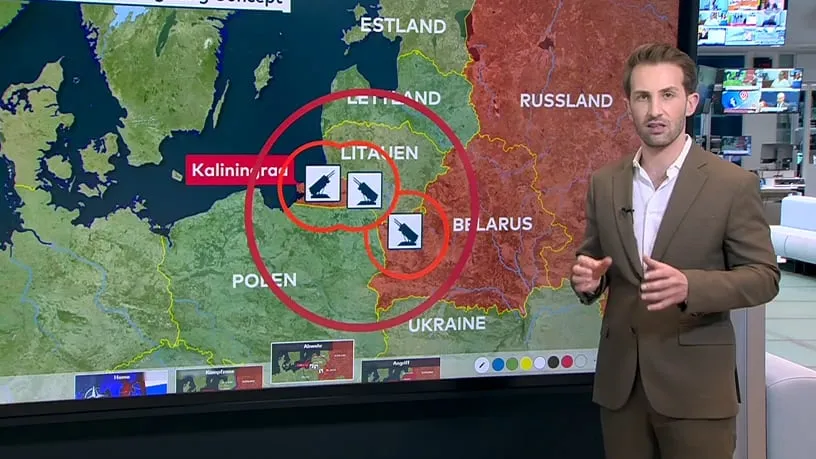
VILNIUS – The North Atlantic Treaty Organization (NATO) is now making massive moves, devising a three-phase defense strategy to counter a possible Russian military aggression against the Baltic states. This state of readiness emerged following an in-depth analysis by Marian Grunden, a prominent editor at the German media outlet WELT, who clearly outlined the alliance's plan for a worst-case scenario. NATO reiterates its commitment to protecting every inch of its member territory from external threats, especially in response to Europe's escalating geopolitical dynamics.
The Baltic region, comprising Estonia, Latvia, and Lithuania, has long been considered a flashpoint in the European security architecture. Its geographical proximity to Russia and historical context place these three nations under strategic scrutiny. The ongoing tensions in Eastern Europe, particularly after the conflict in Ukraine, further reinforce the urgency for NATO to have a comprehensive and responsive defense blueprint.
According to Grunden, the three-phase strategy is designed to respond to various levels of threat, ranging from deterrence to active defense. The first phase focuses on the proactive deployment of troops and military assets in the Baltic region, aiming to send a strong signal to potential aggressors that any hostile action will be met with a proportionate response. This includes increasing multinational troop presence and conducting large-scale military exercises.
The second phase will be activated immediately upon detection of signs of invasion or attack. In this scenario, frontline defense units will be tasked with slowing down enemy forces, allowing time for main NATO forces to mobilize and effectively deploy reinforcements. This involves the use of advanced air and missile defense systems to intercept threats from air and ground.
Subsequently, the third phase involves a full-scale containment and counter-offensive response. If initial deterrence and defense efforts fail to repel an attack, NATO will launch large-scale operations to reclaim any potentially occupied territory and defeat the aggressor forces. Grunden's article underscores that this strategy is not merely a plan on paper, but an operational guide that has undergone intensive simulations.
Should Russian President Vladimir Putin actually dare to launch aggression into the Baltics, NATO will demonstrate its collective strength, Grunden stated in his report, emphasizing the alliance's seriousness. This statement reaffirms that NATO will not hesitate to activate Article 5 of the North Atlantic Treaty, which declares that an attack against one member is an attack against all.
The enhancement of defense capabilities in Eastern Europe is not without reason. Since the conflict in Ukraine, Russia has shown increased military activity on its western borders. This has triggered serious concerns among NATO member states, especially those bordering Russia. Some recent reports also indicate that Russia continues to expand its long-range strike capabilities, including the development of super drones that could potentially reach vital European cities.
NATO's decision to openly discuss this strategy also serves as a strong diplomatic message. It is an effort to prevent escalation of conflict by demonstrating full readiness and the serious consequences Russia would face if it dared to violate the sovereignty of member states. Transparency in this planning is expected to be an effective deterrent.
International security experts view this NATO move as an evolution of the alliance's defense doctrine, which is now more proactive and adaptive to modern threats. The concept of forward defense is once again central to the strategy, with an emphasis on the ability to respond quickly and decisively on the front lines.
Amidst geopolitical tensions, the Baltic states themselves continue to strengthen their national defense capabilities. Investments in military modernization, troop training, and full integration with NATO command structures are top priorities. This is a collaborative effort involving all alliance members to ensure collective security.
The presence of multinational NATO forces in Estonia, Latvia, and Lithuania has been a common sight in recent years. Joint military exercises, such as Saber Strike or Defender Europe, are regularly held to test coordination and interoperability of forces from various member states, ensuring a unified response in crisis situations.
Concerns about hybrid warfare, which includes cyberattacks and disinformation, are also an integral part of NATO's defense strategy. The alliance recognizes that modern conflict is not limited to conventional battlefields, thus requiring a layered approach to protect vital infrastructure and society from various forms of threats. Related articles such as London Under Threat: Russia's Hybrid Warfare Threat Expands also highlight the complexity of these threats.
Marian Grunden's report from WELT sheds light on NATO's evolving defense framework. This is not merely a reactive response but a long-term vision to maintain stability and peace in Europe, confronting continuously evolving security challenges.
Editorial Insight: NATO's decision to outline a three-phase defense strategy in the Baltics sends a clear message: the alliance is serious about safeguarding the territorial integrity of its members. This move, while potentially escalating rhetorical tensions, actually aims to prevent large-scale conflict by demonstrating unwavering readiness. The success of this strategy will heavily depend on the unity of NATO members, speed of response, and adaptability to evolving aggressor tactics. This is a declaration that the era of ambiguity has ended, replaced by a firmer and more transparent defense posture.