 Robert Andrison
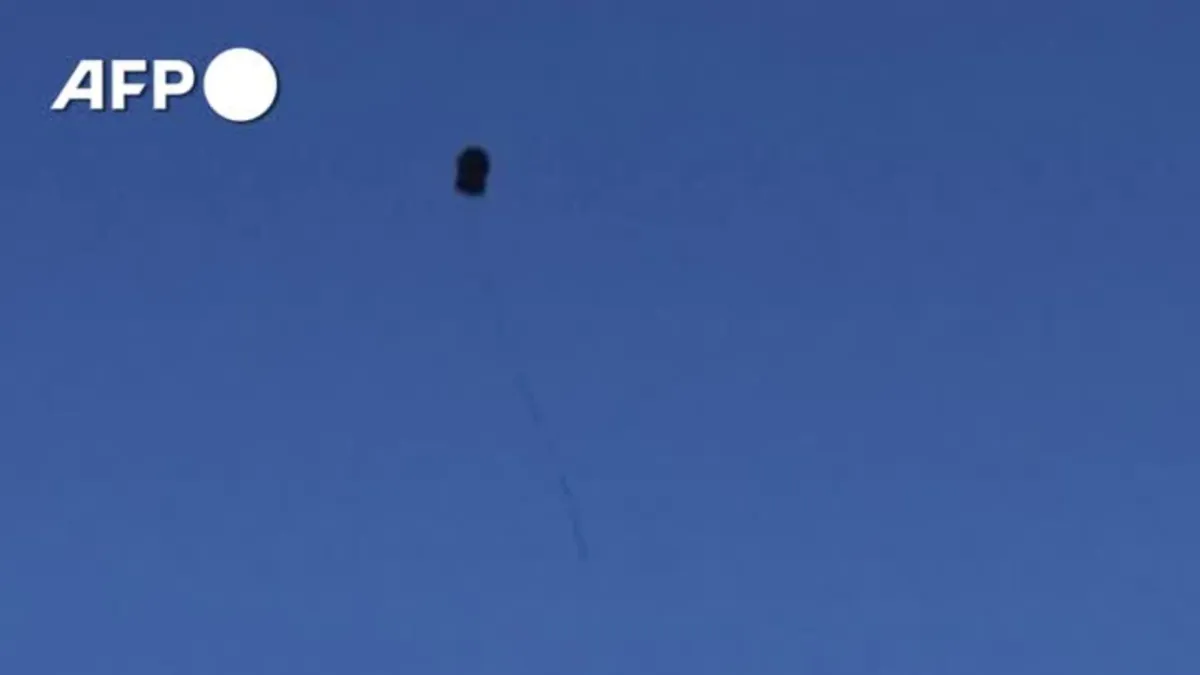
GAZA — Hundreds of Palestinian families recently gathered along the coast of the Gaza Strip, filling the sky with thousands of colorful kites in a festival that conveyed a profound message. This event was not merely a cultural celebration; it served as a symbolic declaration aimed at settlers, asserting the existence and aspirations of the Palestinian people. "If we can't get there, our kites will get there," was the core message intended, reflecting a desire to transcend the physical barriers separating them.
This kite festival took place amidst persistent tensions in the region, where issues of settlement and land rights remain catalysts for prolonged conflict. For many Palestinians, every inch of land carries irreplaceable historical and identitarian significance. Therefore, collective actions such as this festival become potent expressions of non-violent resistance.
The active participation of children and youth in the festival demonstrated how the spirit of resistance is passed down through generations. They enthusiastically decorated and flew kites, transforming the often-gray sky into a canvas of hope and freedom. Their smiles, though fleeting, were proof of an enduring spirit unwilling to succumb to despair.
Kites, in this context, transcend their function as toys. They embody a metaphor for the freedom and mobility denied to many Palestinians. Each string extending into the sky is a link between a confined reality and the dream of a brighter future where boundaries no longer bind.
An event coordinator, who preferred anonymity, stated, "We want the world to see that we exist, we have rights, and our spirit will never be extinguished. These kites are our voices soaring high, passing over fences and checkpoints, reaching anyone willing to listen." This statement underscores the collective effort to convey their narrative to a broader audience.
The message carried by these kites is directed at settlers in the disputed territories, as well as the international community. It serves as a reminder that behind news reports of armed conflict, there is a society that continues to strive for recognition and dignity through peaceful and creative means.
Although its impact may not directly alter political dynamics, the festival effectively drew attention to the living conditions of Palestinians. Local media and several international news agencies covered the event, disseminating images of a sky filled with kites as a symbol of resilience and a desire for dialogue, albeit indirectly.
Activities like kite festivals have long been part of civil resistance strategies in Palestine. History records various forms of cultural expression, art, and sport being used to voice protest, maintain national identity, and foster internal solidarity amidst political and military pressure.
The festival also plays a crucial role in maintaining the mental and social well-being of a community constantly facing challenges. It provides a space for togetherness, creativity, and the positive release of emotions, essential for building long-term social resilience.
In conclusion, the 2026 kite festival in Gaza once again demonstrated that hope can soar high even from the lowest points. With every kite flown, Palestinians sent a universal message about the right to live freely and the desire for a just peace, a portrayal that contrasts with the dominant narrative of conflict.