 Stefani Rindus
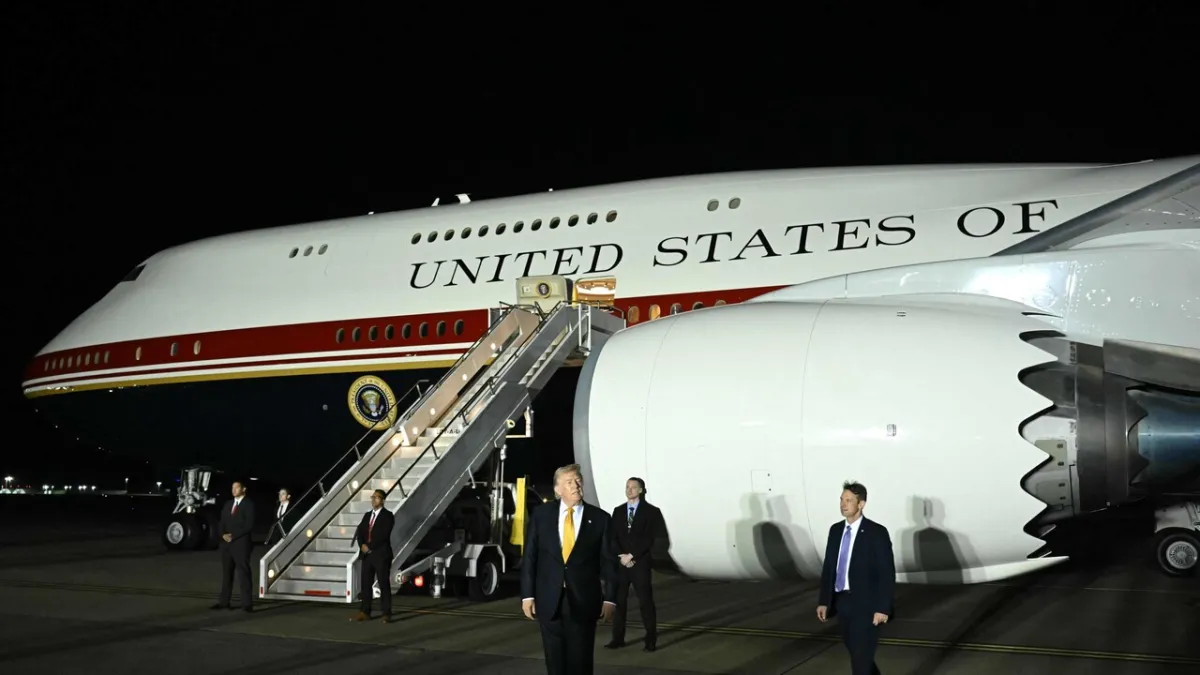
Washington D.C. — A new chapter in the tense relationship between media and government has unfolded as a series of subpoenas were issued to journalists from The New York Times (NYT) by judicial bodies. These actions relate to exclusive reports on crucial security vulnerabilities concerning the presidential aircraft, Air Force One. Stemming from the repressive policies of the former Donald Trump administration against the press, this move sparks a fierce debate about journalistic freedom and the boundaries of national security in 2026. The subpoenas serve as a response to the publication of detailed security issues reportedly linked to a jet donated by Doha, Qatar.
The controversial report published by the NYT several years ago revealed significant weaknesses in Air Force One's operational security system. The article detailed potential vulnerabilities that could be exploited, raising serious concerns for the safety of the U.S. President and the operational integrity of one of America's symbols of power. Unnamed internal sources allegedly leaked this information, which then became the basis for summoning the reporters.
The reaction from the Trump administration at the time was strong condemnation, accusing the NYT of endangering national security. Subsequently, official subpoenas began to be issued, demanding journalists reveal their sources. This step, according to various press freedom organizations, constitutes an intimidation attempt aimed at silencing the media and preventing further investigation into government policies. This situation has been extensively discussed in various media analyses, for instance, as reviewed in the article Trump Administration Intimidates NYT Journalists: Air Force One Triggers Court Summons.
Air Force One is not merely a mode of transport; it is a mobile command center equipped with advanced technology to ensure the President's communication and protection. The issue that emerged concerned a specific jet, reportedly a donation from Doha, the capital of Qatar. Although details of the donation and the specific type of jet remain a subject of public debate, the NYT report implicitly linked it to unresolved security problems.
This case once again highlights the eternal dilemma between the public's right to know and the government's need for secrecy for security purposes. Legal experts and journalism ethicists argue that forced disclosure of sources is a fundamental threat to the principle of a free press. Without source protection, journalists would struggle to obtain vital information necessary for oversight of power.
The relationship between the White House and the media has often been strained, but direct legal action against journalists under the Trump administration was considered beyond normal boundaries. Previous administrations, while often complaining about unfavorable coverage, rarely used legal force to directly suppress investigative reporting in such a manner.
The New York Times, supported by numerous press freedom advocacy organizations, has consistently refused to comply with the subpoenas. They assert that source protection is a crucial constitutional right to maintain journalistic integrity. This legal battle has been ongoing for several years, with implications still being debated in courts in 2026.
In 2026, the legacy of former President Trump's actions against the media is still felt. His policies have reshaped the dynamics between government and journalists, creating a worrying precedent for freedom of expression. Discussions on this topic frequently arise in public debate, especially leading up to general elections and whenever the subject of government transparency is raised.
The profound debate continues regarding where the line between national security and the public's right to know critical information should be drawn. Should the public be aware of every potentially damaging security detail, or is there information that should remain confidential for the greater good? This Air Force One case serves as a classic study for this dilemma.
The controversy surrounding Air Force One and the summoning of NYT journalists is a stark reminder of the importance of an independent press in a democracy. It affirms that even amidst political pressure and security demands, the protection of journalists and their sources is an essential pillar for government accountability and transparency, a principle continuously championed in 2026.