 Dorry Archiles
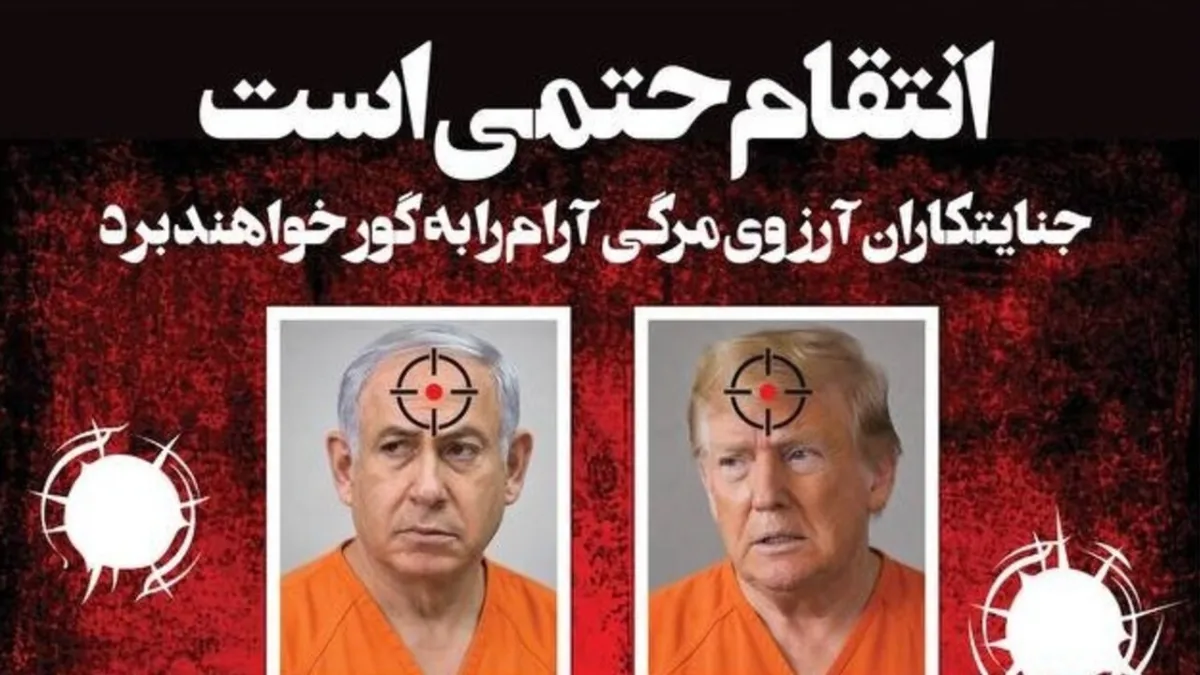
Tehran — Mojtaba Khamenei, son of the late Supreme Leader of Iran, Ayatollah Ali Khamenei, recently issued a serious threat of revenge against three prominent global figures: former US President Donald Trump, Italian Prime Minister Giorgia Meloni, and Israeli Prime Minister Benjamin Netanyahu. This declaration follows his father's death in 2026, exacerbating geopolitical tensions and sparking fears of potential conflict escalation in the Middle East. The incident adds to a long list of frictions between the Islamic Republic of Iran and Western nations, as well as Israel, putting the world on high alert.
These threats were delivered in a highly sensitive context, shortly after the passing of Ayatollah Ali Khamenei, who had long led Iran. Mojtaba, known for his significant influence among the clerical elite and Iran's Revolutionary Guard, explicitly named the three leaders as individuals responsible for the circumstances leading to his father's death.
Unidentified intelligence sources in the Middle East indicate that Mojtaba's threats are not mere rhetoric but reflect strong sentiments within Iran's power circles, seeking retaliation for what they perceive as foreign interference.
Donald Trump, whose presidency was marked by a hardline policy against Iran, including withdrawal from the JCPOA nuclear deal and heavy economic sanctions, became a primary target. His policies are often regarded as major triggers for instability in the Gulf region and heightened tensions between Washington and Tehran.
Giorgia Meloni, the Prime Minister of Italy, was also surprisingly included in this blacklist. Her involvement, as suggested in previous reports, is linked to the narrative that Italy under her leadership is considered a 'mastermind' behind Khamenei's death. This indicates that Iran perceives a Western consensus in the alleged conspiracy against its leader.
Meanwhile, Benjamin Netanyahu, the Prime Minister of Israel, has long been a sworn enemy of Iran. Relations between the two countries have always been characterized by extreme tension, with Israel consistently accusing Iran of being the greatest threat to its security. Mojtaba's threat further underscores this deep-seated animosity.
Amidst the harsh rhetoric from Tehran, the United States made a statement that drew global attention. Washington claimed that Iran had admitted that the attacks on ships in the Strait of Hormuz were a mistake. This statement, if true, indicates a complexity in Iran's stance; on one hand aggressive, on the other acknowledging error.
The Strait of Hormuz itself is the world's most vital oil shipping lane, and any incident there has the significant potential to disrupt global energy supplies and trigger widespread conflict. Iran's admission of error in Hormuz, though conveyed through the US, could be interpreted as an attempt to de-escalate tensions in this strategic area while maintaining its tough image.
The death of Ayatollah Ali Khamenei in 2026 has opened a new chapter in Iranian politics, with Mojtaba Khamenei emerging as a potential figure to fill the void in spiritual and political leadership. However, with these revenge threats, he places Iran at a crossroads between escalation and diplomacy.
This situation demands extreme caution from all international actors. The global community, including the UN and major powers, urges all parties to exercise restraint and avoid provocative actions that could worsen an already fragile situation. The future of Iran's relations with the Western world and Israel now depends on how Mojtaba's threats will be acted upon and responded to by the parties involved. The potential for renegotiation or military escalation remains two opposing scenarios on the geopolitical horizon of 2026.