 Dodi Irawan
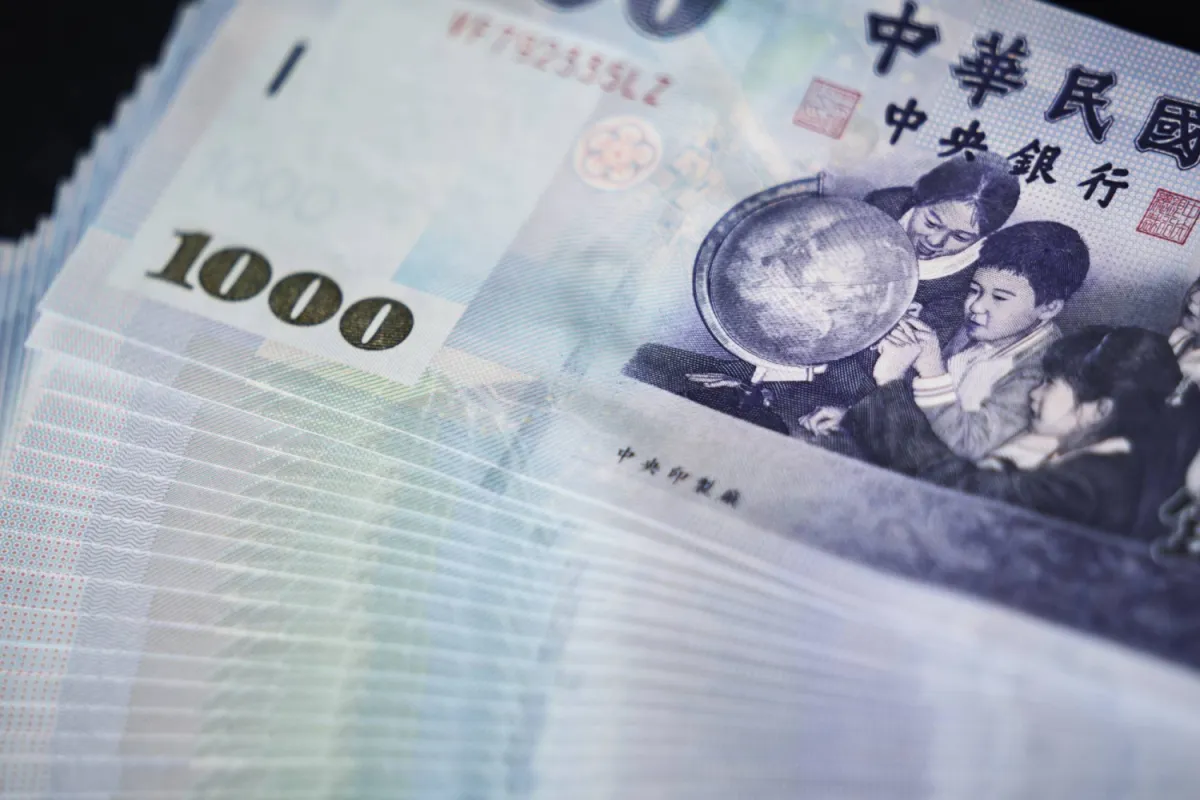
TAIPEI – The Taiwan Dollar is sharply depreciating toward its weakest level in a decade in 2026, an economic phenomenon perplexing analysts and investors alike. This weakening occurs precisely as Taiwan's economy, particularly its technology and artificial intelligence (AI) sectors, registers phenomenal growth, challenging the fundamental tenets of global currency trading.
This paradoxical situation raises fundamental questions: why has a booming AI industry, which should drive exports and attract foreign investment, failed to support the national currency's value? Economists point to a variety of complex factors contributing to this unusual trend.
Normally, strong export expansion and significant profits from high-tech sectors would bolster the domestic currency. Exporting companies would convert their foreign currency earnings into local currency, increasing demand for the Taiwan Dollar and, in turn, appreciating its value. However, this scenario is not materializing significantly.
One of the primary suspected causes is the stark interest rate differential with other major economies, particularly the United States. The aggressive interest rate hikes by the US Federal Reserve in previous periods have made US dollar-denominated assets more attractive to global investors. This has triggered capital outflows from Asian markets, including Taiwan, towards higher-yielding US dollar investment instruments.
Furthermore, external pressure from a globally strengthening US dollar plays a role. As the world's reserve currency, movements in the US dollar significantly impact the value of other currencies. Geopolitical tensions and global economic uncertainties often prompt investors to seek a 'safe haven' in the US dollar, exacerbating the position of more vulnerable currencies.
Taiwan's semiconductor and AI industries, which form the backbone of its exports and innovation, have indeed experienced an unprecedented surge in demand. Leading companies, such as chip manufacturers, report record revenues and aggressive expansion. However, a significant portion of these profits may not be immediately converted back into Taiwan Dollars or reinvested domestically on a scale large enough to offset selling pressure.
The Central Bank of Taiwan's monetary policy also faces a dilemma. Intervention to support the Taiwan Dollar could deplete foreign exchange reserves and potentially hinder export competitiveness. Conversely, allowing continued depreciation could fuel imported inflation and reduce purchasing power for the public, although it might offer temporary benefits for exporters.
Similar situations have occurred in countries heavily reliant on advanced technology exports, but the dynamics of global capital and geopolitics in 2026 present unique challenges. Some analysts even compare this phenomenon to the experiences of other emerging markets struggling to maintain currency stability amid global capital dominance.
According to market experts' reports, a large portion of the high-tech export earnings may be held in foreign currency by multinational corporations. This is done to facilitate global operations, mitigate exchange rate risks, or invest overseas, thus limiting the flow back into the domestic economy.
The uncertain geopolitical environment in the Asian region may also influence investor sentiment towards Taiwan's assets. Trade and technology tensions, such as those seen in US chip restrictions threatening data centers in Asia, create uncertainty that can make investors hesitant to hold local assets.
This is not merely a matter of economic fundamentals, but also a reflection of the complex interconnectedness of global financial markets, said a senior economist from a regional investment bank who wished to remain anonymous. The AI boom indeed brings prosperity, but its mechanism of transmission to the domestic currency is not as efficient as we might assume under current market conditions.
The government of Taiwan and its central bank face the arduous task of formulating a strategy that can balance investment attractiveness, currency stability, and long-term economic growth. A holistic approach encompassing monetary, fiscal, and regulatory policies is required to address this paradox and ensure that the prosperity from the AI sector can be broadly felt.
Editorial Insight: The phenomenon of the Taiwan Dollar's weakening amidst the AI industry boom in 2026 highlights the complexities of the modern global economy. Reliance on foreign capital flows, international interest rate dynamics, and geopolitical tensions can easily override domestic fundamental strengths. The future of the Taiwan Dollar will largely depend on adaptive policy responses and the ability to manage market expectations in an ever-changing environment. This serves as a valuable lesson for countries relying on a single leading sector for prosperity.