 Dodi Irawan
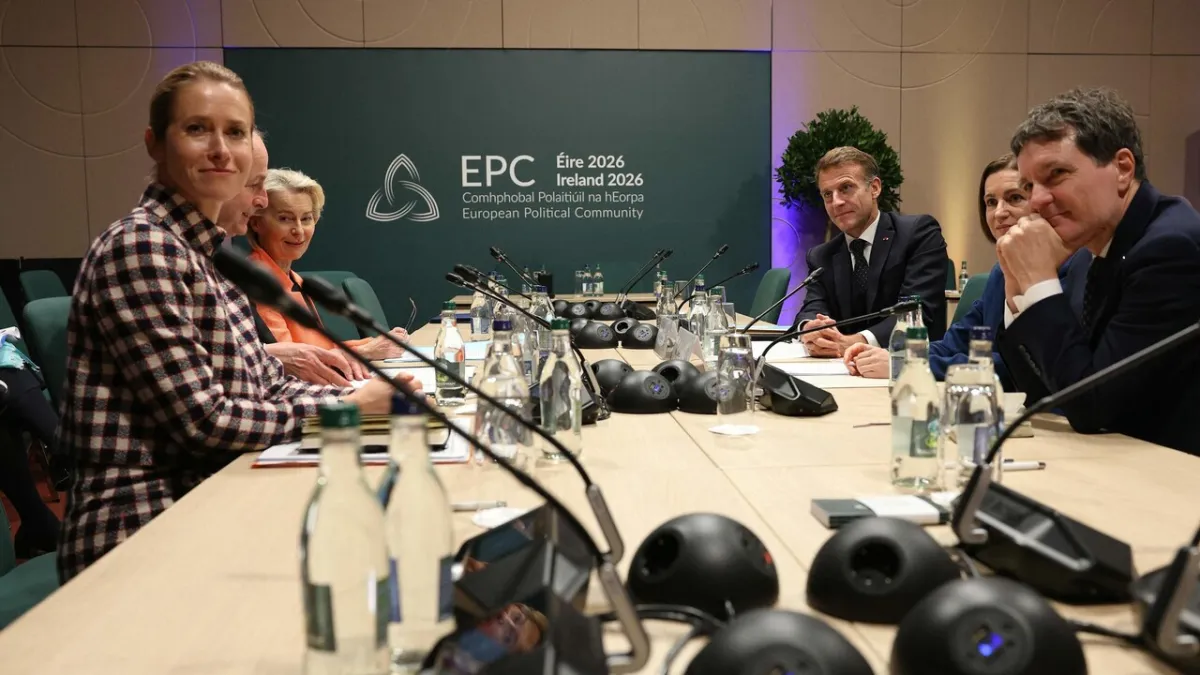
Tallinn – Estonian Prime Minister Kaja Kallas recently issued a scathing critique of the so-called 'Kushner-Witkoff model' for reconstruction and peace in Ukraine, asserting that the nation possesses robust institutions and is not merely a ground for speculative projects. Kallas's statement emerged amidst Moscow's persistent attempts to divert attention from ceasefire issues, coupled with its repeated denials of having launched attacks on Ukraine.
Kallas's criticism signals a firm rejection of any approach that potentially undermines Ukraine's sovereignty and its capacity to manage its own future. 'Ukraine has functioning institutions, a legitimate government, and a people fighting for their freedom. They are not a playground for models driven by private interests without considering existing state structures,' Kallas emphasized at an international diplomatic forum in 2026.
The 'Kushner-Witkoff model' is widely understood as an initiative proposed by prominent private sector figures, including Jared Kushner and Richard Witkoff, which reportedly advocates for investment-based solutions and commercial development for post-conflict regions. While its objectives might appear positive on the surface, Kallas underscored the dangers of such a model, which could erode the legitimacy and role of Ukrainian state institutions.
Kallas, known as one of Ukraine's most vocal supporters in Europe, highlighted the crucial role of international bodies and governments in the reconstruction process. 'True peace and sustainable development can only be achieved through full respect for international law, state sovereignty, and the active participation of Ukraine's democratic institutions,' she stated.
In a broader context, the Estonian Prime Minister's remarks also addressed Russia's continuous efforts to obfuscate facts. Moscow, through various official channels, has maintained that it never attacked Ukraine and that all accusations are attempts to deflect focus from the need for a ceasefire, which, according to them, is not being respected by the Ukrainian side.
'It is abundantly clear that Moscow is repeatedly attempting to divert attention from ceasefire violations and the reality of their aggression,' Kallas affirmed. 'No one has attacked Russia. On the contrary, it is Russia that has launched an unprovoked war against a sovereign nation.'
These sentiments are echoed by numerous global leaders and international organizations who also call for any peace and reconstruction initiatives to be centered on strengthening Ukrainian institutions, rather than on projects that could marginalize the state's role.
Geopolitical observers note that the debate surrounding Ukraine's reconstruction model reflects a larger tension between approaches prioritizing short-term economic pragmatism versus long-term principles of sovereignty and justice. Kallas argues that disregarding Ukraine's institutions would be tantamount to disregarding its people's struggle.
Estonia, as a NATO and European Union member state, consistently advocates for strict sanctions against Russia and unwavering military and financial support for Ukraine. Kallas's current stance underlines Tallinn's commitment to ensuring that Ukraine rebuilds with dignity and full control over its own destiny.
Kallas's statement also serves as a warning to global actors that peace efforts should not become a tool to weaken a struggling nation, but rather to empower it. It is a call for transparency, accountability, and respect for fundamental principles in international diplomacy.
The debate concerning the 'Kushner-Witkoff model' and the private sector's role in post-conflict reconstruction is expected to continue. However, Kallas's insistence on placing Ukrainian institutions at the core of any solution points towards a direction many hope for: sustainable, sovereignty-based solutions.
Editorial Insight: Kaja Kallas's critique of the 'Kushner-Witkoff model' is more than a rejection of a business proposal; it is an affirmation of the fundamental principles of sovereignty and institutional integrity for a nation amidst conflict. This statement underscores that Ukraine's reconstruction must be predicated on the country's own capacity, supported by international partners, not dictated by private agendas that could disregard existing governance. This is crucial to prevent further fragmentation or the emergence of quasi-state entities that would only complicate the path to lasting and stable peace. Kallas's insistence also indirectly challenges Russia's deceptive narrative, compelling the world to remain focused on the root causes and credible solutions.