 Demian Sahputra
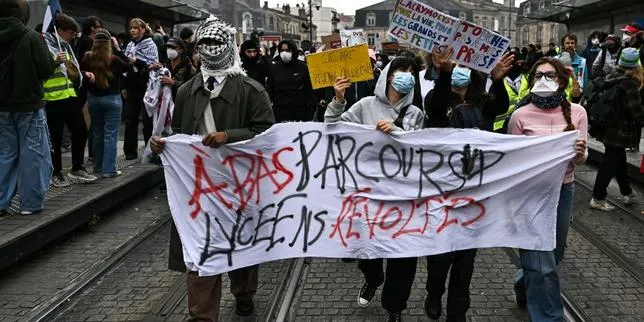
PARIS – The French government, through the Minister of National Education and the Minister of Higher Education, announced a series of emergency measures last Monday. This political response aims to de-escalate the massive wave of student protests that have paralyzed parts of the education sector across the country. The policy package seeks to address long-neglected reform demands, particularly concerning the Parcoursup selection system, staffing levels, and the Baccalaureat exam curriculum.
The ongoing protests are not merely a momentary outburst. They represent an accumulation of frustration over reforms initiated during President Emmanuel Macron's two terms, which are now widely considered to have failed expectations. Demonstrators accuse previous policies of widening disparities and burdening the education system without fundamental solutions.
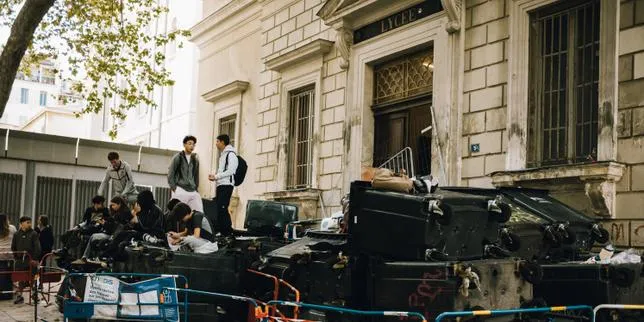
The streets of Paris and other major cities have borne witness to public anger. Thousands of high school and university students have taken to the streets, calling for fundamental change. Their demands extend beyond better learning conditions to a call for a fairer and more inclusive educational future. These actions have sometimes led to clashes with security forces, increasing tension in the capital. (For related actions, also read: Paris in Turmoil: France Increases Police Presence to Face Mass Strikes 2026).
The government fully recognizes the urgency of this situation. A source at the Elysee Palace stated, 'The Cabinet understands the depth of concern expressed by our youth. We are committed to restoring trust and providing concrete solutions.' This statement underscores the government's seriousness in addressing the crisis.
The Minister of National Education explained that one of the main focuses is a comprehensive review of the Parcoursup system, the university admissions mechanism often criticized for being opaque and unfair. Many prospective students feel this system fails to proportionally accommodate their aspirations.
Meanwhile, the Minister of Higher Education highlighted the importance of increasing teaching staff and facilities. Overcrowded classes, lack of support for teachers, and inadequate facilities have been recurring complaints that exacerbate the quality of learning. Concrete steps will be immediately implemented to address these structural issues.
Reforms to the Baccalaureat exam, the gateway to higher education, are also under scrutiny. The government pledges to simplify the curriculum and reduce the excessive pressure experienced by students. The goal is to create a more holistic evaluation system and reduce potential discrimination.
Proposed policies include:
- A comprehensive review of the Parcoursup algorithm and selection process.
- Allocation of additional budget for the recruitment of 5,000 new secondary school teachers and 3,000 university lecturers by the end of the 2026 fiscal year.
- Simplification of Baccalaureat exam material, focusing on essential competencies and reducing irrelevant optional subjects.
- Increase in scholarships and financial aid for students from disadvantaged families.
Nevertheless, many remain skeptical. The French National Student Federation (UNEF) welcomed the government's initiatives but stated that implementation is key. 'We do not want mere sweet promises. We need real action and changes that can be directly felt by every student,' said a UNEF spokesperson.
Criticism also comes from academics who view the government's measures as merely piecemeal. They argue that the root causes of educational problems in France require a more comprehensive approach, not just the undoing of previous reforms.
This situation poses a significant test for the credibility of the French government, especially in managing the aspirations of its youth. The government's ability to implement these promises will determine whether the student mobilization can be appeased or will intensify.
Political analysts predict that if the government fails to provide effective and timely solutions, this wave of protests could trigger greater social instability. Education, as the foundation of national progress, becomes a crucial battleground of ideologies and policies.
The government now faces the monumental task of not only addressing current demands but also formulating a long-term, inclusive, and sustainable vision for education. Constructive dialogue with all stakeholders is essential to achieve a national consensus.
Editorial Insight: The French government's response to the student protests this time signifies an acknowledgment of past education reform failures. However, the success of this policy package heavily relies on the speed and effectiveness of its implementation. If these remain mere promises on paper, the potential for social unrest will continue to loom, or even worsen, given France's long history of student movements acting as catalysts for political change. The government must demonstrate both resolve and flexibility to genuinely alleviate tensions and rebuild public trust.