 Debby Wijaya
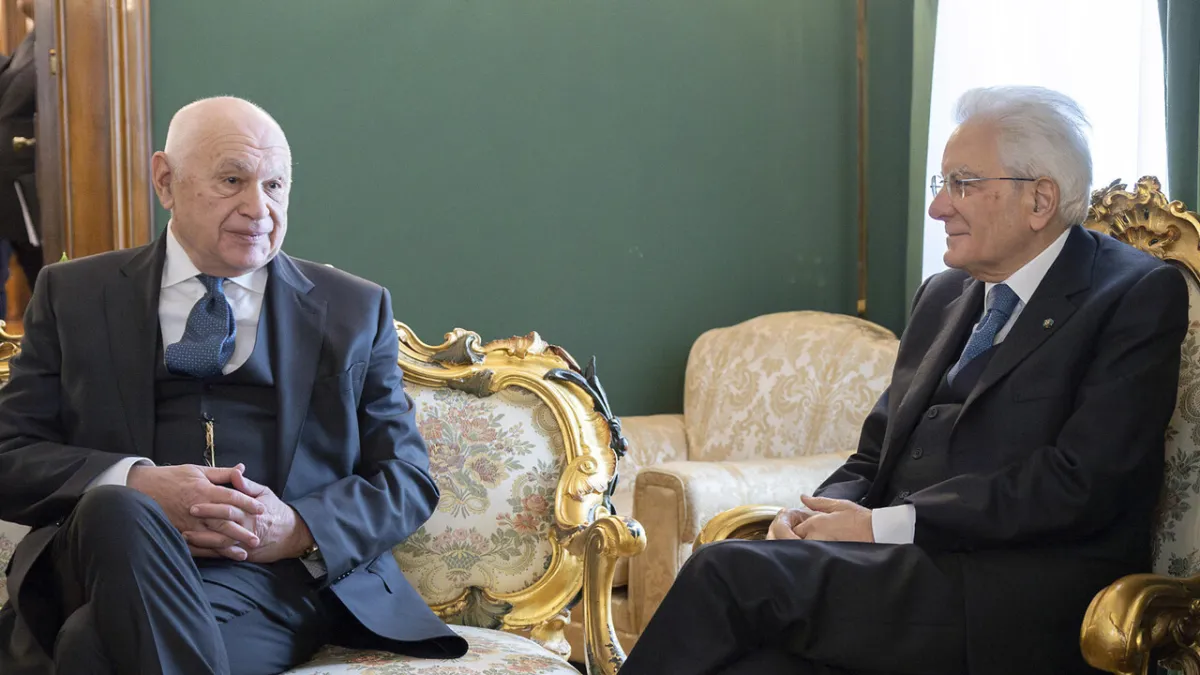
ROME — The Quirinal Palace, official residence of the Italian President, recently issued a stern rebuke to Justice Minister Carlo Nordio regarding the limits of a minister's authority in the pardon application process. President Sergio Mattarella's action follows Minister Nordio's initiation of a pardon inquiry for convicted jeweler Roggero, whose sentence was just handed down. This incident has sparked a fierce debate about constitutionality and the separation of powers at the heart of the Italian government in 2026.
The rebuke from the Quirinal, delivered via an official statement, explicitly outlined that the initiation of the pardon process is an exclusive prerogative of the Head of State, not part of a minister's attributions or powers. The statement emphasized the importance of maintaining constitutional integrity and avoiding overlapping roles between the executive and judicial branches, especially in a decision as crucial as a pardon.
Minister Nordio was known to have commenced a preliminary inquiry into a possible pardon for Roggero, a jeweler who had recently been found guilty and sentenced. Nordio's action, though perhaps driven by an intention to review a case he deemed controversial, was procedurally considered to exceed his authority as Justice Minister.
Roggero's case itself has drawn significant public attention. Specific details of the charges against him are not detailed in the source, but the verdict has elicited various reactions. Some view it as the outcome of a fair legal process, while others, including high-ranking government officials, regard it as an injustice warranting reconsideration.
One of the voices highlighting this situation is Defense Minister Guido Crosetto. "This is an injustice," Crosetto stated, expressing his concern over Roggero's verdict. He even added, "It should be considered to spare him from prison," indicating significant political and moral pressure behind this legal case.
This controversy once again reminds the public of the fundamental principle of the separation of powers within the Italian legal system. A pardon is an extraordinary instrument of justice provided by the constitution, which can only be granted by the President of the Republic after considering recommendations from the Justice Minister. However, the initiation and preliminary investigation remain with the presidential institution.
President Mattarella, known as a staunch guardian of the constitution, often acts as a counterweight in Italy's frequently tumultuous political dynamics. This intervention is not merely a common rebuke, but a reaffirmation of the boundaries that must not be crossed to preserve the principles of democracy and the rule of law.
This incident has the potential to cause political tension within the ruling coalition. Minister Nordio and Minister Crosetto are from the same party or share similar political views, and the President's intervention could be seen as a signal of internal friction. This situation echoes the dynamics seen in Storm of Political Intrigue Shakes Italy's Right-Wing Coalition, Meloni Continues to Advance! which indicates the fragility of political stability.
Media and public reactions to this event have been varied. Most mainstream media appreciate President Mattarella's move as an assertion of constitutional authority. However, some have questioned why Roggero's case received special attention from high officials, sparking speculation about the factors behind the push for a pardon.
Moving forward, the pardon application process for Roggero will likely follow stricter procedures and align with the constitutional framework reasserted by the Quirinal. The Justice Minister's role will be limited to providing opinions and recommendations, while the final decision rests entirely at President Mattarella's discretion.
This event also serves as a reminder for all public officials about the importance of understanding and respecting the limits of authority of each state institution. In a democratic system, checks and balances are essential to prevent abuse of power and ensure justice is administered without undue intervention.
Analysis by constitutional law experts indicates that President Mattarella's action was proportional and necessary. They assess that Nordio's initial interference, though perhaps not a deliberate act to violate the constitution, had the potential to set a bad precedent if not immediately rectified by the Head of State.
This case adds to a long list of legal and political controversies occurring in Italy. As a country with a complex political history, such incidents often serve as a barometer of governmental stability. These dynamics also recall internal challenges faced by Italy, including when Storm of Italian Politics: Electoral Law Collapses, Ruling Coalition Divided! occurred some time ago.
Observers are now awaiting Minister Nordio's response following this rebuke. Will he withdraw from the pardon initiative, or will there be diplomatic efforts to clarify any misunderstandings between the Quirinal Palace and the Ministry of Justice?
Nevertheless, President Mattarella's message is clear: the power of pardon is a serious authority that must be handled with utmost caution and in accordance with constitutional mandates. This is a fundamental principle for maintaining public trust in the judicial system and the presidency.