 Angel Doris
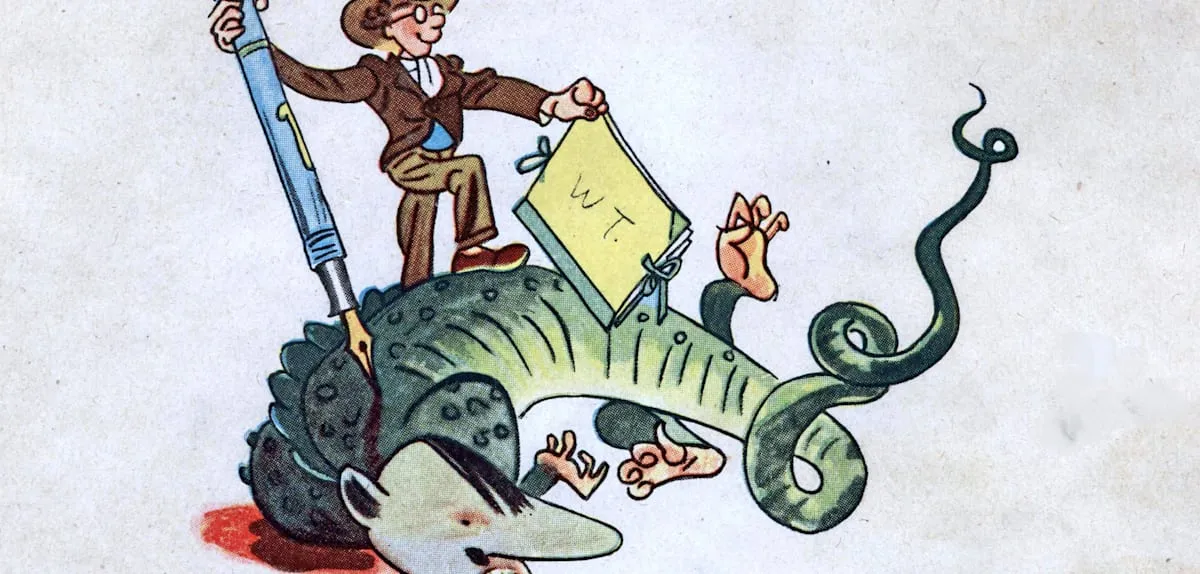
BERLIN — The worlds of art and history are once again stirred by the publication of Walter Trier's collection of political drawings, the legendary illustrator whose works were beloved by author Erich Kästner yet deeply feared by the Nazi regime. This retrospective publication, appearing in 2026, uncovers a new dimension of a sharp, empathetic humorist who dared to voice truth amid political darkness.
Walter Trier, who passed away in 1951, was widely known for his iconic illustrations for Erich Kästner's children's books, such as "Emil und die Detektive" and "Pünktchen und Anton." His cheerful and character-filled visual style successfully brought Kästner's narratives to life, cementing his name in the history of global children's literature. However, behind that friendly image, Trier was a keen social observer.
Beyond the realm of children's literature, Trier possessed a strong political voice. His visual wit, often satirizing power and injustice, became a thorn in the side of repressive governments. The power of his satire lay in his ability to convey complex messages with captivating visual simplicity.
The publication of his political drawings this year marks a significant event. This collection showcases a darker and bolder side of Trier, revealing how he used his pen and ink as a weapon against the propaganda and repression carried out by the Nazis during the 1930s and 1940s.
When the Nazis came to power, many artists and intellectuals chose to remain silent or flee. Trier was one of those who continued to use his art as a form of resistance, albeit subtly. His sharp political sketches reflected his concerns for humanity and freedom under threat.
These drawings now offer an authentic window into the political and social atmosphere of Germany at that time, from the perspective of a tenacious artist. They are historical artifacts that speak to individual courage in the face of tyranny. Every line and stroke reflects a deep concern for the fate of fellow human beings.
Art historians and political observers have welcomed the publication of this collection. They believe that Trier's works not only possess high artistic value but also undeniable historical relevance. His profound understanding of crowd psychology and the weaknesses of power is clearly reflected in each of his works.
Kästner himself, whose books were also burned by the Nazis, held great admiration for Trier's courage and talent. Their friendship was based not only on professional collaboration but also on shared views regarding truth and justice. Both were moral voices in a turbulent era.
In the global context of 2026, as various challenges to democracy and freedom of expression persist, Walter Trier's legacy once again stands out. His works remind us of the power of art as a timeless and geographically unbound tool for social critique.
This publication is expected to stimulate further discussion about the role of art in the struggle for human rights and civil liberties. Walter Trier, the beloved and feared illustrator, left an invaluable legacy: proof that humor and sensitivity can be the last bastion against brutality.