 Chris Robert
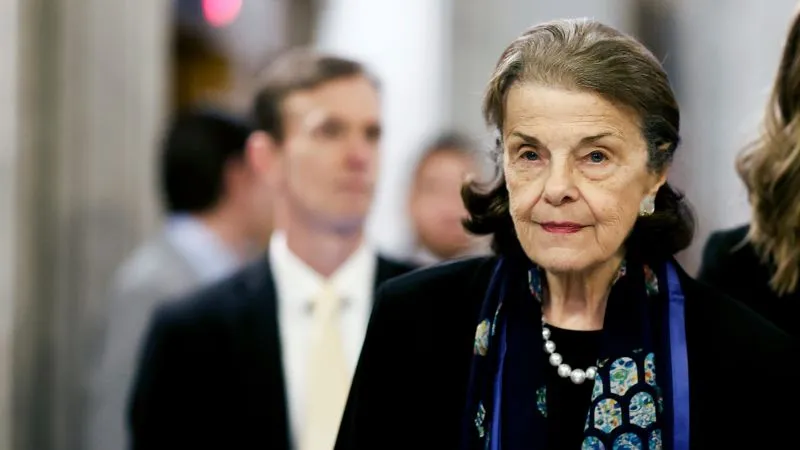
WASHINGTON – A significant effort by Senate Majority Leader Chuck Schumer to replace Senator Dianne Feinstein on the United States Senate Judiciary Committee with Senator Ben Cardin of Maryland is expected to face substantial opposition. A floor vote on the matter, scheduled for Tuesday afternoon, is projected to be blocked by Republicans, leading to a political stalemate on Capitol Hill.
This move comes in response to Senator Feinstein's ongoing health issues, which have led to a prolonged absence and disrupted vital legislative processes, particularly concerning the confirmation of federal judicial nominees and other critical legislation. The situation has raised concerns among Democrats about the efficiency of key committee operations.
Senator Feinstein, who will be 92 in 2026, has served as a senator from California since 1992. Her lengthy career in Congress includes crucial roles on various committees, including the Judiciary Committee, where she once served as Chair.
Schumer's request to replace Feinstein with Cardin is temporary, aimed at restoring the operational capacity of the now understaffed Judiciary Committee. This committee plays a central role in advancing President Donald Trump's policy agenda, especially in judicial appointments.
Internal Senate sources indicate that the Republican Party views this replacement effort as an opportunity for delay. They are reluctant to cast a vote that could expedite the confirmation of judicial nominees put forth by the Democratic Party, particularly in the context of tight political competition leading up to the upcoming midterm elections.
The inability of the Judiciary Committee to function optimally could delay the passage of important legislation and the confirmation of government nominations, ultimately hindering the Donald Trump administration from realizing crucial agendas.
The Republican blockade is not merely tactical; it also reflects deep-seated political tensions between the two parties. They perceive that a concession to Democrats would grant strategic advantages they are unwilling to yield easily.
Senator Ben Cardin, selected by Schumer for this position, is a respected Senate veteran. His appointment is expected to bring the necessary experience and expertise to fill the void left by Feinstein.
However, without bipartisan support, the measure is likely to reach an impasse. Senate procedures allow Republicans to effectively block a floor vote, meaning the committee replacement proposal may never come up for approval.
This situation highlights the fragility of the United States political system, where the health of a senior legislator can have far-reaching impacts on government performance and the national policymaking process.
Political observers predict that this stalemate will continue until there are significant changes, either through intensive negotiations or other developments in Senate dynamics. Public and media pressure will also play a role in shaping subsequent actions.
Editorial Insight: The deadlock over Senator Feinstein's replacement on the Judiciary Committee is not just a procedural issue but a stark reflection of political polarization in Washington. Republicans are strategically leveraging Feinstein's absence to slow down the Democratic judicial agenda, demonstrating that every political loophole will be exploited for electoral gain. Resolution will require significant compromise or external political pressure, which, regrettably, is increasingly rare in the US political landscape of 2026.