 Chandra Wijayanto
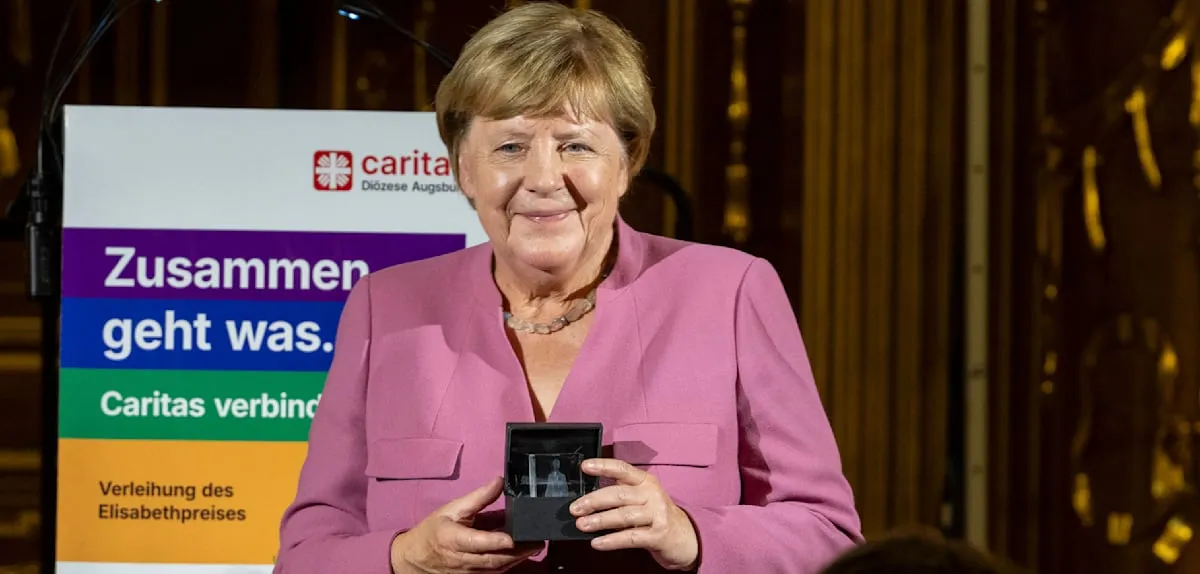
BERLIN – Former German Chancellor Angela Merkel was awarded the Elisabeth Prize by Caritas in 2026, in recognition of her dedication to solidarity and responsibility. The award ceremony, held in Berlin, became a public focal point following a controversial speech from the laudator, Sarah Bosetti, who ironically highlighted how Merkel was being honored for principles that had previously fueled negative sentiment against her.
Bosetti's speech explicitly stated that Merkel received the award for what she is most hated for, referring to policies that caused polarization during her tenure. This statement immediately sparked widespread debate among politicians and the general public regarding the substance of the award and Merkel's public image.
The Elisabeth Prize itself is a prestigious award from Caritas, a globally recognized Catholic social welfare organization. It is presented to individuals who demonstrate exceptional commitment to humanitarian values, especially solidarity and social responsibility, in line with Caritas's mission.
During her 16 years as chancellor, Merkel was indeed known for several policies that championed solidarity, particularly concerning the refugee crisis in 2015. Her decision to open doors to hundreds of thousands of refugees at that time garnered both praise and fierce criticism from across the European political spectrum.
In a moment no less surprising, Bosetti also floated the idea that Merkel deserved to be proposed as the next top CDU (Christian Democratic Union) candidate. This suggestion immediately became a hot topic, given that Merkel has retired from active politics and the CDU is striving to rejuvenate its leadership after recent electoral defeats.
The CDU's losses in several recent elections have indeed been a major challenge for the party. Analysis regarding regional leaders' accountability for the CDU's poor performance was discussed, such as in the article Gunther Bela Merz: Heads of Region Reminded to Take Responsibility for CDU Defeat. This illustrates the complex internal dynamics of the party.
Media and public reactions to this award varied. Some saw it as a form of rehabilitation or recognition of Merkel's moral integrity, while others criticized the timing and substance of Bosetti's speech, deeming it provocative and unnecessary.
Merkel, who now largely enjoys her retirement, did not immediately respond to Bosetti's suggestion or the controversy surrounding the award. She has always emphasized the importance of unity and stability, principles she consistently upheld during her leadership of Germany.
This controversy is not just about recognizing a former leader; it also touches the pulse of German politics, which is currently seeking direction. The discourse of a strong figure like Merkel returning, even if only rhetorical, indicates a yearning for stability amidst uncertainty.
The values of solidarity and responsibility highlighted by Caritas through this award are, in essence, crucial pillars for societal progress. Regardless of political debate, the award underscores the enduring relevance of these values in addressing global challenges in 2026.
Editorial Insight: The awarding of the Elisabeth Prize to Angela Merkel by Caritas is not merely a formality but a reflection of the complexities of leadership in the modern era. Sarah Bosetti's praise, though ironic, highlights the essence of politics: difficult decisions often elicit extreme responses, both support and rejection. This award might not be about celebrating popularity, but rather about recognizing the courage to uphold principles, even when facing the consequence of sharp criticism. The implications for the CDU could be varied, either evoking nostalgia for the Merkel era or accelerating the search for fresh, new faces.