 Stefani Rindus
MOSCOW — The Russian Stock Exchange is experiencing one of its darkest periods at the start of 2026. Its main index, a key barometer of economic health, has plummeted 30 percent since the beginning of the year. This phenomenon has caused many leading Russian corporations, often referred to as “showcase companies,” to fall to historical lows, triggering serious concerns about national economic stability.
This sharp decline has not only shocked domestic investors but also attracted the attention of global economic observers monitoring geopolitical and financial dynamics in the region. Trading volumes have been volatile, reflecting the uncertainty gripping the market.
Several giant corporations that have long been the backbone of the Russian economy, including entities in the energy and mining sectors, are now struggling with extreme financial pressure. Their market capitalization has shrunk drastically, eroding shareholder confidence and potential investors.
Professor Anatoly Krasnov, a leading economic expert from Plekhanov Russian University of Economics, identified five key factors fueling this wave of decline. His in-depth analysis highlights the complexity of the challenges facing Russia in 2026.
The first factor is the ongoing escalation of geopolitical tensions, particularly related to the conflict in Eastern Europe. Economic sanctions imposed by Western countries continue to weigh heavily on Russia's financial and trade sectors, limiting access to international capital markets and crucial technology. This situation is exacerbated by reports of Ukrainian attacks disrupting Russian logistics, adding pressure on supply chains and production.
Second, global commodity price fluctuations, especially for oil and gas. As a major energy exporter, the Russian economy is highly vulnerable to international market price changes. Declining demand or oversupply can significantly hit state revenues.
Third, domestic economic policies that tend to prioritize state control over market liberalization. A less transparent regulatory environment and government intervention in the private sector often hinder innovation and long-term investment.
Fourth, declining foreign investor confidence. Prolonged political and economic uncertainty has made many global investors reluctant to invest capital in Russia. Foreign capital withdrawal contributes to the depreciation of the ruble and exacerbates stock market conditions.
Fifth, the structure of the Russian economy remains overly reliant on raw material exports. A lack of diversification into higher value-added sectors makes the country vulnerable to external shocks and slow to adapt to changing global economic trends.
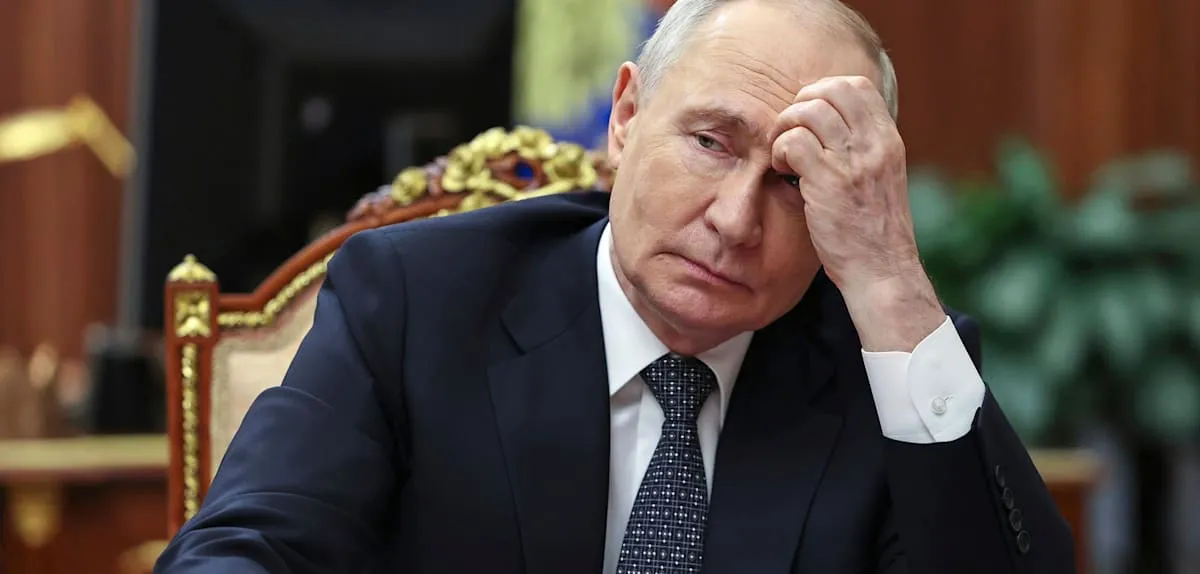
The administration of President Vladimir Putin faces the daunting task of stabilizing this situation. Several emergency measures may be taken, but their impact on market confidence remains a major question. The primary focus will be on mitigating the impact on the real sector and maintaining social stability.
Analysts predict that without bold structural reforms and significant diplomatic efforts, the Russian stock market will struggle to recover in the near future. Economic growth projections for the second half of 2026 have been revised downwards by many international financial institutions.
The implications of this downturn could spill over into other sectors, including employment and purchasing power. Inflation may rise if the ruble continues to weaken, adding to the burden on households across Russia. This represents a severe test of the country's economic and social resilience.
This Russian stock market crisis is not merely a number on a trading screen; it reflects deep-seated tensions in the global economy and geopolitics. How the Russian government responds to these challenges will determine the trajectory of their economy in the coming decade.
Business leaders and domestic investors are now awaiting concrete steps from the Kremlin to quell the turbulence. The operational continuity and profitability of Russia's elite companies depend on effective adaptation strategies amidst this economic storm.
This situation serves as a reminder of the fragility of financial markets to political and economic upheavals. The international community will continue to monitor developments on the Russian Stock Exchange as a crucial indicator for global stability in 2026.