 Chris Robert

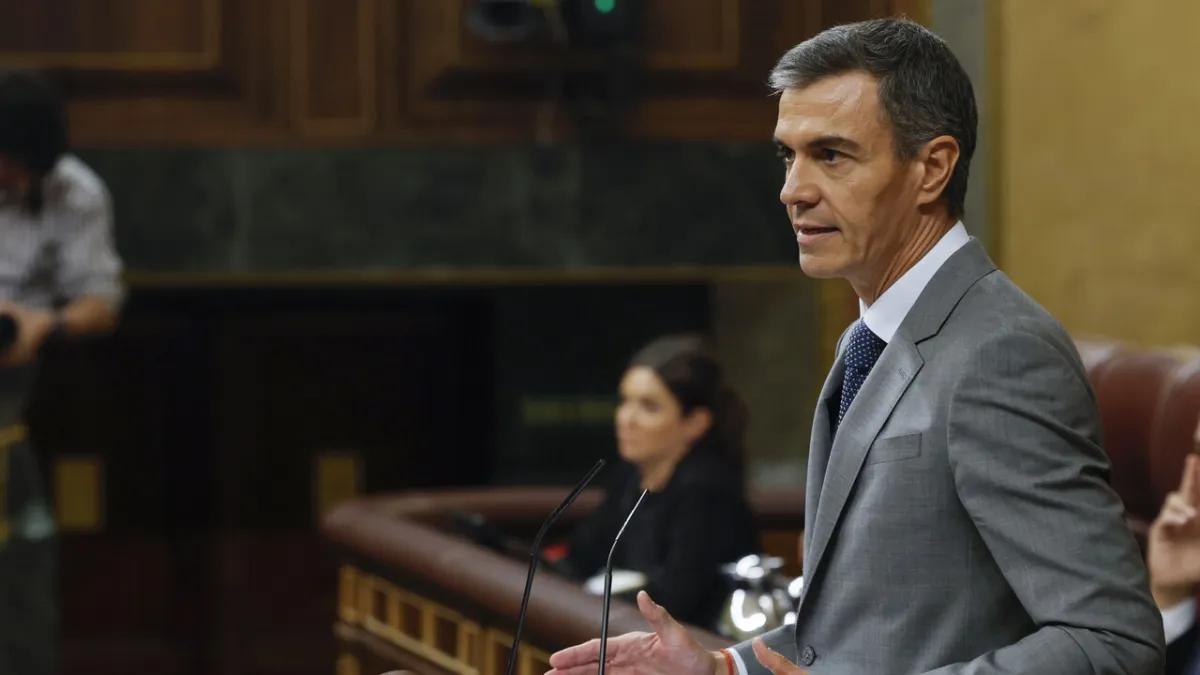
MADRID – Spanish Prime Minister Pedro Sanchez finds himself at a pivotal moment in his political career, following a significant push from the Socialist Party (PSOE) to swiftly conduct a vital parliamentary vote in early 2026. This move is perceived as a strategic effort to strengthen the position of the coalition government, which has frequently been rocked by instability, while also responding to the intensifying political dynamics on the Iberian Peninsula.
The internal party pressure on Sanchez emerged after a series of intense debates concerning the economic and social policy direction the government intends to pursue. Factions within the PSOE seek a stronger mandate from the legislature to implement their reform agenda, especially amidst persistent inflation challenges and global uncertainties.
Sources close to Moncloa, the official residence of the prime minister, revealed that Sanchez himself has spent the past week consolidating support, both from within his party and from coalition partners. Careful calculations are underway to ensure a favorable vote outcome and to avoid further political destabilization.
This is not merely an ordinary vote; it is a declaration of confidence in our vision and leadership, stated a senior PSOE spokesperson, requesting anonymity, underscoring the urgency of the situation. We need a clear signal from parliament that this government possesses the legitimacy and strength to continue serving the Spanish people.
The proposed vote encompasses several key legislative packages, including the state budget for the upcoming fiscal year and reforms to the social security system. Both issues have sparked fierce debates among opposition parties and even within some segments of the ruling coalition.
The internal PSOE consensus indicates that pressing for a vote now is the most logical step to prevent political fragmentation that could cripple the government. By consolidating the party's position and challenging the legislature to take a stand, Sanchez hopes to put an end to speculation regarding his cabinet's stability.
However, Sanchez's path is not without obstacles. Right-wing opposition parties, such as the People's Party (PP) and Vox, have voiced strong objections to this initiative, accusing Sanchez of attempting to 'manipulate' the democratic process for narrow political gains. They are calling for early general elections as a solution to the current political deadlock.
On the other side of the political spectrum, left-wing coalition partners and regional parties also have their own demands, adding complexity to Sanchez's efforts to secure a majority vote. Some have hinted at conditional support, demanding concessions in energy policy or regional autonomy.
The political climate in Spain is often volatile, and this current episode recalls similar past tensions. For instance, a housing crisis that triggered waves of protests and a national strike demonstrates the vulnerability of public support for government policies. Thousands of Spaniards Erupt: Housing Crisis Triggers Call for National Strike! serves as a mirror of how vital stability is.
Political analysts predict that the outcome of this vote will be a crucial determinant for the future of Sanchez's government. A victory would provide him with the momentum and authority needed to advance his reform agenda. Conversely, a defeat could trigger a government crisis and even unavoidable snap elections.
The eyes of the Spanish and European public are now fixed on Madrid, anticipating how Pedro Sanchez will navigate this high-stakes political maneuver. Socialist leadership will be tested, and Sanchez's ability to 'sum up' this intricate situation will determine the political direction of the country for some time to come.
Editorial Insight: The Socialist Party's push for a parliamentary vote reflects a high-risk strategy adopted by Pedro Sanchez. While potentially strengthening his legitimacy, this move also creates an opening for the opposition to manipulate the situation, leading to destabilization. Spain's political stability heavily depends on Sanchez's ability to build consensus amidst increasingly sharp polarization, a challenge that will shape the European political landscape.