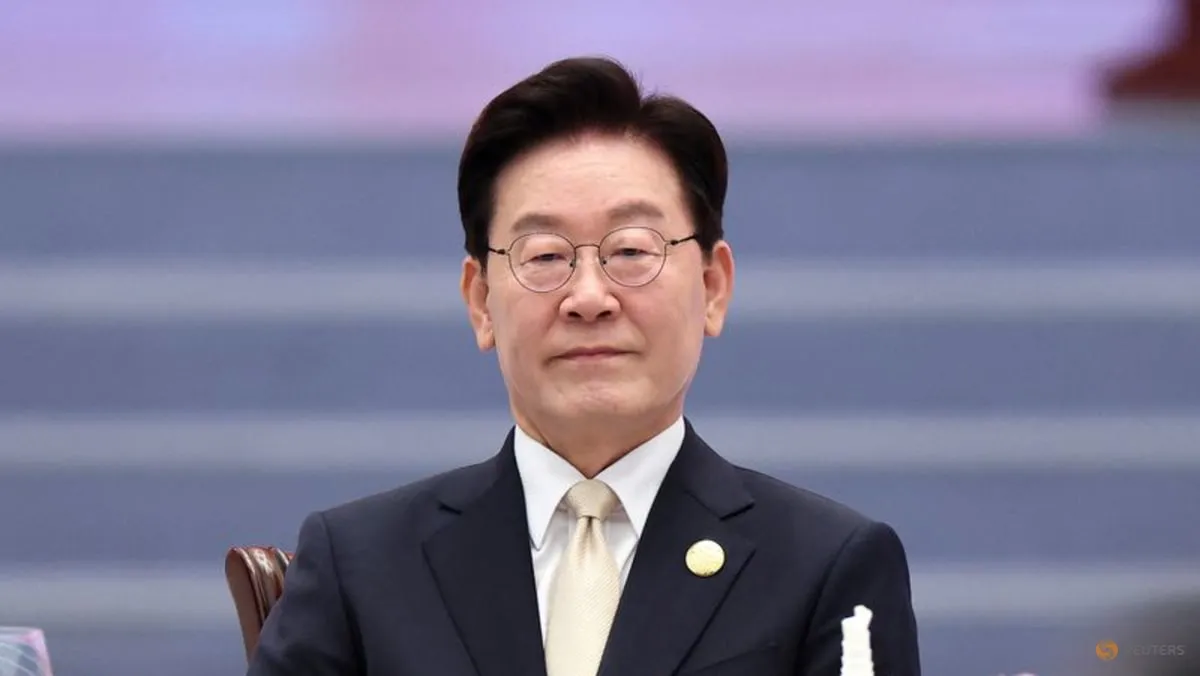
SEOUL – South Korean President Lee Jae-myung emphasized the critical importance of speed in the global artificial intelligence (AI) race. He made this statement during a visit to a newly constructed data center, a facility anticipated to attract significant investment from international AI companies while serving as a backbone for meeting chip demand.
President Lee's visit, which occurred early this week, signifies South Korea's serious commitment to becoming a major player in the future technology landscape. Data centers, as vital infrastructure, are primary sources of demand for semiconductor chips, essential components for the development and operation of advanced AI systems.
According to President Lee, the success of this data center project will widely open doors for further investment from global AI technology giants. Speed is everything in this AI race, he stated, underlining the urgency of continuous adaptation and innovation. This vision aligns with South Korea's efforts to position itself as a global innovation hub.
The AI race is indeed intensifying worldwide. Superpowers and regional forces are competing fiercely to develop computing capacity, algorithms, and AI applications. The presence of modern and efficient data centers is an absolute prerequisite for processing the massive volumes of data required for AI algorithms to learn and function optimally.
Investment in data center infrastructure not only impacts the AI sector but also the semiconductor industry, which is a traditional strength of South Korea. Increased chip demand from data centers will stimulate production growth and innovation in local chip companies, simultaneously strengthening global supply chains.
The South Korean government understands that a strong innovation ecosystem is paramount. This encompasses not only physical infrastructure but also investment-friendly policies, a supply of digital talent, and a regulatory environment that supports the development of new technologies. This move is expected to attract top talent and substantial capital to the country.
Several industry analysts predict that the success of projects like this will place South Korea in a stronger bargaining position on the global digital economy stage. This will enable the country to not only be a consumer of technology but also a leader in its creation and dissemination.
Despite fierce competition, South Korea has a solid track record in technological innovation. From the automotive industry to telecommunications, the country has repeatedly proven its ability to adapt and lead technological trends. This AI momentum presents both a challenge and a golden opportunity.
Similar efforts are observed in various parts of the world. For instance, Singapore and China continue to strengthen their strategic partnerships in the technology sector, illustrating how regional collaboration is key to navigating the dynamic technological landscape.
It is hoped that President Lee's initiative will not only accelerate domestic AI development but also attract the attention of global investors seeking strategic locations with robust infrastructure. This represents a strategic step to secure the economic and technological future of South Korea.
The data center visited by President Lee is designed with cutting-edge technology, integrating energy efficiency and scalability to accommodate the exponential growth in AI computing needs. Sustainability aspects are also a key focus, in alignment with the global agenda for green technology.
Editorial Insight:
South Korea's aggressive move to accelerate data center infrastructure reflects a deep understanding of the global AI race dynamics. AI's reliance on computational power makes data centers vital arteries. The success of this initiative will not only strengthen South Korea's digital economy but also has the potential to solidify its position as a technological pioneer, making it a magnet for innovation and investment in Asia.