 Stefani Rindus
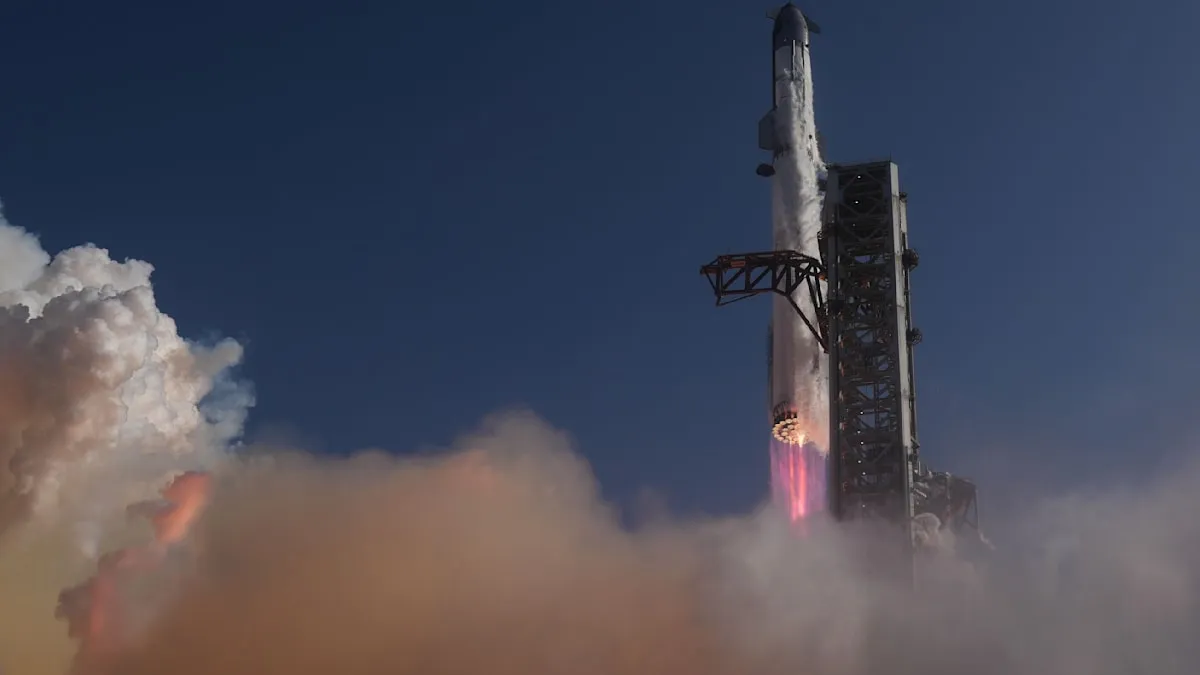
WASHINGTON — SpaceX's colossal Starship rocket successfully completed its 13th test flight, a monumental achievement that reignites optimism for space exploration and Elon Musk's ambitious plans for Mars. This success, occurring in 2026, has been described as a "small miracle" by prominent space expert Ulrich Walter, highlighting the complexity and innovation underpinning the private space program.
The 13th test flight represents a crucial stage in the development of Starship, a space transport system designed to carry humans and cargo to the Moon, Mars, and beyond. Each flight provides valuable data for the SpaceX team to refine the rocket's design and operations.
Ulrich Walter, a professor of space physics and former astronaut, stated that the largely successful test flight of Starship is tangible proof of technological advancement. "It's a small miracle that they have come this far," Walter remarked, emphasizing the immense technical challenges in building and operating a rocket of Starship's scale.
This flight not only tested the rocket's ability to lift off and maneuver in the atmosphere but also its propulsion and thermal protection systems. The data collected from this mission is essential for subsequent steps, including water or land landing tests.
Elon Musk's vision for Mars colonization is not new, but Starship is the primary key to realizing that dream. With unprecedented payload capacity and reusability, Starship is expected to drastically reduce the cost of space travel.
Space industry observers view this SpaceX achievement as a turning point. They acknowledge that despite remaining challenges, each successful test brings humanity a step closer to a multi-planetary future. The significant investment in this rocket technology is beginning to yield substantial results.
Musk himself has consistently voiced his belief that Mars exploration is an inevitable evolutionary step for the survival of the human species. He envisions self-sustaining cities on Mars, supported by infrastructure that will be built using Starship.
Nevertheless, the journey to Mars remains long and fraught with obstacles. Technical, financial, and physiological challenges for astronauts require continuous innovation. Starship must prove its reliability and safety under various extreme conditions.
The success of this 13th test flight sends a strong signal to the global community that SpaceX is serious about its ambitious plans. It also inspires a new generation of scientists and engineers to pursue new frontiers in space exploration.
Governments and national space agencies worldwide are also closely monitoring Starship's progress. Potential collaborations between the private and public sectors could accelerate larger exploration missions in the future, including lunar landing programs.
The economic implications of the Starship program are also vast. The potential for space tourism, asteroid mining, and the expansion of Earth orbital infrastructure could create multi-trillion-dollar industries, opening new job opportunities and driving innovation across various sectors.
Overall, the success of Starship's 13th test in 2026 is more than just a technical achievement. It is a symbol of human resilience, ambition, and willingness to transcend existing boundaries, aligning with Elon Musk's grand vision for the future of civilization.