 Stefani Rindus
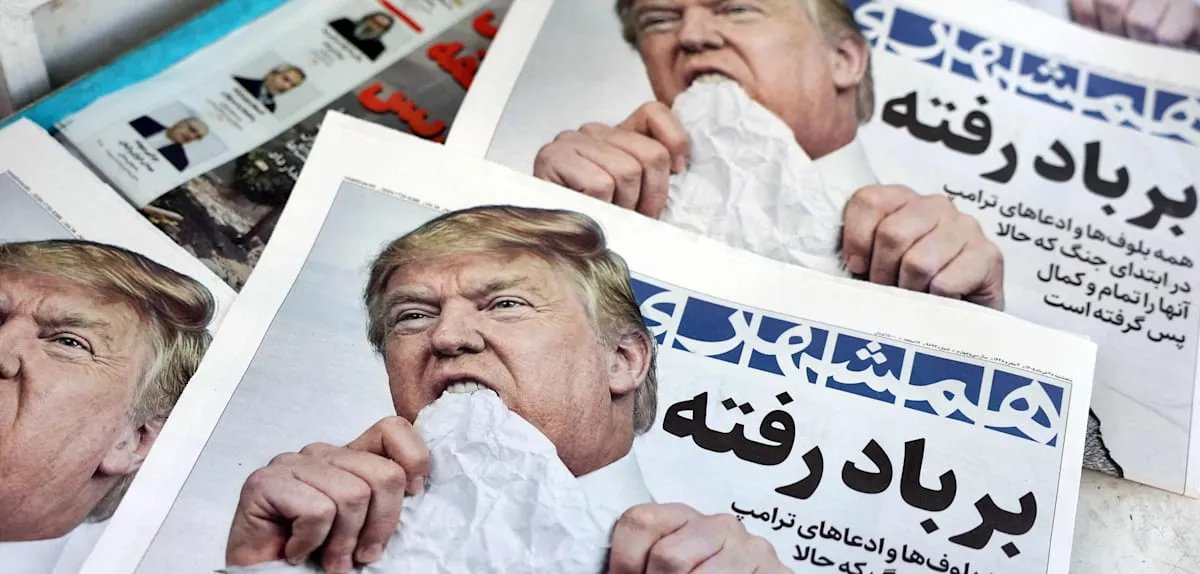
TEHRAN – Prominent German politician Friedrich Merz has unexpectedly become the focus of Iranian media after a national newspaper in the country published a provocative image depicting him in prisoner's attire, alongside figures like Donald Trump and Benjamin Netanyahu. This publication explicitly identified Merz as a prime target of Iran's announced retaliation campaign following the death of Grand Ayatollah Ali Khamenei in early 2026, sparking diplomatic outrage and global concern.
The daily newspaper, affiliated with Iran's Revolutionary Guard, featured a graphic collage accusing Merz of involvement in an international conspiracy believed to be responsible for the death of the supreme spiritual leader of Iran. The narrative accompanying the image hinted at 'the wish for a quiet death will be taken to the grave,' a rhetorical phrase explicitly pointing to promised retribution.
Threats against Friedrich Merz, who in 2026 serves as the Chairman of the Christian Democratic Union (CDU) and a significant opposition figure in Germany, mark a serious escalation in Tehran's anti-Western rhetoric. This publication is not merely propaganda but a statement of intent targeting specific individuals on the international political stage.
The death of Ayatollah Khamenei in January 2026 has created waves of instability in the region. Iran, through various official channels, has consistently accused foreign powers, especially the United States, Israel, and European allies, of being behind the event they refer to as Khamenei's 'martyrdom.'
A firm response from Berlin is anticipated. A spokesperson for the German Foreign Ministry implicitly stated that 'threatening and unfounded rhetoric against officials of a sovereign state is unacceptable and will be taken seriously.' However, they have not yet issued an official statement regarding specific measures to be taken.
This incident extends Iran's list of threatened Western politicians. Previously, Italian Prime Minister Giorgia Meloni was also drawn into Tehran's 'blacklist' with similar threatening narratives. Read more about the threats against PM Meloni here.
Geopolitical analysts observe that this Iranian action is part of a larger strategy to project power and demonstrate resolve amidst internal and external pressures. Such threats aim to demoralize opponents and strengthen domestic support.
Professor Hassan Rouhani, an expert in international relations from Sharif University, during an online interview with national media, stated, “Tehran is attempting to test the limits of Western patience. By targeting figures like Merz, they are sending a message that no one is immune from the reach of their vengeance.”
Relations between Iran and Germany have been tense for years, particularly due to Iran's nuclear program and human rights issues. A direct threat against a German political leader has the potential to worsen the situation, even prompting further sanctions or diplomatic actions.
WASHINGTON D.C. – The United States, through a State Department spokesperson, has expressed deep concern over the threat. “We call on all parties to refrain from escalating rhetoric that could jeopardize regional peace and security,” he said, without specifically naming Iran.
The geopolitical situation in the Middle East itself remains highly tense in 2026. Iran's blockade of the Strait of Hormuz has become a crucial and continuously escalating issue. The crisis in the Strait of Hormuz is intensifying in 2026, see the review here.
This provocative move by Tehran is expected to be a major topic on the agenda for upcoming G7 meetings and the UN Security Council. The world awaits a coordinated response from the international community to de-escalate tensions and prevent potential broader conflicts.
German political observers worry that this incident could affect German foreign policy, especially in its approach to the Middle East. Pressure to take a tougher stance against Iran may increase in the German Parliament.
Nevertheless, many parties also advocate for cautious diplomacy. Uncalculated escalation could trigger a cycle of violence that is difficult to stop. The balance between firmness and dialogue will be key in addressing the threat launched by Tehran. The publication of threats against Merz serves as a bitter reminder of the fragility of global peace amid interstate political intrigues.